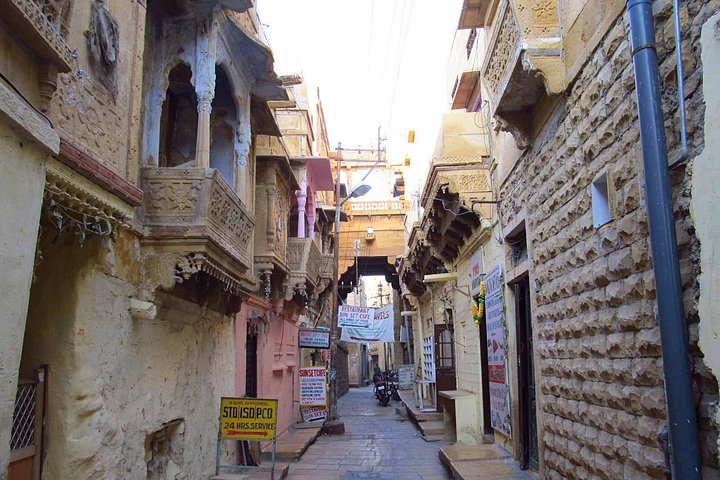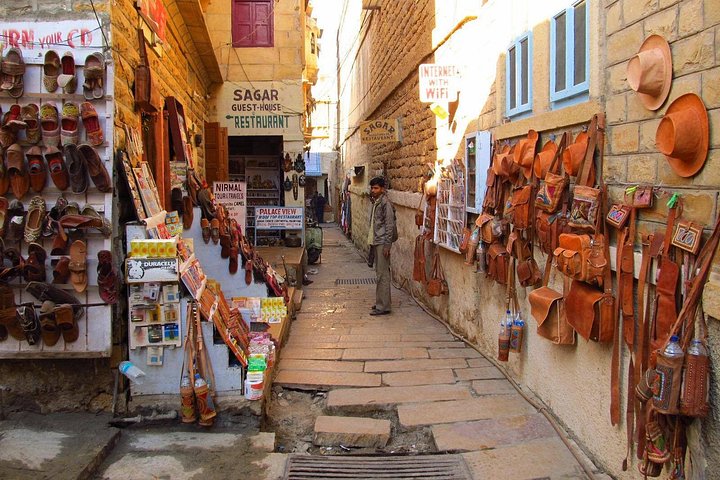
The bazaars around the base of the fort and along the lanes below it are the commercial heart of Jaisalmer, and they have been trading for centuries. Shops spill onto narrow streets with bundles of embroidered cloth, mirror-work bags, patchwork bedspreads, brass lamps, silver jewellery, puppets, camel-leather shoes and spice sacks. The market is noisy, colourful and sometimes overwhelming, but it is also a wonderful place to see local craft in daily use. A guided walk helps you navigate the lanes, learn what to look for and find the artisans who make things rather than simply sell them, turning shopping into a window onto the town.
Jaisalmer's position on old caravan routes made it a trading town long before it became a tourist stop. Merchants once exchanged goods between Central Asia, Sindh and the Indian coast, and the habit of bargaining lives on. Today the markets are a mix of tourist shops and everyday stalls, with vegetable sellers, tailors and sweet shops sharing space with embroidery stores. Walk slowly and notice the difference between the two kinds, because the everyday stalls show how people live.
Textiles are the speciality. Look for mirror-work embroidery, a Rajasthani tradition in which tiny pieces of reflective glass are stitched into cloth, as well as appliqued patchwork, block-printed fabrics and woollen shawls. Quality varies enormously, from machine-made items to hand-stitched pieces that took weeks. A good guide will teach you how to tell the difference by checking the back of the stitching and the weight of the cloth, and will suggest shops they trust.
Other crafts worth seeking are silver and brass jewellery, camel-leather sandals and bags, wooden puppets, carved stone items and small paintings. Be wary of anything claimed to be antique, and be aware that rules limit the export of genuine antiques. Spice shops are good for gifts, with blends and dried chillies that travel well if sealed.
Bargaining is expected. A friendly approach works best: ask the price, offer a lower figure, smile and be prepared to walk away. There is no obligation to buy after drinking tea in a shop. If you plan to buy several items, visit more than one shop first to get a sense of prices, and keep cash in small notes to avoid being short-changed.
The best times for walking are early morning, when shops open slowly and the light is gentle, and late afternoon, when the heat eases and the lanes come alive. Midday is hot and can feel crowded. A two-hour guided market walk is an inexpensive way to explore, and it also introduces local snacks and tea stops along the way. Wear comfortable shoes, carry water and keep valuables secure in crowded stretches.
A few practical habits make shopping here easier. Decide in advance what you want, such as one good textile or a piece of silver, and budget for it, because the range of goods can be overwhelming. Carry a small bag for purchases and keep your wallet in a front pocket in busy stretches. If you buy something large, ask the shop to pack it for travel, and keep receipts for anything you may need to show at customs. Take time to enjoy the process, because conversations with shopkeepers are part of the pleasure.
What to expect
The experience
A guided walk through bazaar lanes with stops at textile, jewellery and spice shops, and tea or snack breaks.
Best time
Early morning or late afternoon, when it is cooler and livelier.
How long
About two hours.
Tips
Bargain politely, compare shops, carry small notes and wear comfortable shoes.
Quick picks
- Best for
- Shoppers and craft lovers.
- Families
- Colourful and lively for older children, though crowded.
- Couples
- Browse for textiles and silver together.
- Pair with
- The fort, Gadisar Lake and the street food crawl.
- Time needed
- Two hours plus shopping time.
Good questions
What should I buy in Jaisalmer?+
Mirror-work textiles, appliqued bedspreads, silver jewellery, camel-leather goods and spices are popular choices.
Is bargaining expected?+
Yes, polite bargaining is part of shopping, and you are free to walk away.
How can I spot quality embroidery?+
Check the stitching on the back, the weight of the cloth and whether the mirror work is sewn rather than glued.
When is the best time to visit the markets?+
Early morning and late afternoon are cooler and more pleasant than midday.
Is a guided walk worth it?+
A guide helps you find trusted shops and artisans and explains what you are looking at.