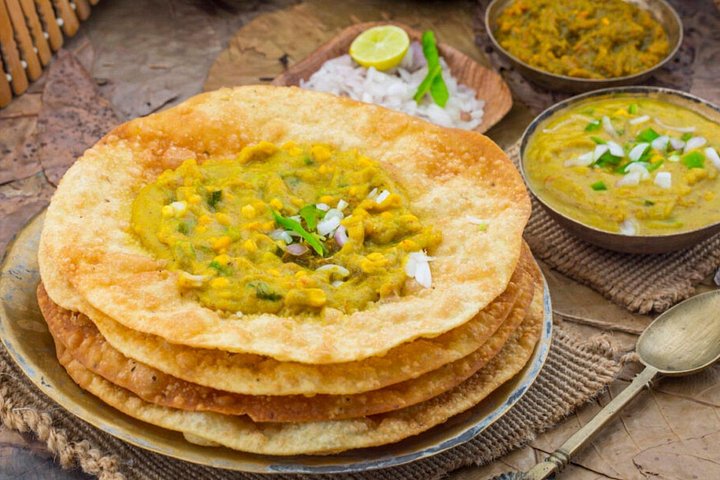
Food in Jaisalmer is shaped by the desert. With little water and few fresh vegetables, cooks relied on dried beans, lentils, millet, ghee, buttermilk and spices, and they became masters of flavour with a small pantry. Today you can eat these traditional dishes in humble family kitchens, street stalls and rooftop restaurants, and the results are hearty, aromatic and surprisingly varied.
Dal baati churma
This is the signature meal of Rajasthan. Baati are hard wheat balls baked until crisp, then broken and soaked in ghee. They are served with spiced lentils and churma, a sweet crumble of crushed wheat, ghee and sugar. The combination of savoury and sweet is rich and filling, and the dish is often served at festivals and celebrations. Try it for lunch and plan a quiet afternoon.
Ker sangri
Ker are small desert berries and sangri are long beans from the khejri tree, and together they make a tangy, spicy dish cooked with dried spices and yoghurt or oil. It is a true taste of the Thar, usually served with bajra roti or chapati. If you only try one local speciality, this is a good choice, because it is hard to find outside Rajasthan.
Bajra roti and gatte ki sabzi
Bajra roti is flatbread made from pearl millet, thick and earthy, served with ghee, garlic chutney or buttermilk. Gatte ki sabzi uses gram flour dumplings simmered in a spiced yoghurt gravy. Both are staples of home cooking and show how resourceful the cuisine is.
Street snacks
Savoury kachori, fried pastries filled with spiced lentils, are a morning favourite, often served with chutney. Samosas, pakoras and mirchi vada (stuffed chilli fritters) appear throughout the day. Choose busy stalls with fresh oil and hot food, and carry hand sanitiser. A guided street food walk is an easy way to sample several dishes with a local who knows the best vendors.
Sweets
Jaisalmer's sweet shops are famous for treats made with milk, ghee, gram flour and sugar. Look for laddoos, barfi, jalebi and local specialities such as ghotua ladoo, a distinctive local sweet. Sweets make good gifts, and you can buy them in boxes to carry home. Pair them with sweet milky tea.
Drinks
Chai is everywhere, brewed strong with milk and spices. Lassi, a yoghurt drink, and chaas, spiced buttermilk, cool you down in the heat. Choose sealed or filtered water, avoid ice from unknown sources and ask your hotel about safe drinking water. Alcohol is available in some restaurants and hotels, but policies vary, and licensed venues are the safest choice.
Where to eat
Rooftop restaurants in and around the fort offer views and a mix of Indian and traveller menus, and they are lovely at sunset. Small family-run places in the old city serve thalis and regional dishes at modest prices. Hotels and camps often have set dinners with Rajasthani dishes, sometimes with folk music. A cooking class in a local home is a fun way to learn the techniques and eat the results.
Dietary notes
Vegetarian food is the norm in much of the old city, partly because of Jain and Hindu traditions. Vegans should ask about ghee and dairy. Many places can adjust spice levels, and it helps to say mild or medium. If you have allergies, explain clearly and consider carrying a written note in Hindi or English.
A simple eating plan
Start the day with kachori and tea, lunch on dal baati churma or a thali, take an afternoon tea break and finish with a rooftop dinner of ker sangri and bajra roti. Add a street food walk or a cooking class if you want to go deeper. Eat well, drink safely and enjoy the contrast between rich, simple food and the austere landscape that produced it.
Food etiquette and cost
Eating with your right hand is traditional, though cutlery is always available in tourist restaurants. Tipping is appreciated in restaurants and camps, and a service charge may already be included in some places. Prices are modest by international standards, with thalis and street snacks costing little and rooftop meals somewhat more. If you are invited to a home, bring a small gift such as sweets, remove your shoes and accept food and tea graciously. Do not be surprised if hosts offer second helpings, since generosity is a point of pride in the desert.