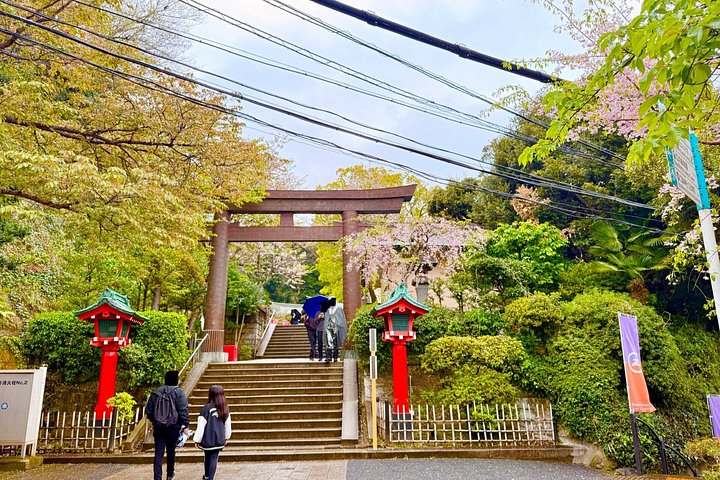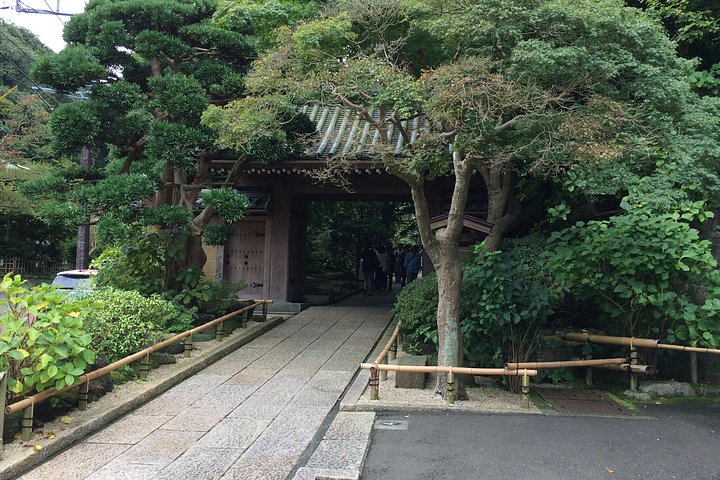
Enoshima Shrine is not one building but three, spread along the slope of the island and dedicated to the goddess Benzaiten, patron of music, water, wealth and the arts. The lowest hall, Hetsunomiya, stands behind a red gate near the island's entrance and houses a famous statue of the goddess playing a lute and a second image of her in an unusual unclothed form. The middle hall, Nakatsunomiya, is a colourful building with carved decoration and a calm courtyard, and the highest, Okutsunomiya, stands near the summit amid trees, decorated with painted and carved detail. The traditional founding date is early, and the shrine has attracted pilgrims for well over a thousand years. Entering the grounds is free, although some small side attractions and the treasure hall charge a fee.
The walk between the three halls is as important as the halls themselves. A great bronze torii marks the start of the lane from the causeway, and the climb passes souvenir shops, seafood stalls and teahouses before the first gate. After Hetsunomiya, a flight of steps leads to the middle hall, and from there the route climbs to the top of the island, where you can reach the garden and the observation tower.
The paths are steep in places, so wear comfortable shoes. If your legs object, escalators cover the steepest sections for a modest fee, and they save energy for the rest of the island.
Benzaiten is a goddess associated with water, luck and the arts, and many visitors come to pray for success, love or creative inspiration. Look for the ema, wooden plaques on which visitors write wishes, and the smaller sub-shrines tucked beside the paths. At the summit hall, a prayer for good fortune is said to be especially effective, and visitors often tie a fortune slip on the racks beside the path.
The shrine is lively on festival days, when processions and music add colour to the climb, so check the calendar if you want to see one.
Plan around two to three hours for a leisurely visit, including the climb, the shrines and views over the bay. Mornings are quieter, and weekends are crowded. It is easy to extend the visit with the garden and tower at the summit, the Iwaya caves on the far side and a whitebait lunch back near the bridge. The best photographs are from the viewing spots between the halls, where the sea opens out between the pines.
Etiquette is simple
Bow at the torii, quietly pass through the gates and use the purification fountain before approaching the halls. Photography is welcome in the grounds but discouraged inside the buildings. Some halls close in the late afternoon, so start in the morning. To reach the island, ride the Enoden to Enoshima Station or the Odakyu line to Katase-Enoshima and walk across the long bridge, which gives its own view of Mount Fuji on clear days.
Because the island is small, the shrine route also makes a convenient spine for the whole visit. Walk up through the three halls, reach the garden and tower at the summit, descend by the rear path to the caves and the rocky shore and finish with lunch near the bridge. It is a full but easy day, and it shows why Enoshima has drawn pilgrims, artists and holidaymakers for so many centuries.
What to expect
The experience
A free self-guided climb through three shrine halls on the slope of Enoshima, with sea views along the way.
Best time
Weekday mornings, when the lane is quiet and the climb is cool.
How long
One and a half to two hours with the climb, longer with lunch.
Tips
Wear comfortable shoes, consider the escalators for the steepest part and carry coins for offerings.
Quick picks
- Best for
- Anyone interested in Japanese folk religion, art and sea views.
- Families
- Lots to see on the way, but the steps tire small legs, so use the escalators.
- Couples
- Make a wish together at the top hall, then continue to the garden.
- Pair with
- The Sea Candle, the Iwaya caves and Enoshima Aquarium.
- Time needed
- About two hours.
Good questions
Is Enoshima Shrine free?+
Entering the grounds is free, although the treasure hall and the escalators charge a small fee.
Who is Benzaiten?+
A goddess of music, water, wealth and the arts, widely worshipped across Japan.
How many shrine halls are there?+
Three: a lower, a middle and an upper hall, linked by the path up the island.
How do I get to Enoshima?+
Ride the Enoden to Enoshima Station or the Odakyu line to Katase-Enoshima, then walk across the bridge.
Can I avoid the steepest climb?+
Yes. Escalators cover the steepest stretches for a modest fee, and the rest can be walked.