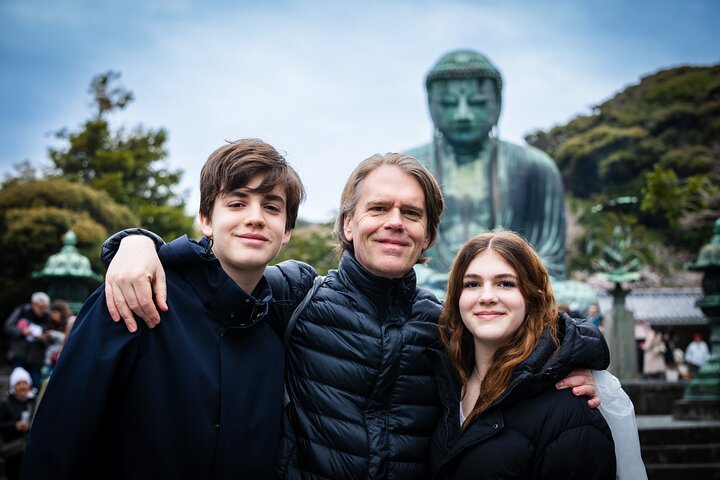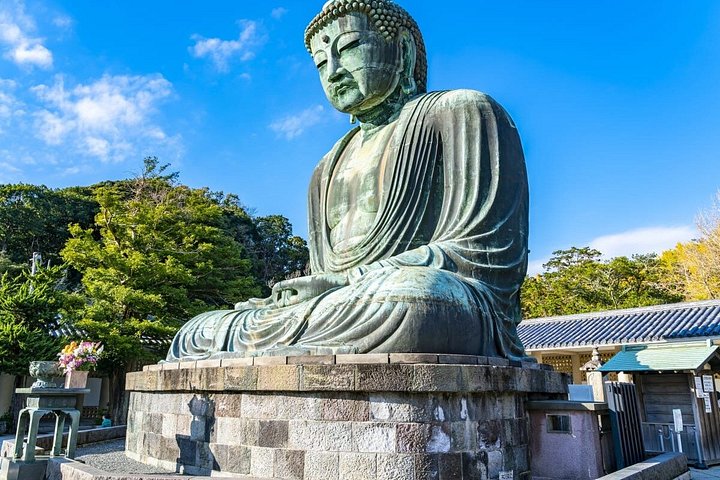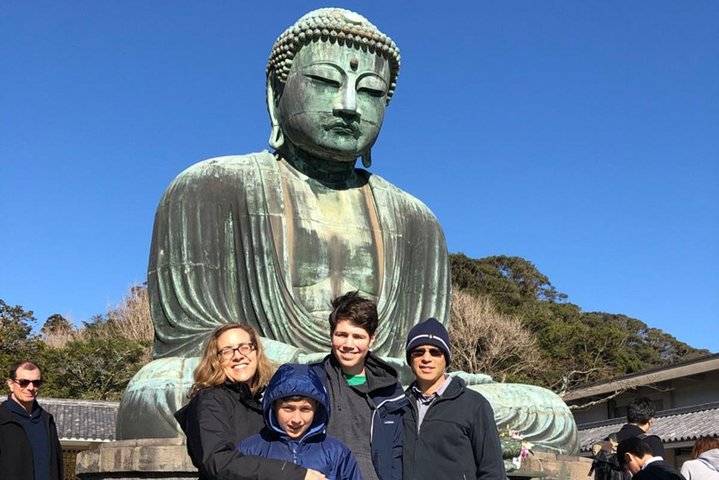
The Great Buddha, or Daibutsu, is the reason most people come to Kamakura. The seated bronze figure of Amida Buddha at Kotoku-in temple rises roughly thirteen metres, weighs around a hundred and twenty tonnes and dates to the mid thirteenth century. Its face is calm, its eyes half closed, and its hands rest in a meditation gesture that has made it one of the best known images in Japan. It is a national treasure. The statue once sat inside a large hall, but storms and a tsunami in the late fifteenth century destroyed the building, and the Buddha has stood in the open air ever since, which is part of its charm: you see it against sky, trees and weather rather than in dim temple light. Admission is a few hundred yen, and for a few yen more you can climb into the hollow interior through a small door, which is a quirky way to appreciate how it was assembled from cast sections.
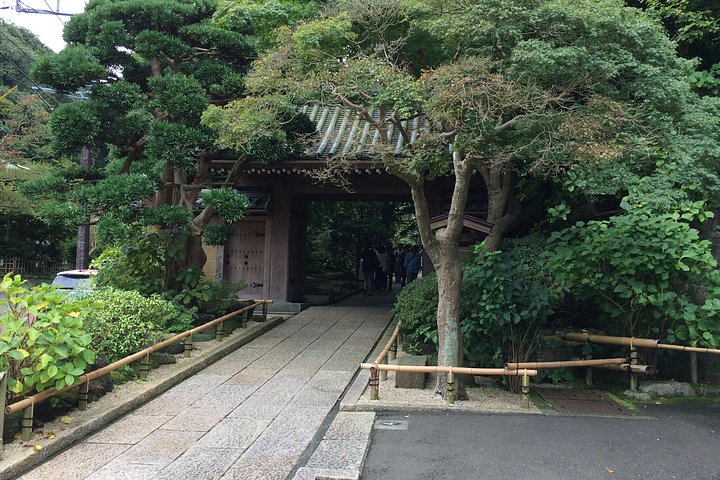
The temple grounds are small and easy to read. You buy a ticket at the gate, walk up the short approach and the Buddha appears, larger than photographs suggest. Walk all the way around it to see the back, where two small windows open in the shoulders, and look for the giant pair of straw sandals displayed nearby, an offering made for the statue. There is a temple shop and a modest garden, but the sight is the statue, and most people are finished within forty-five minutes.
Getting there is simple. Take the Enoden train to Hase Station and walk about ten minutes through a quiet residential street, or ride a bus from Kamakura Station. Hours run longer in the warmer half of the year and shorter in winter, and the interior of the statue closes earlier than the grounds, so aim for the morning if you want to go inside. The grounds are open every day, but check the temple's website before a holiday period, when services such as seal stamps can change.
Pair it with Hase-dera, which is a short walk away, so the two share a half day. Crowds peak late morning, when tour groups arrive from Tokyo, so go at opening or in the last hour before closing for clearer photographs. Tripod use and loud behaviour are discouraged, and the interior is narrow, so skip it if you dislike tight spaces. A guided walk that explains the casting history makes the visit richer if you are short on background.
What to expect
The experience
A self-guided visit to the open-air bronze Buddha, with the option to climb inside the hollow statue for a small extra fee.
Best time
Right at opening or the last hour before closing, when tour groups thin out and the light is soft.
How long
Forty-five minutes to an hour, longer if you add the interior and the temple shop.
Tips
Bring coins for the entrance and the interior, wear shoes that are easy to slip off elsewhere, and combine with Hase-dera next door.
Quick picks
- Best for
- Every first-timer, because this is the picture that defines Kamakura.
- Families
- Easy and short, and children enjoy climbing inside the statue, though the interior is narrow and steep.
- Couples
- Go early on a weekday, then walk to Hase-dera for the ocean view and a slow lunch.
- Pair with
- Hase-dera, the Enoden train and the Daibutsu hiking trail towards the Genjiyama ridge.
- Time needed
- About an hour including the walk from Hase Station.
Good questions
How much does the Great Buddha cost to see?+
Entry to Kotoku-in is a few hundred yen, with a smaller extra fee to go inside the statue. Young children are free or discounted, and you pay at the gate.
Can you go inside the Great Buddha?+
Yes, through a small opening, for a few yen extra. The interior closes earlier than the grounds, so go before the afternoon.
Is the Great Buddha indoors?+
No. The statue has sat in the open air since the hall around it was destroyed centuries ago, so weather affects the visit and you can walk right around it.
How do I get to Kotoku-in?+
Ride the Enoden to Hase Station and walk about ten minutes, or take a bus from Kamakura Station. From Tokyo it is a short JR ride to Kamakura first.
How long should I allow?+
Plan on forty-five minutes to an hour, or half a day if you add Hase-dera and the walk between them.