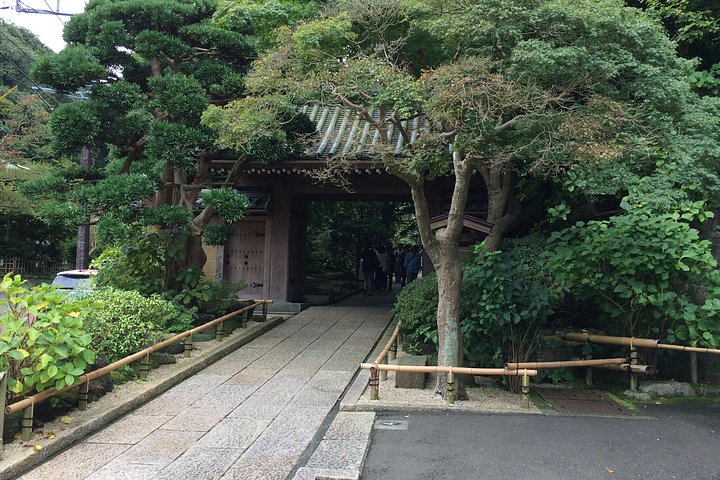
Hokoku-ji is a small Zen temple in eastern Kamakura, loved for the bamboo grove behind its main hall. The garden was formed from the retreat of the priest Tengan Eko, and a path of stepping stones winds through tall moso bamboo whose stalks rise overhead and filter the light into green. The effect is cooler and stiller than the busier bamboo groves of Kyoto, partly because the temple limits behaviour: visitors are asked to stay quiet, stay on the paths, avoid tripods and refrain from eating or drinking in the garden. At the back, a teahouse serves a bowl of matcha with a dry Japanese sweet, and you can sit on a bench facing the bamboo. The main hall and the surrounding moss garden are pleasant, though they are overshadowed by the bamboo. Admission is a few hundred yen, with the matcha charged separately.
The temple is small, and most people spend forty-five minutes to an hour. Pay for entry at the gate, wander the garden, then queue for the teahouse if you want matcha. The tea set has a last order about half an hour before closing, so do not leave it late, and on busy days the queue can take a while. The sight is best in the morning, and on a weekday you may have the paths nearly to yourself.
Getting there is easy but not obvious. Take a bus from the east exit of Kamakura Station and get off near the temple, or walk for about thirty minutes through quiet lanes. The temple opens in the morning and closes in the afternoon, and it is shut at the turn of the year and in bad weather, so check before you go. It sits near other quiet sights, including Sugimoto-dera and Jomyo-ji, which make a good eastern loop.
Photographers should note that the bamboo is the star but the rules matter: tripods are not allowed, and signs ask visitors to stay on the paths. Mosquitoes can be a nuisance in summer. A guided walk that includes Hokoku-ji can add context about the Ashikaga family and the temple's history, and saves working out the bus. It is not a place for loud groups or children who cannot stay quiet.
What to expect
The experience
A short, quiet walk through a moso bamboo garden, with a matcha break at the teahouse.
Best time
Weekday mornings, when the paths are quiet and the light is soft.
How long
Forty-five minutes to an hour, longer if the tea queue is long.
Tips
Mind the rules: no tripods, no food or drink in the garden and stay on the paths. Order matcha before the last order time.
Quick picks
- Best for
- Couples and photographers who want a calm, green Zen garden.
- Families
- Fine for children who can be quiet, but there is little to do beyond looking.
- Couples
- Sip matcha facing the bamboo and then walk to Sugimoto-dera.
- Pair with
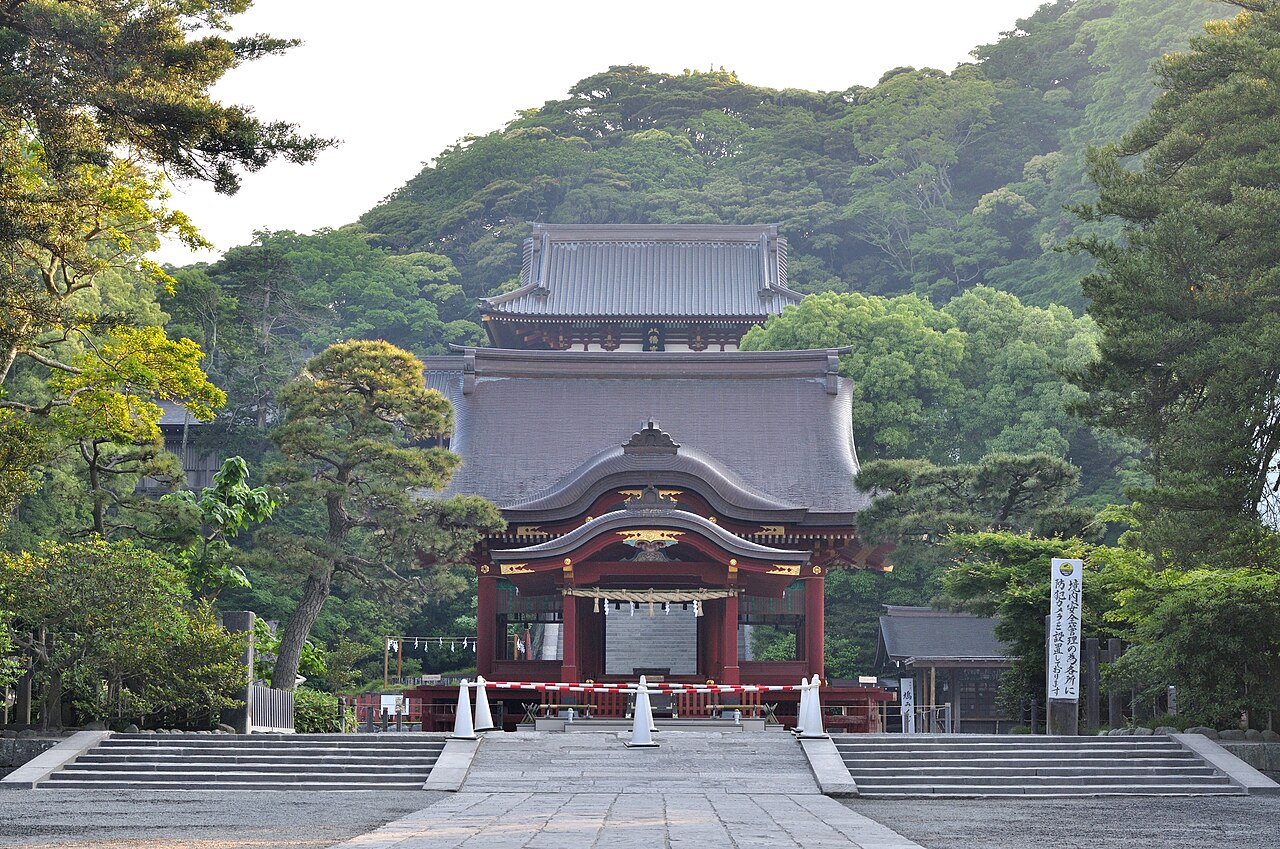
- Sugimoto-dera, Jomyo-ji and Tsurugaoka Hachimangu.
- Time needed
- About an hour.
Good questions
How much does Hokoku-ji cost?+
Entry is a few hundred yen, and the matcha set at the teahouse is charged separately.
When is it open?+
Morning until mid afternoon, closed at the turn of the year and in bad weather. Check the temple's website before you go.
Can I use a tripod?+
No. The temple asks visitors not to use tripods and to stay quiet on the paths.
How do I get there?+
Take a bus from the east exit of Kamakura Station, or walk about half an hour through quiet streets.
Is the bamboo garden crowded?+
It can be at weekends and in holiday periods, so go on a weekday morning for the calmest visit.