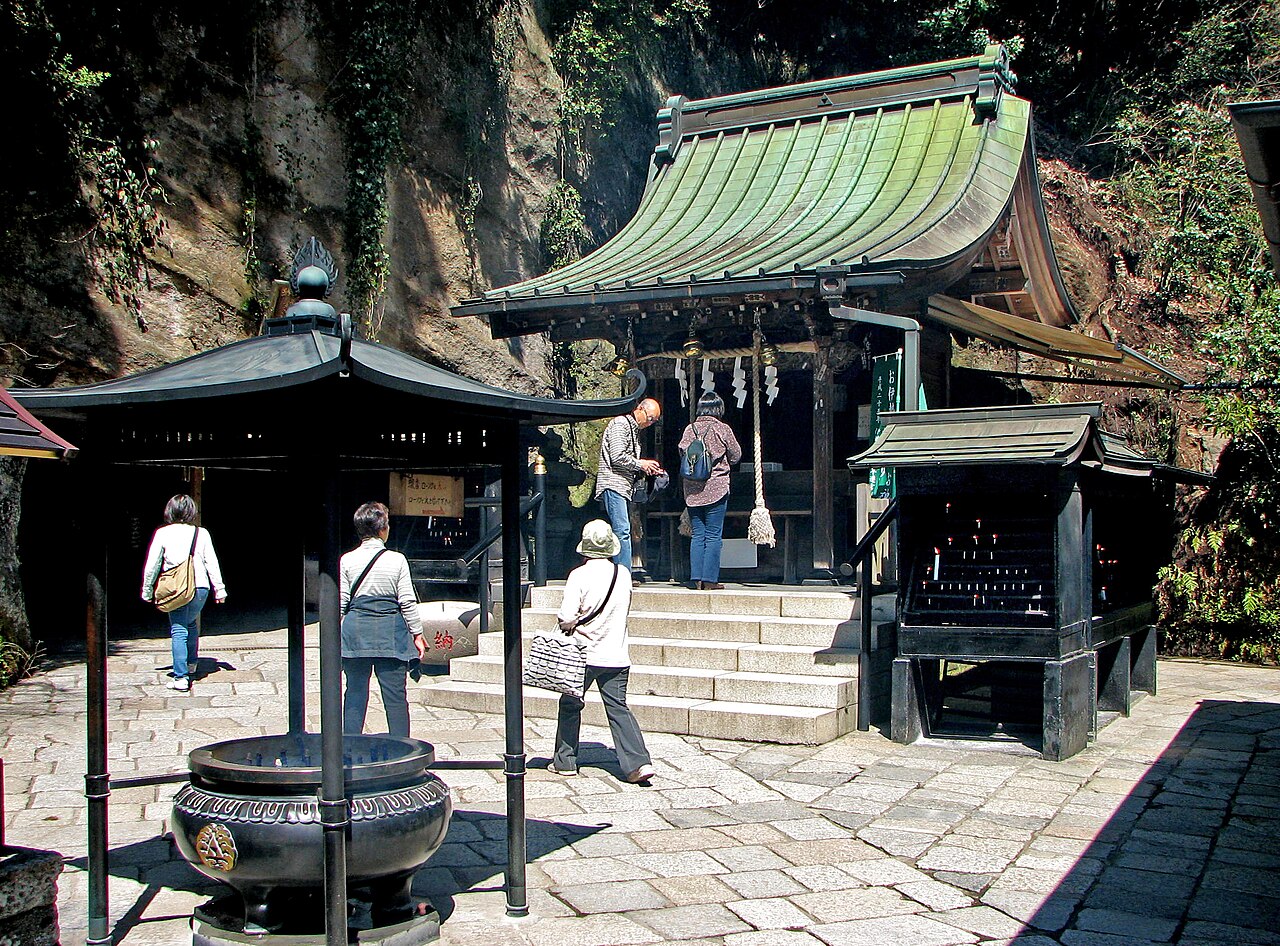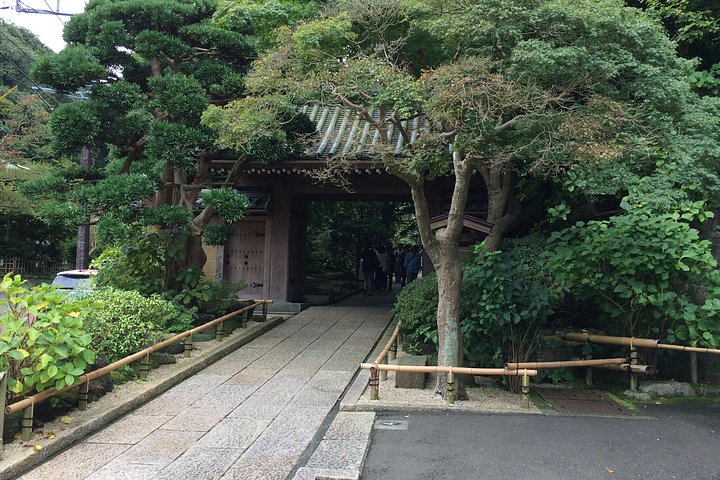
Hase-dera is a temple that rewards slow walking. It climbs a hillside above Yuigahama beach in tiered gardens, with a pond and stone lanterns at the bottom and the main hall near the top. Inside the Kannon Hall stands a gilded wooden statue of the eleven-headed Kannon, about nine metres tall, which tradition says was carved from a camphor log in the eighth century. Nearby, the Jizo-do is crowded with thousands of small stone Jizo figures, offered by parents in memory of children, and the quiet there is moving. A short cave beneath the hill, with carvings of Benzaiten, is lit by lanterns and low enough to make you duck. From the terrace beside the hall you look across the rooftops to the sweep of Sagami Bay, and in June the hillside is covered with hydrangeas that draw long lines. Entry is a modest fee, and a small museum and a cafe overlook the view.
Plan for steps. The route from the entrance to the viewing terrace and the main hall is a series of staircases and paths, so it is not an easy visit with a pushchair or limited mobility, though the lower garden is flat. Take your time at the pond, then climb to the Kannon Hall, where visitors may enter and see the great statue closely in the dim light.
Incense and candles are on sale, and you may buy a small stone Jizo to leave if you wish. The view terrace is the best place to stop for a drink or a sweet from the cafe.
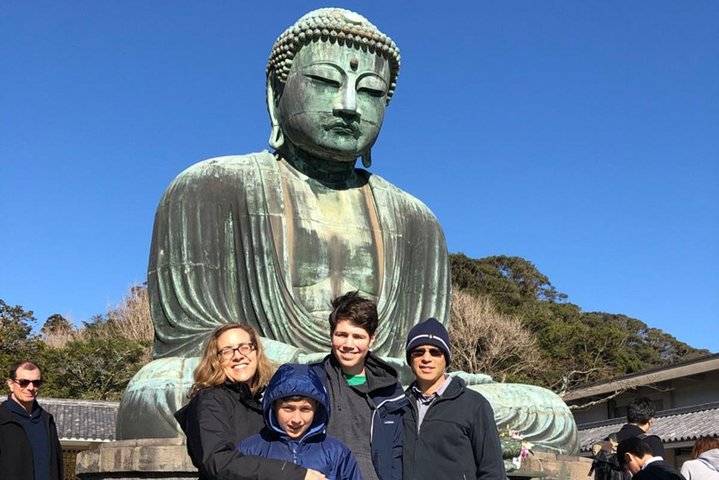
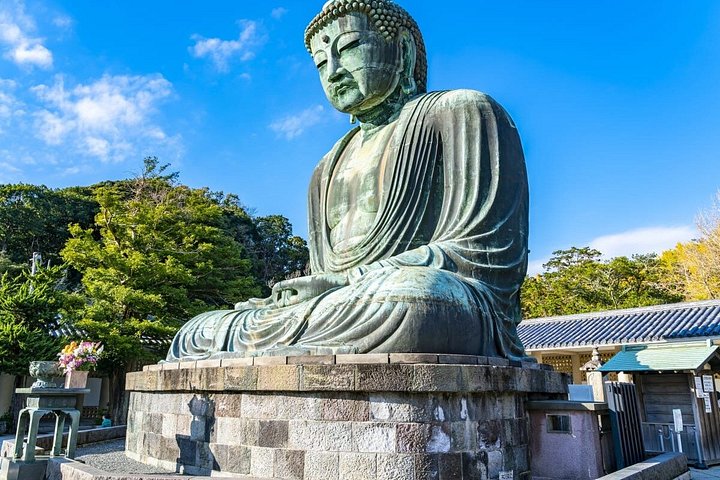
The temple is a five to ten minute walk from Hase Station on the Enoden, and a short walk from the Great Buddha, so the two make a natural half day. Hours are shorter in winter, and the cave and some halls can close in poor weather. The hydrangea season in June is beautiful but crowded, so go on a weekday morning, or choose autumn, when the maples glow and the crowds drop.
Be respectful in the Jizo-do, where photographs are discouraged, and keep voices low. Some paths are slippery after rain. If you have only a day for the Kamakura coast side, Hase-dera is worth more than most temples because it combines garden, art and a view in one compact visit. A guided tour that pairs it with the Great Buddha explains the legends and saves navigation time.
What to expect
The experience
A self-guided climb through terraced gardens to the Kannon Hall, the Jizo-do, a small cave shrine and a hilltop view terrace.
Best time
Weekday mornings, or autumn, to avoid the June hydrangea crowds.
How long
An hour to ninety minutes, plus time for the cafe and the view.
Tips
Wear shoes for steps, avoid photography in the Jizo-do and check weather before you go, as the cave can close in rain.
Quick picks
- Best for
- Visitors who want a garden, a big statue and an ocean view in one stop.
- Families
- Children enjoy the cave and the koi pond, but the many steps are tiring for little legs.
- Couples
- Share a tea on the view terrace, then walk down to Yuigahama beach at sunset.
- Pair with
- The Great Buddha, the Enoden train and the Hase coast lanes.
- Time needed
- About ninety minutes.
Good questions
Is Hase-dera worth visiting if I see the Great Buddha?+
Yes. It is a short walk away and offers gardens, a giant gilded Kannon and a sea view that the Buddha site lacks.
When are the hydrangeas in bloom?+
Usually in June, with a peak in the middle of the month. Expect queues and go on a weekday morning.
How much is entry?+
Admission is a modest fee, a few hundred yen, paid at the gate, with a small extra charge for some special exhibits.
Is the temple accessible?+
Only partly. The lower garden is flat, but reaching the main hall and the view terrace involves staircases.
How do I get there?+
Ride the Enoden to Hase Station and walk five to ten minutes uphill. It is also an easy walk from the Great Buddha.