Kanazawa is a city that rewards staying out after the museums close. The lanes of the teahouse districts are quieter and more atmospheric at dusk, the castle and the garden are lit up in certain seasons, and the city's dining culture, built on fresh seafood and local sake, comes into its own at night. Many visitors treat the evening as a gap between dinner and bed, but with a little planning it can become the most memorable part of the trip.
Dusk in the teahouse districts
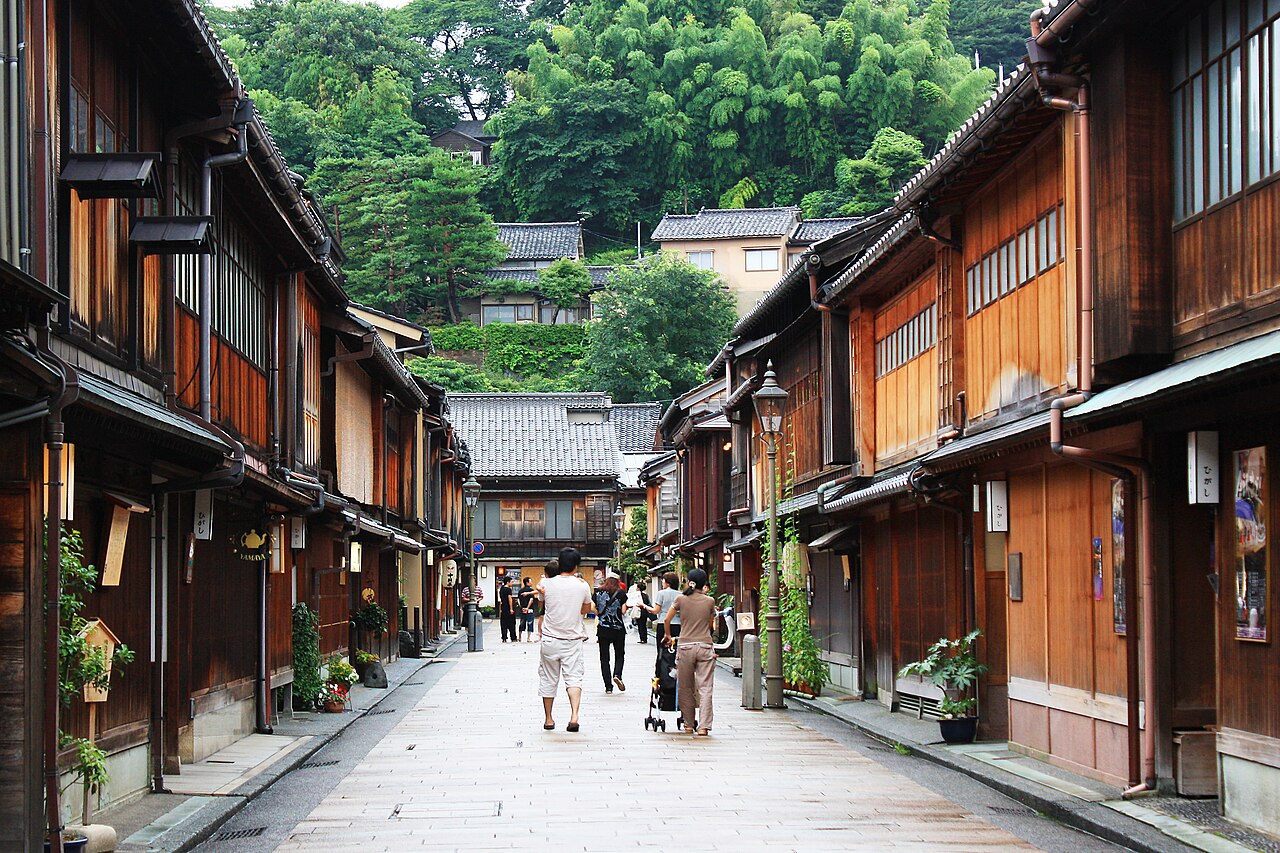
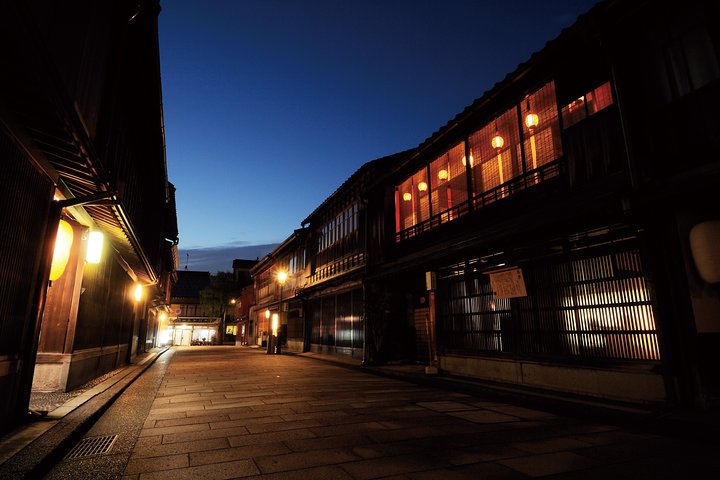
Higashi Chaya and Kazuemachi are at their best at the end of the day, when the day-trippers leave, lamps come on behind lattice windows and the stone lanes are almost empty. Arrive an hour before dark, have a coffee or sweet in a teahouse that stays open, and walk slowly through. Kazuemachi runs beside the river and is especially pretty, and a guided night walk can add stories about the geisha tradition and the Maeda lords. Public rooms in some teahouses close in the afternoon, so check hours if you want to go inside.
A geiko performance
To see the entertainers of Kanazawa at work, book a performance with dinner or a behind-the-scenes session. You will watch traditional dance and music, hear about the training of geiko and, in some formats, join games and conversation. Seats are limited and sessions are scheduled, so book ahead. It is the most formal evening available and suits couples and travellers who want to see the culture rather than merely walk past it.
Izakaya and snack bars
For a more relaxed evening, join a guided izakaya hop. The host orders local dishes, explains the etiquette and brings you into small counters you would hesitate to enter alone. Expect sashimi, grilled fish, simmered dishes and local sake. The tour usually lasts about three hours, starts in the early evening and ends in the central nightlife area, within a short walk of most hotels.
Sake tasting
For a quieter, more educational option, a seated sake tasting with food pairings explains the styles, brewing and serving customs of the region. It is better for couples and small groups who like to learn as they drink, and it is less crowded than a bar tour.
Night tours
A guided night tour with a local meal combines the lit lanes, a walk through the old districts and dinner in one booking. It is an efficient choice for travellers with only one or two evenings and for those who prefer not to plan the details themselves.
Eating late
Kanazawa is not a late-night city in the Tokyo sense. Many restaurants take last orders earlier than visitors expect, and small places close when the master decides to. Make reservations for dinner, especially on weekends, and have a backup plan such as a convenience store or a hotel restaurant. Hotels near the station and in Korinbo can recommend places and call for you.
Getting home
Buses become infrequent in the late evening, so know the last departure or plan to take a taxi. The districts are walkable from central hotels, but stone paths can be slippery when wet, so wear shoes with grip. Carry cash, since small bars rarely accept cards.
Evening etiquette
Keep your voice low in the teahouse lanes, where people live, and ask before photographing anyone. In bars, wait for the host to start the toast, pour for others before yourself and accept a seat charge as part of the price. Do not follow geisha or ask for photographs in the street.
Seasonal evenings
In spring and autumn the castle park and the garden are sometimes lit after dark for special illumination periods, and the city feels lively. Summer evenings are warm and humid, so a cold sake and a river walk are welcome. In winter, the lanes are very quiet, with snow on the roofs and lamps glowing, which many visitors find the most beautiful time to walk through the old districts. Check the dates for illuminations locally, because they change from year to year.
A sample evening
Walk through Higashi Chaya at dusk, eat a light early dinner, join an izakaya tour and finish with a quiet walk home along the river. For a special night, swap the second half for a geiko performance. Both pair well with a morning at Omicho Market, where you can see the seafood that you ate the night before.