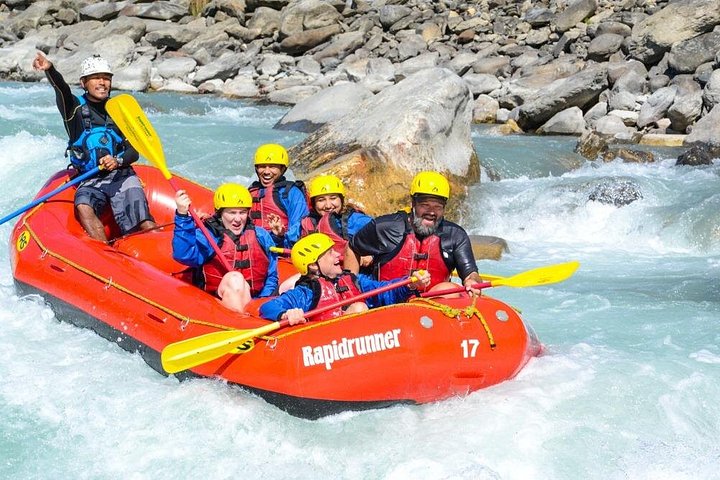
The Bhotekoshi River tumbles out of the Himalaya near the Tibetan border and has long been one of the most thrilling rafting rivers in Nepal. Its rapids are steep, continuous and splashy, with names that tell their own story, and a day on the water suits anyone who wants a proper whitewater adrenaline rush. Tours leave Kathmandu early, drive several hours along a winding mountain road, and meet the river for a safety briefing, paddle practice and a guided run through a series of big rapids. Guides steer and call commands, so you do not need experience, only a willingness to paddle hard and get soaked. A hot lunch on the riverbank is usually included, and the return drive finishes in the late afternoon.
What sets the Bhotekoshi apart is its pace. The river drops quickly through a narrow gorge, and rapids come one after another, leaving little time to rest between them. The water is cold, fed by snowmelt, but the sun in the gorge warms the day and the spray feels like part of the fun. Safety kayakers or additional guides usually accompany the rafts, and the briefing covers what to do if the raft flips or someone falls in. Take it seriously: this is a lively river, and the guides expect everyone to follow their calls.
Water levels shape the experience. After the monsoon the river is high and powerful, while in the dry season it is smaller and more technical. Operators decide whether trips run according to conditions, and some times of year are better suited to beginners. Ask when you book about the current river level and minimum age, and be honest about swimming ability. Life jackets and helmets are provided, and you should wear quick-drying clothes, secure sandals and bring a change of dry clothes for the drive back.
The road trip is part of the day. Kathmandu to the river takes several hours through terraces and small bazaars, and the road can be rough, so travelers who get carsick should plan ahead. Some people choose to combine the rafting with a stop at the Last Resort and its famous bridge, or stay overnight at a riverside camp.
If you want an easier river, Trisuli is closer and gentler. If you want the full thrill, the Bhotekoshi is the one. Book in the dry months, bring a waterproof camera case and expect to be pleasantly exhausted by evening.
What to expect
The experience
A full-day trip with transport, safety briefing, guided whitewater run and a riverside lunch.
Best time
Dry months, when the river is more manageable, with high-water seasons suiting experienced paddlers.
How long
A full day, including several hours of driving each way.
Tips
Wear quick-drying clothes and secure sandals, bring dry clothes and tell the guides honestly about swimming ability.
Quick picks
- Best for
- Thrill seekers who want real whitewater without a multi-day expedition.
- Families
- Check the minimum age and river level. Many teens manage well, but young children are better on a gentler river.
- Couples
- A shared adrenaline day, followed by a relaxed riverside lunch.
- Pair with
- Last Resort bungee or a night at a riverside camp.
- Time needed
- A full day.
Good questions
Do I need rafting experience?+
No. Guides steer and call commands, but you must paddle and follow instructions.
How rough are the rapids?+
The Bhotekoshi is steep and continuous. Ask the operator about current levels and suitability.
Is equipment provided?+
Yes, usually life jackets, helmets and paddles. You bring quick-drying clothes and sandals.
What is the minimum age?+
It varies by operator and water level. Confirm when booking.
How does it compare with the Trisuli?+
The Trisuli is closer and gentler. The Bhotekoshi is wilder and a longer drive.