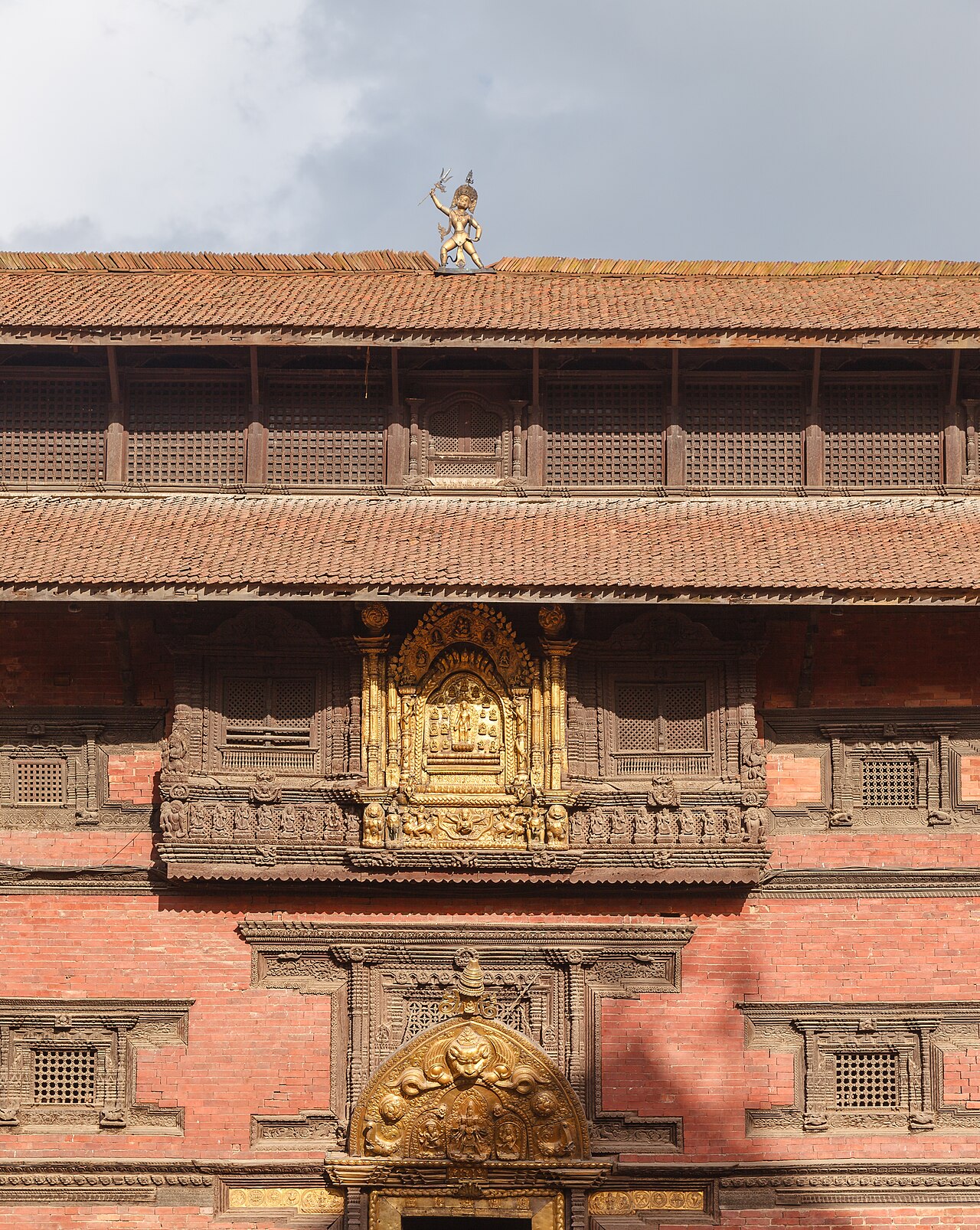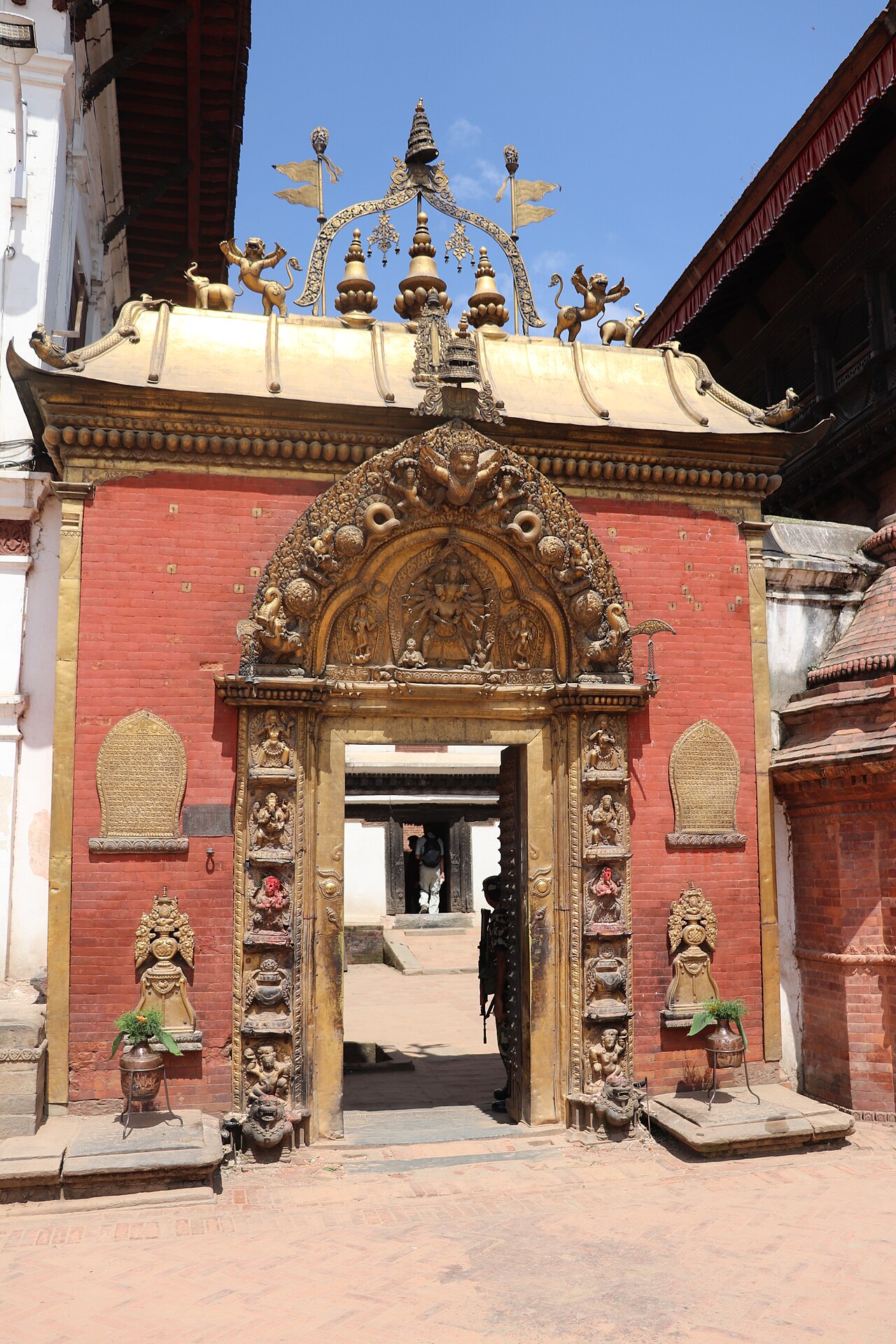
Kathmandu Durbar Square, also called Hanuman Dhoka or Basantapur, is the old royal plaza of the city and one of the seven monument zones that make up the UNESCO World Heritage listing for the Kathmandu Valley. Malla kings and later Shah rulers lived and were crowned here, and the square still feels like a stage set: tiered pagoda temples with carved struts, the red-brick palace courts of Hanuman Dhoka, the Kumari Ghar where the Living Goddess is housed, and the fierce stone image of Kal Bhairav. The earthquake of 2015 brought down several buildings, and restoration continues, so you will see scaffolding on some monuments alongside rebuilt ones such as Kasthamandap, the timber pavilion said to have given Kathmandu its name. The square is ticketed for foreign visitors, with a modest fee, and a guide turns a confusing jumble of shrines into a readable story of kings, gods and trade routes. Go early, before tour groups arrive, and let the side lanes toward Indra Chowk and Asan draw you into the working old town.
History is the point here. The palace complex grew over several centuries, with the Malla kings of the 15th to 18th centuries adding temples and courtyards, and the Shah dynasty later using it as a royal residence until the family moved to a newer palace. Nepal's kings were still crowned at Hanuman Dhoka in the twentieth century. The Taleju Temple, dedicated to the royal family's tutelary goddess, rises above the square as its tallest structure, and the Kumari Ghar is home to a young girl worshipped as a living goddess, who appears briefly at a window at certain times. Respect the signs that ask for no photography of her.
To see it well, enter from the Basantapur side, look at the Gaddi Baithak and the courtyards, then circle the temples at Maru Sattal and Kasthamandap. Wear flat, comfortable shoes, since stone is uneven and wet in the monsoon. Guides at the gate are licensed; agree on terms first or book a day tour in advance that bundles the square with other valley sites. Bring small bills for temple offerings, and expect friendly sellers, pigeons and the occasional persistent tout.
Best timing is early morning, when the light is soft, the square is quieter and shopkeepers are opening. Late afternoon is lively, with locals gathering on temple steps. Check current opening arrangements and restoration areas before you go, because parts of the complex can be fenced off. Nearby you can reach Thamel on foot in around fifteen minutes, which makes this an easy half day combined with the Garden of Dreams area or a coffee break in the old town.
What to expect
The experience
A self-guided or guided walk through the open-air square, with entry to some palace courtyards and museum areas depending on current restoration.
Best time
Early morning for soft light and thinner crowds, or late afternoon when local life fills the temple steps.
How long
Allow two to three hours including the side lanes toward Indra Chowk.
Tips
Hire a licensed guide or book a valley tour, carry some cash for the entry fee, and dress modestly with shoulders and knees covered.
Quick picks
- Best for
- First-timers who want the old royal city and its stories in one compact, walkable place.
- Families
- Children enjoy the pigeons and the busy square, but keep close hold in crowds and uneven stone.
- Couples
- Go at golden hour, then wander the old lanes toward Asan Bazaar for tea and street snacks.
- Pair with
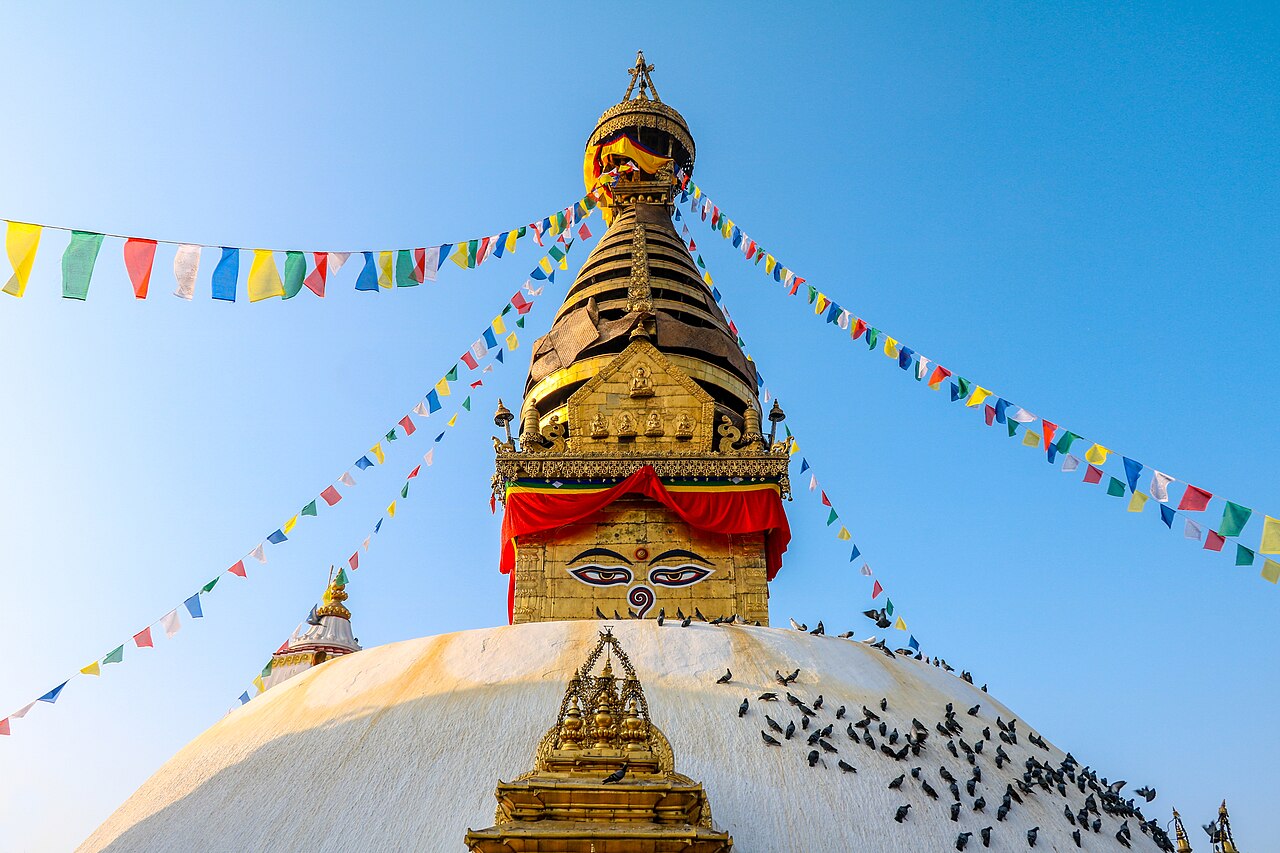
- Swayambhunath for a hilltop view, or the Garden of Dreams for a calm break after the crowds.
- Time needed
- Two to three hours; a half day if you combine it with the old bazaars.
Good questions
Do I need a ticket for Kathmandu Durbar Square?+
Yes, foreign visitors pay a modest entry fee at the ticket booths, while Nepali citizens and some regional visitors enter on different terms. Keep your ticket with you, as staff may check it inside the complex.
Is the square still damaged from the 2015 earthquake?+
Several monuments were damaged and many have since been rebuilt, though some restoration work continues. Expect a mix of finished temples and scaffolding, which does not stop the square from being worth a visit.
Can I see the Living Goddess?+
The Kumari appears at an upper window of her residence at certain times, and the courtyard is open to visitors. Photography of her is not allowed, so enjoy the moment rather than the camera.
Is a guide worth it?+
For most first-time visitors, yes, because the square has dozens of monuments with layered history that signs do not fully explain. A guided half-day tour is a good value and often combines the square with other valley sites.
How far is it from Thamel?+
It is roughly a fifteen-minute walk from the heart of Thamel through busy streets, or a short taxi ride. Walking is more interesting if you do not mind the traffic and crowds.