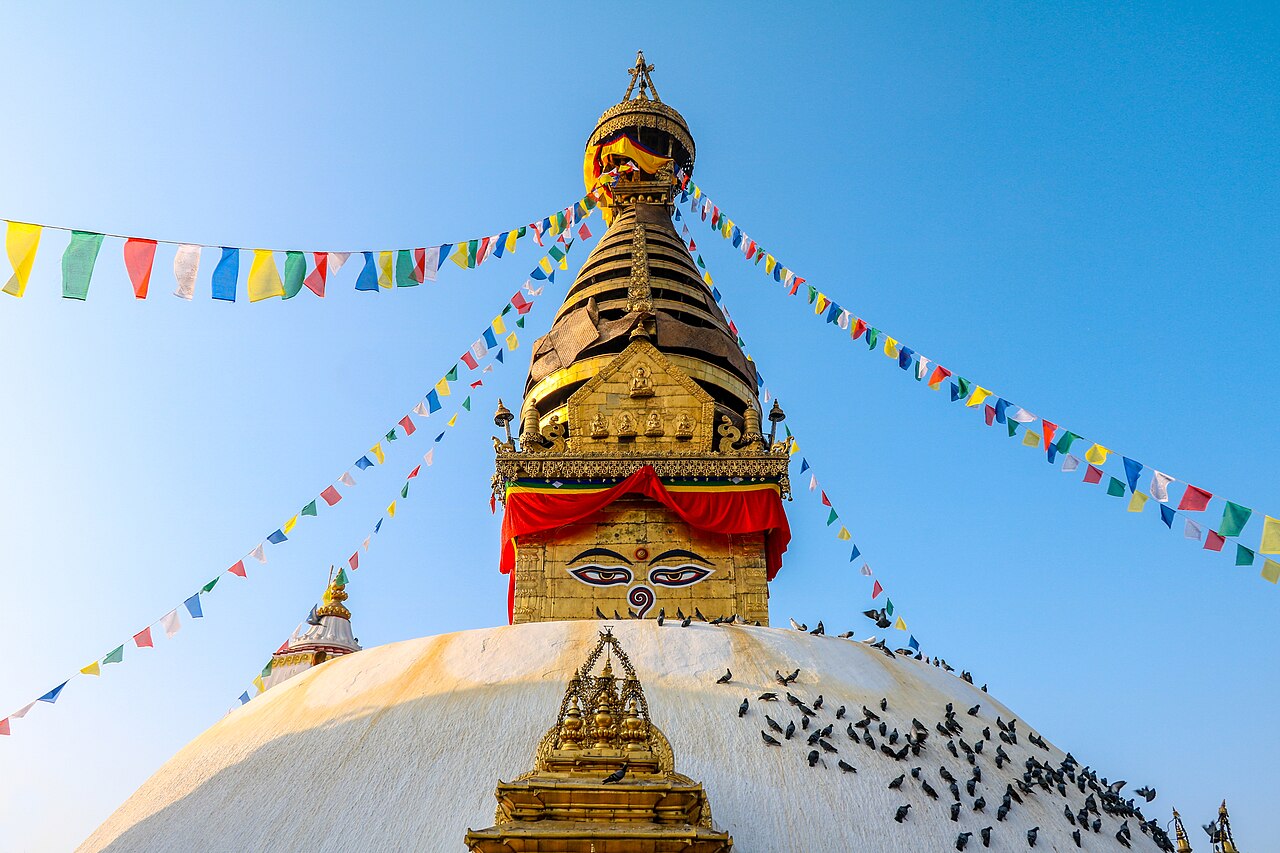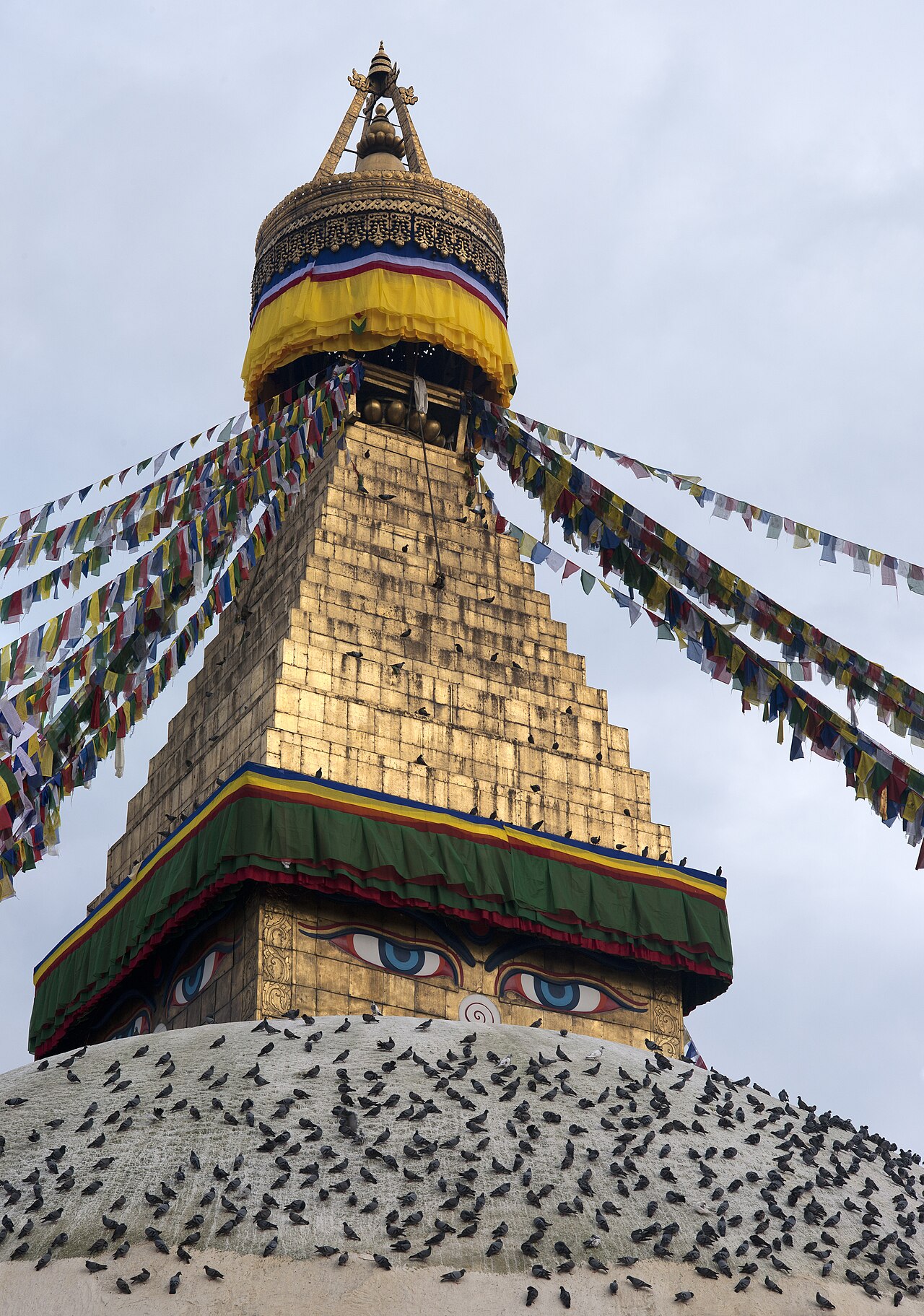
Boudhanath, or Boudha, is a vast white stupa in the northeast of Kathmandu and the center of Tibetan Buddhism in Nepal. Its huge whitewashed dome carries a golden tower painted with the all-seeing eyes of the Buddha and strings of prayer flags that fan out from the spire like a tent. A broad plaza circles the stupa, and pilgrims walk clockwise around it, spinning prayer wheels, murmuring mantras and lighting butter lamps. The surrounding streets are filled with monasteries, rooftop cafes, thangka painters, bookshops and shops selling singing bowls and incense. Boudhanath is part of the UNESCO World Heritage listing for the Kathmandu Valley, and foreign visitors pay a modest entry fee to enter the plaza. It is a living religious site, and the best experience is simply to join the circuit slowly.
Many Tibetans settled around Boudha after 1959, and the neighborhood has grown into a major center for Tibetan monastic life, with several large monasteries and schools. The stupa itself is believed to have been built many centuries ago and has been restored several times, including after earthquake damage in 2015, when the spire was repaired and reconsecrated. The three ringed levels of the base and the thirteen steps of the tower have symbolic meanings, and guides can explain them if you want depth.
To enjoy the place, plan on walking at least one clockwise circuit and then climb to a rooftop cafe to watch the scene from above. Dawn brings pilgrims and monks chanting, and the hour around sunset brings lamps and a gentle crowd. Avoid midday heat. Dress modestly with covered shoulders and knees, do not step over offerings, and ask before photographing people at prayer. You can also visit one of the monasteries, where a quiet prayer hall is often open.
Boudhanath is close to the airport and Pashupatinath, so many visitors combine the two on a morning tour. Taxis are easy from central Kathmandu, though traffic can be slow. The area has good hotels and guesthouses if you want to stay nearby, and it is a calmer base than Thamel. Prices for souvenirs are negotiable, and quality varies, so shop at established stores for singing bowls and thangkas.
What to expect
The experience
A clockwise walk around the stupa on the plaza, with optional time in monasteries, rooftop cafes and shops.
Best time
Dawn or the hour before sunset for chanting, butter lamps and the best light.
How long
Allow ninety minutes to two hours, or longer if you add a monastery visit.
Tips
Walk clockwise, dress modestly, ask before photographing people, and shop at established stores.
Quick picks
- Best for
- Visitors who want a calm, atmospheric introduction to Tibetan Buddhist culture.
- Families
- Open and safe, with pigeons and prayer wheels that children like, but keep an eye on traffic near the entrance.
- Couples
- Take a rooftop table for dinner and watch the lamps and chanting at dusk.
- Pair with
- Pashupatinath Temple, a short ride away, for a morning of two very different sacred sites.
- Time needed
- Two hours, or an evening if you stay for dinner in the area.
Good questions
Is Boudhanath free to enter?+
Foreign visitors pay a modest entry fee at the plaza gate, while Nepali citizens enter on different terms. Keep your ticket for the duration of your visit.
Which direction do I walk around the stupa?+
Clockwise, following the pilgrims. Move at a slow pace and do not cut across the flow of people.
When is the best time to visit?+
Dawn and dusk are most atmospheric, with chanting, butter lamps and gentle light. Midday is hot and less peaceful.
Can I go inside a monastery?+
Many monasteries near the stupa welcome respectful visitors to the main hall during open hours. Remove shoes, dress modestly and keep quiet during prayers.
Is it far from the airport?+
It is only a short drive from Tribhuvan International Airport, which makes it a convenient first or last stop. Allow extra time for traffic.