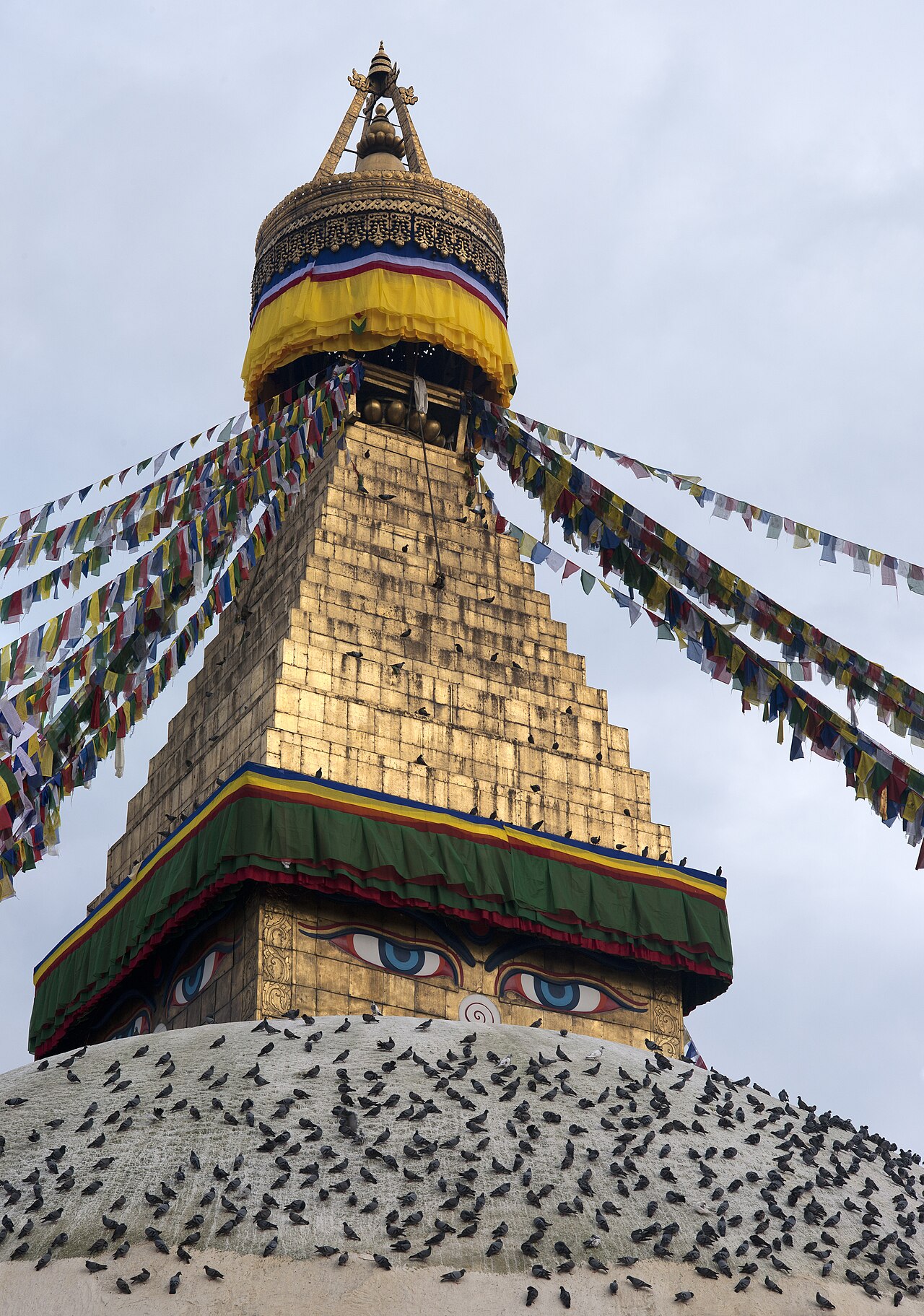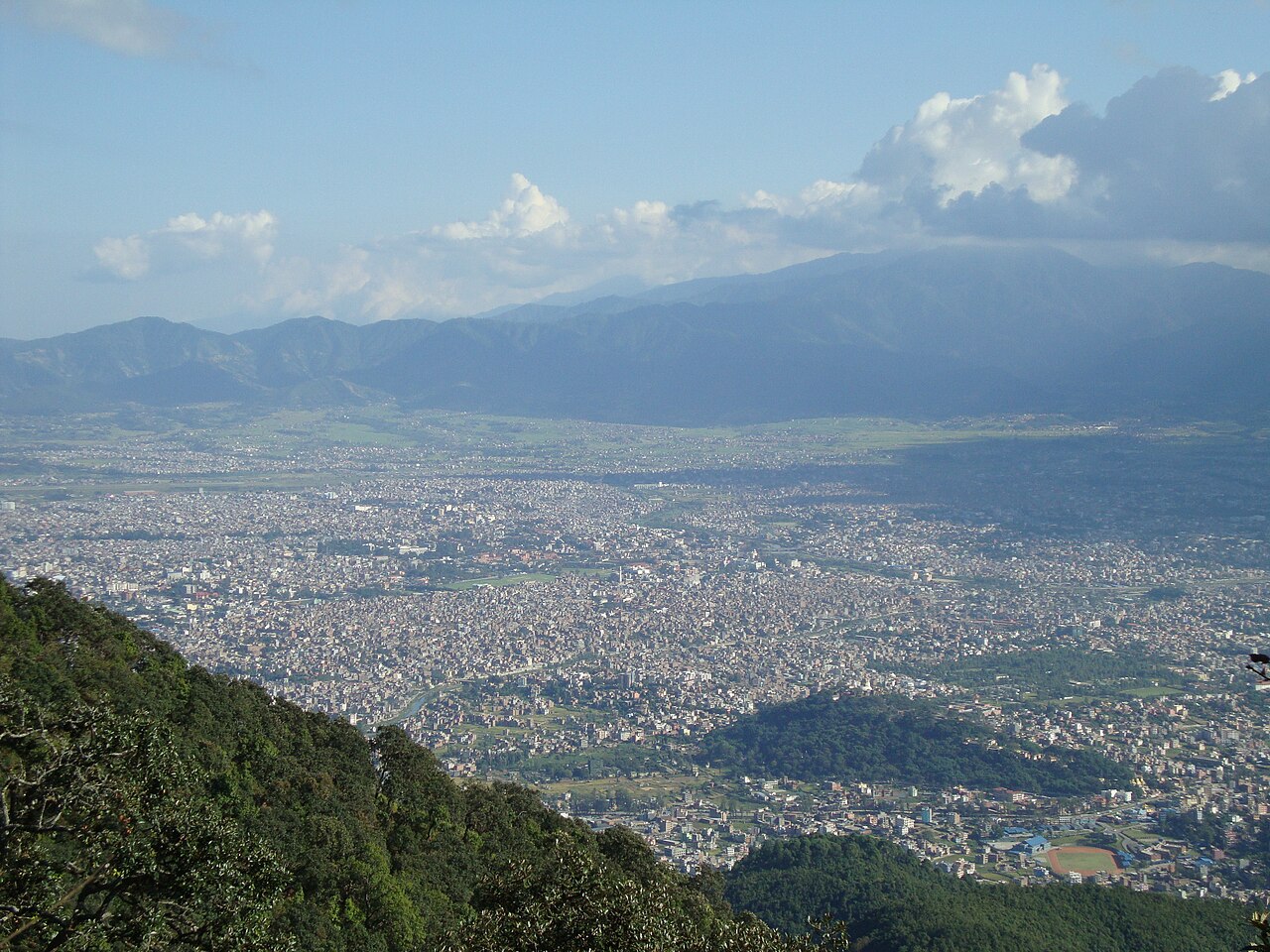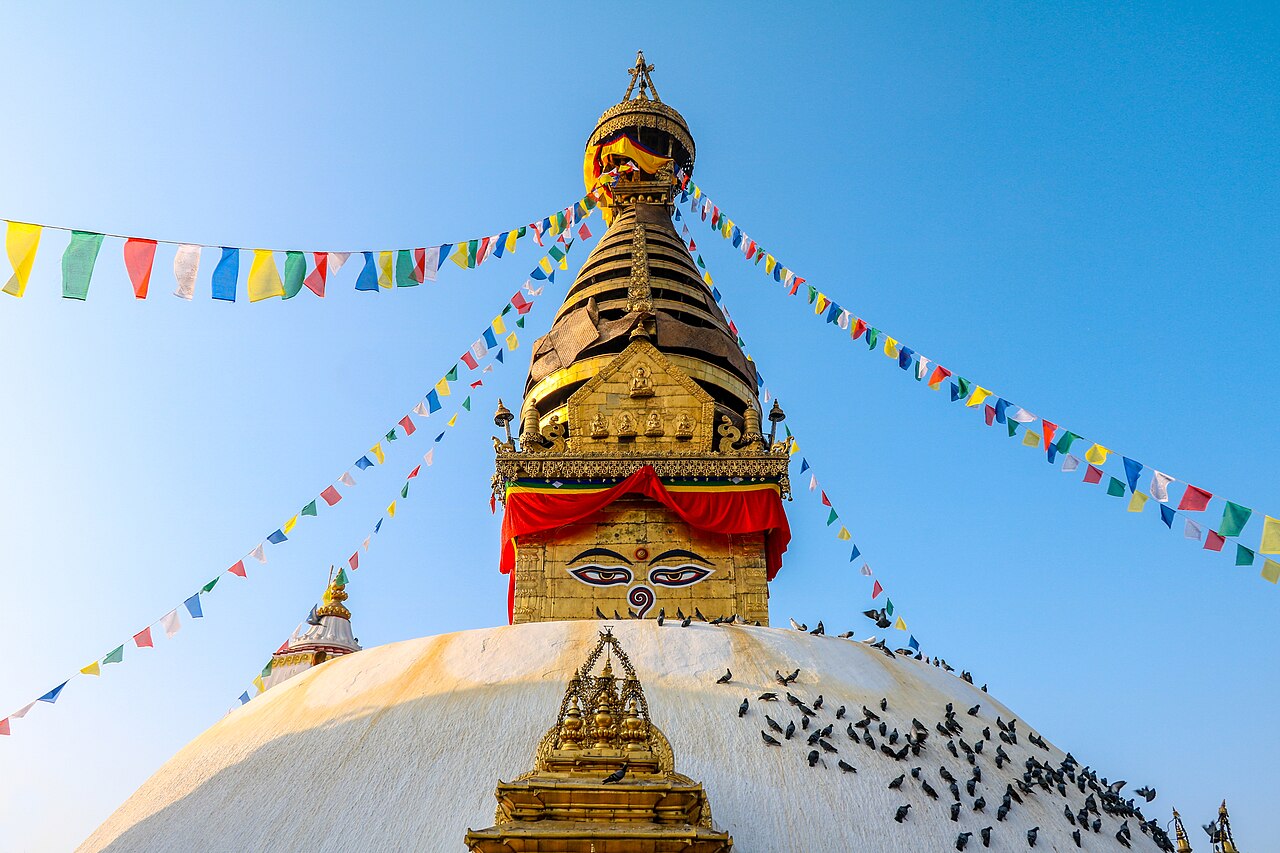
Swayambhunath is a Buddhist and Hindu pilgrimage site on a wooded hill west of central Kathmandu, and one of the valley's UNESCO monument zones. Its great white dome is topped with a gilded spire and the painted eyes of the Buddha, which look out in four directions. The site is far older than most of the valley's monuments, with traditions placing its founding well over a thousand years ago, and it remains a working place of worship where Tibetan Buddhists and Newar Hindus circle the stupa daily. Visitors usually climb the long eastern stairway lined with Buddha statues, though a road reaches the western side. The macaques that give the hill its nickname, the Monkey Temple, roam freely and can be bold, so keep food and loose items out of reach. At the top you find prayer wheels, small shrines, a lively market of souvenirs and singing bowls, and wide views over the rooftops of the valley.
The stupa's symbolism rewards a little explanation. The dome represents the world, the thirteen rings of the spire the stages toward enlightenment, and the painted eyes are said to see in all directions, with a curl between them that is not a nose but the number one in Nepali script. Pilgrims walk clockwise, spinning the prayer wheels around the base as they go. Beside the stupa are the Harati Temple, dedicated to the goddess associated with protecting children from illness, and a small museum and monastery areas. The earthquake of 2015 damaged some structures on the hill, and rebuilding has continued, so you may see repair work in places.
Plan on climbing the eastern stairs from the base, which gives the classic approach through the rows of statues, then leave by the western road where taxis wait. The climb is steep but short, and there are places to pause. Wear sturdy shoes and carry water. An entry fee is charged to foreign visitors at the gate. Keep a respectful pace and do not touch the sacred objects. A local guide adds a lot, as the layers of Buddhist and Hindu belief are not obvious from signs alone.
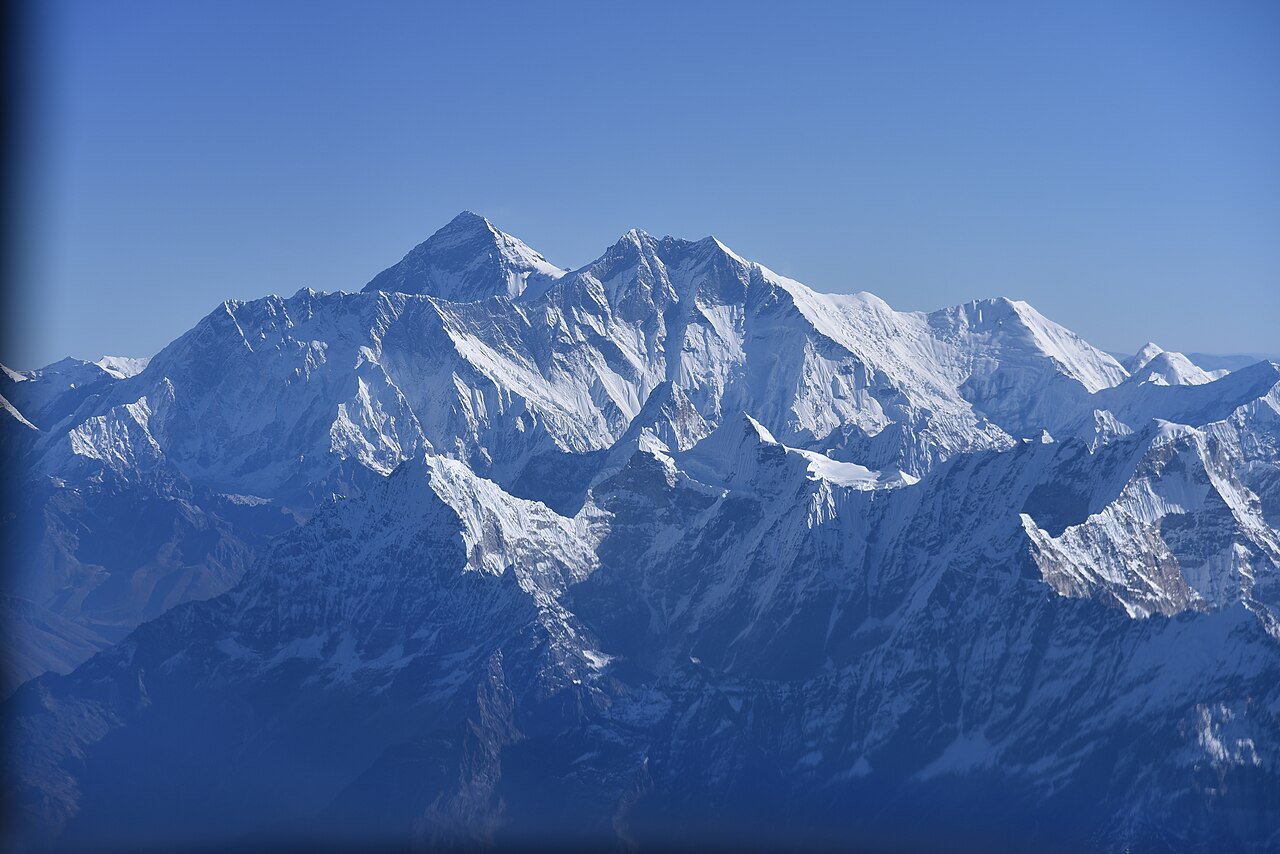
Sunrise and the last hour before sunset are the best times, when light turns the dome gold and prayer flags glow. Midday can be hot and busy with tour buses. Because the hill is high, it is a good place to check whether the mountains are visible, especially in the clear air of autumn and winter, which is also the season for pleasant temperatures in Kathmandu.
What to expect
The experience
A climb up the eastern stairs, then a walk around the stupa and hilltop shrines, with a ticket check at the entrance.
Best time
Early morning or the hour before sunset, when the light is warm and the crowds thinner.
How long
Plan on about ninety minutes to two hours including the climb and the viewpoints.
Tips
Hold bags and sunglasses closed near the monkeys, wear shoes that grip, and walk clockwise around the stupa.
Quick picks
- Best for
- Anyone who wants an easy-to-reach spiritual landmark with a big view over the valley.
- Families
- Children love the monkeys, but keep food hidden and stay close, as the animals can snatch things.
- Couples
- Arrive for sunset, watch the lamps being lit and walk the kora as the valley lights come on.
- Pair with
- Kathmandu Durbar Square or the Garden of Dreams on the same day, both within a short drive.
- Time needed
- Allow two hours, more if you linger over the viewpoint or the market stalls.
Good questions
Why is it called the Monkey Temple?+
Troops of rhesus macaques live on the hill and are considered sacred by many visitors. They are used to people and can be cheeky, so do not feed or tease them.
How many steps is the climb?+
The eastern stairway is commonly described as having a few hundred steps, and it is steep but manageable at a slow pace. If you prefer, a road leads to the western gate for a shorter walk.
Is there an entry fee?+
Foreign visitors pay a modest ticket at the entrance, while Nepali citizens enter differently. Keep your ticket handy in case staff ask to see it.
Can I see the Himalaya from here?+
On clear days, mostly in autumn and winter, there are distant views of snow peaks beyond the valley rim. Morning is your best chance, before haze builds.
Is it suitable in the monsoon?+
It is open year round, but the steps are slippery in heavy rain and views are often clouded. Dry-season visits are far more rewarding.