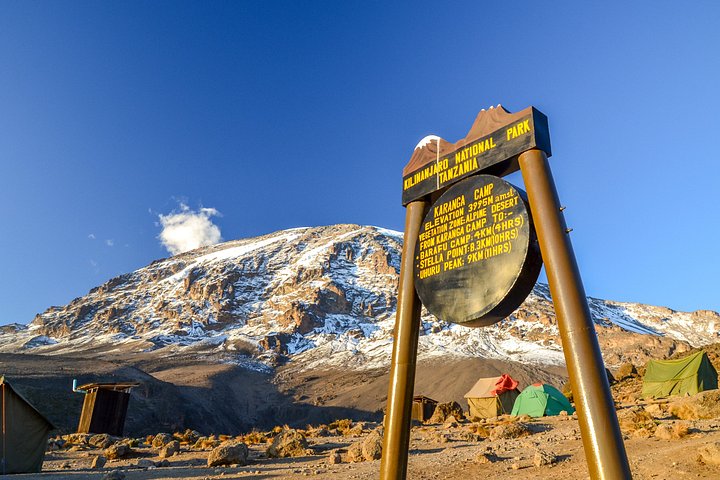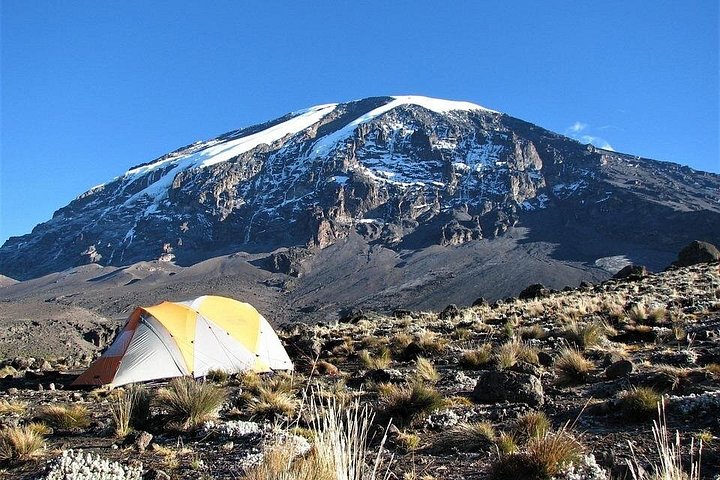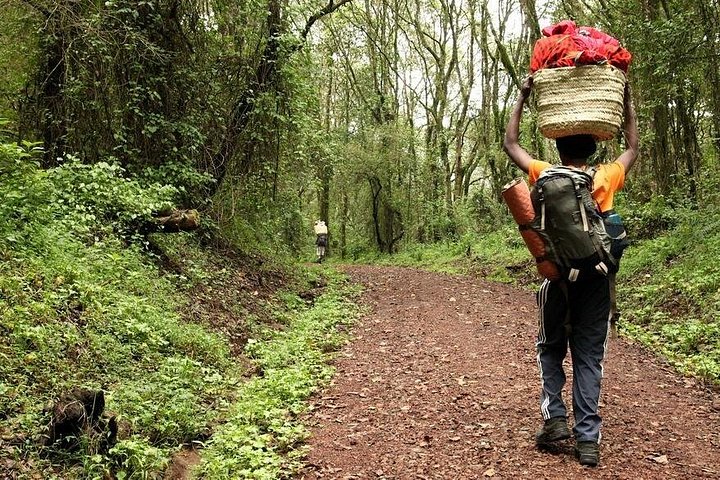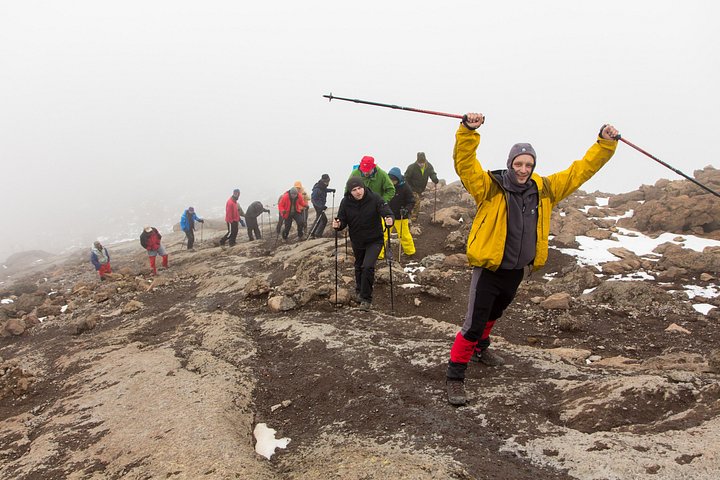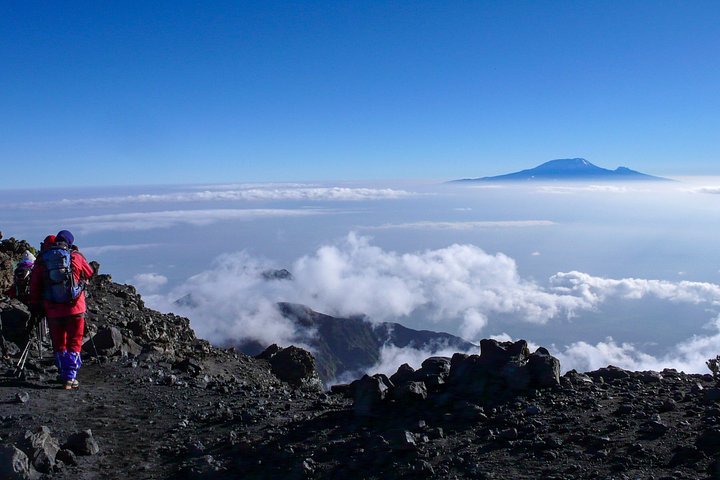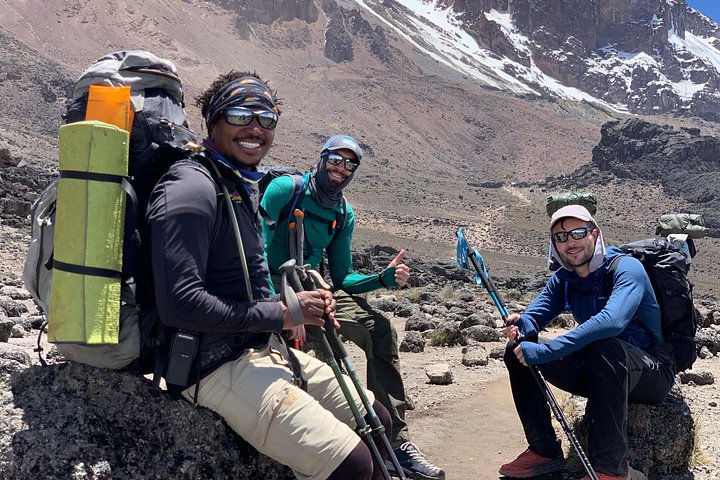
The Northern Circuit is the longest and arguably the most rewarding route on Kilimanjaro. It begins in the west like Lemosho, crosses the Shira Plateau and then, instead of dropping to Barranco, heads east around the northern flank of the mountain. Over several days you walk an arc beneath Kibo's northern face, through landscapes few climbers ever see, before swinging back to the standard summit approach at the saddle. Most itineraries take nine or ten days, and that extra time is the secret to the route's reputation for high summit success. The gentle pace is the main attraction. Every day involves modest altitude gain, and camps are spaced to allow plenty of rest. You also see the mountain from angles that Machame, Marangu and Umbwe walkers never do: wide moorland, quiet valleys, bare alpine desert and long views north into Kenya. Wildlife is rare, but the silence and sense of remoteness are special, and on a clear day the cone of Kibo seems to float above a sea of cloud. This route suits trekkers who want to maximise their chance of success and are willing to spend more time and money. It is also a good choice for people who dislike crowds, because the northern section is among the least visited parts of the park. The cost is higher than a six- or seven-day trek, since you need more days of food, fees and staff.
The summit day follows the usual pattern: a midnight start from Kibo Hut or a high camp, a slow climb through the cold dark up the scree to Gilman's Point or Stella Point and then along the rim to Uhuru Peak. By this stage your body has had more days at altitude than on shorter routes, and many guides say that summit night feels more manageable as a result.
Descent is usually by the Mweka route, the main descent path for the southern side, which means you finish in the forest above Moshi. This is a long walk of several hours, and trekking poles are helpful for tired knees. The final stretch through rainforest feels like a reward.
Planning is more important for long routes. Make sure your leave dates and flights allow a buffer, because bad weather or a rest day may extend the itinerary. Check that your travel insurance covers trekking to 6,000 metres and evacuation. Ask the operator how they manage supplies over many days, how many porters will accompany you and how food is kept safe and varied. A longer trek makes meals and morale more important.
Because the route is quiet and slow, it is a good fit for photographers and for people who like to take their time. Pair it with relaxation on the coast or a safari afterwards, and keep in mind that our Arusha pages has day trips such as Materuni and Chemka that make a gentle recovery after nine or ten days on the mountain.
A few extras make long treks more comfortable. Bring a book, a power bank and a small speaker or journal for the evenings, because daylight ends early at camp and there is a lot of time in the tent. Pack spare socks and base layers for the long days, ask the cook about snacks and hot drinks and agree in advance how the crew tipping will be handled. Good morale across ten days is a real contributor to success.
What to expect
The experience
A guided, tented trek that crosses Shira, loops around the north side of Kibo and finishes with a summit attempt and descent to Mweka Gate.
Best time
January to early March and June to October for the clearest views.
How long
Nine or ten days on the mountain, plus arrival and recovery time.
Tips
Book extra buffer days around your flights, check your insurance covers trekking at altitude and bring layers for long, cold evenings.
Quick picks
- Best for
- Trekkers who want maximum acclimatization and the quietest slopes.
- Families
- Best for fit adults and older teenagers, given the length of time on the mountain.
- Couples
- A long shared journey with remote camps and big skies.
- Pair with
- Coast or safari time afterwards, or relaxed days in Moshi.
- Time needed
- Eleven to twelve days including travel and rest.
Good questions
Why take the Northern Circuit?+
It is slow and gradual, which gives your body time to adapt and generally leads to a high success rate.
Is it much more expensive?+
Yes, because it needs more days of fees, food and staff, but many climbers feel the extra days are worth it.
Is it crowded?+
No. The northern section is one of the least visited parts of the mountain.
How hard is summit night?+
It is still cold and long, but many climbers find it more manageable after extra days at altitude.
Where does the route end?+
Most itineraries descend via Mweka Gate on the southern side.