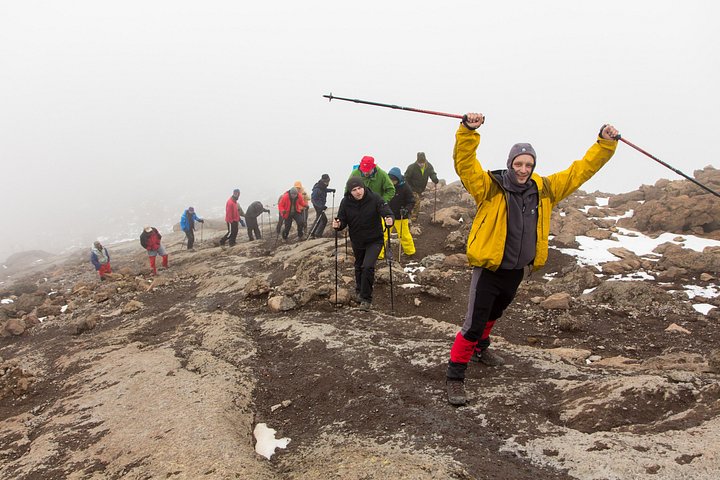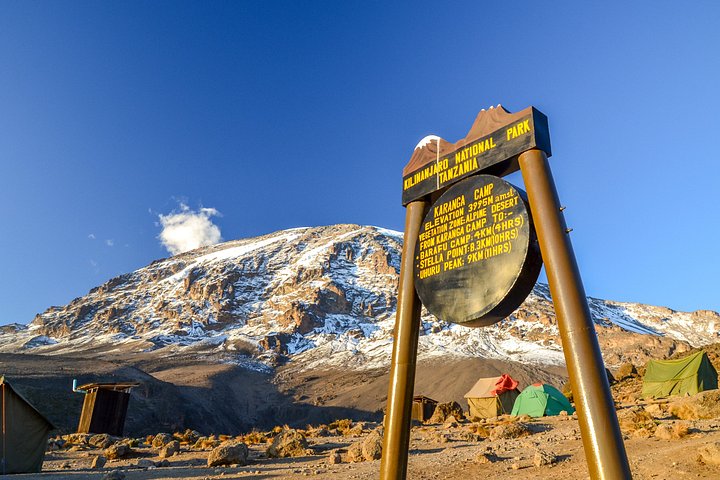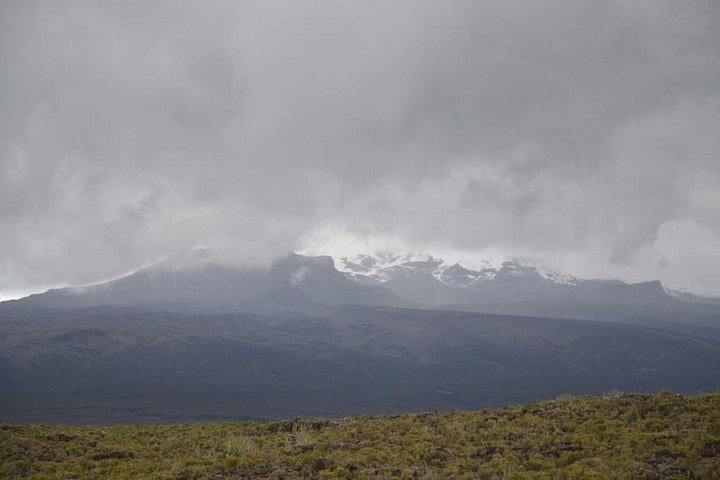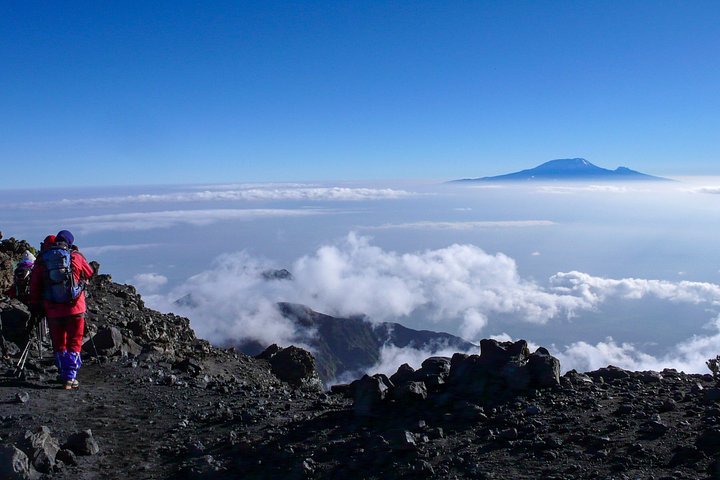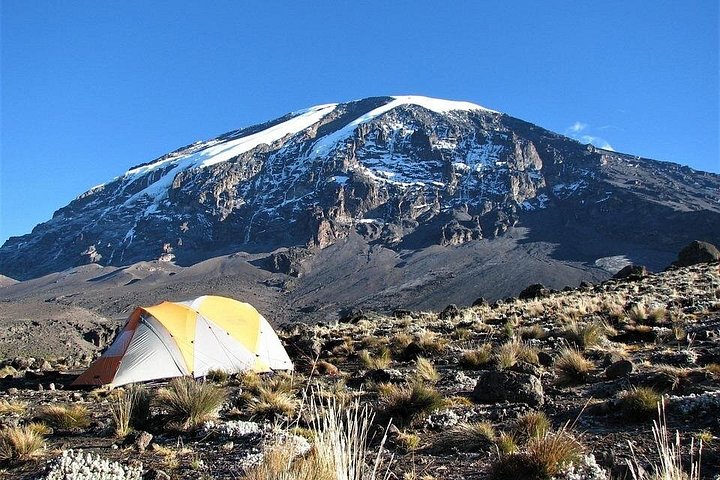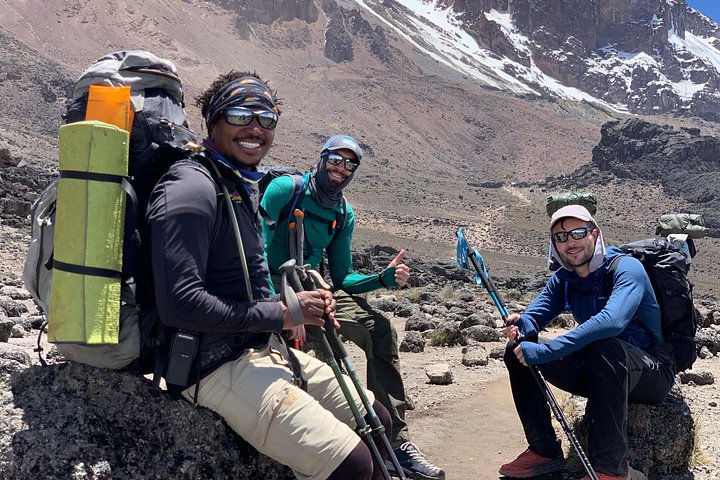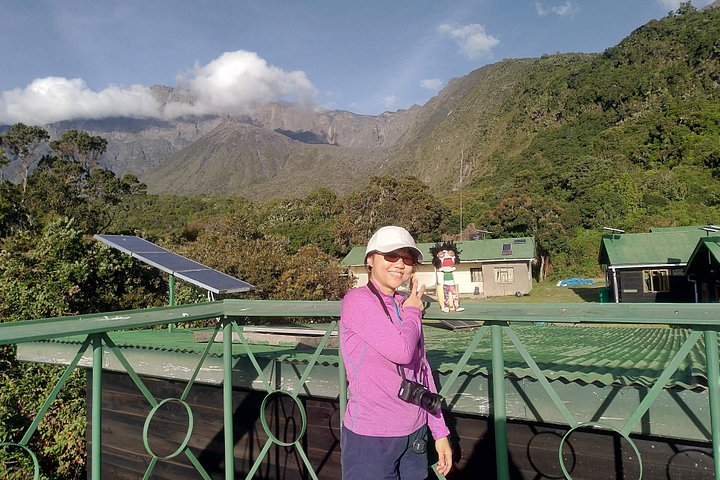
Mount Meru rises to 4,566 metres above Arusha National Park and is the second-highest mountain in Tanzania. It is a stratovolcano with a broken crater, and its sharp rim and the ash cone inside are a striking sight in their own right. Many climbers treat it as a warm-up for Kilimanjaro, and a four-day trek is a good way to test your fitness, your boots and your response to altitude before attempting the bigger mountain. It is also a rewarding climb in its own right. The route starts at Momella Gate on the eastern side of the park. On the first day you walk through forest and savanna with an armed park ranger, because buffalo, giraffe, warthogs and other animals live along the lower trail. That is a rare bonus on a mountain climb: it feels like a walking safari. You pass fig trees, open glades and views toward Kilimanjaro, then climb to Miriamba Hut, where you sleep in a simple shared hut. The second day climbs steeply to Saddle Hut at around 3,500 metres, below the summit cone, and many groups make an afternoon acclimatization walk to Little Meru. The summit attempt begins around midnight on day three, following a narrow crater rim to Socialist Peak, with a dramatic sunrise over Kilimanjaro if the sky is clear. Descent is back to Miriamba and then the gate on day four.
Fitness needs are real but lower than for Kilimanjaro. The route is steep, particularly the climb to the summit along the rim, which has some exposed sections that require careful footing and a head for heights. Guides will go slowly and take care, but it is not a stroll. Poles are very useful, as are sturdy boots and warm clothing for the cold summit night.
Meru is on the Arusha side of the region and the park is covered by the Arusha National Park Day Trip on our Arusha pages. This market includes the multi-day trek, which is a different experience: you stay in huts, climb to altitude and need a guide and ranger. Many operators arrange pickups from both Moshi and Arusha, so ask about the best option for your base.
Weather windows follow the usual pattern. The dry months, January to early March and June to October, are the best, while April and May are wet and the trail can be slick. Visibility at the top depends on cloud, and early mornings are the best time to see Kilimanjaro rising above the plain.
Combine Meru and Kilimanjaro for the full experience. A common plan is to climb Meru first, rest for two days and then start a Kilimanjaro route, which helps with acclimatization. Ask your operator about packages that link the two, and about the fees for park entry, huts and rangers, which are charged per day and change from time to time. Tips for the ranger and the crew are customary.
Altitude is milder than on Kilimanjaro, but it still matters. Drink plenty of water, walk slowly on the steep sections and tell your guide if you feel dizzy or sick. A pulse oximeter check at the huts is a useful habit, and you should carry your own medication and a small first-aid kit. Photographers should bring a lens that can capture both wildlife and distant peaks.
What to expect
The experience
A guided four-day trek from Momella Gate with a park ranger, overnight stays in mountain huts and a pre-dawn summit climb.
Best time
January to early March and June to October for drier trails.
How long
Four days, including a midnight summit attempt on day three.
Tips
Bring poles, warm layers and a head torch, and be ready for exposed sections near the summit.
Quick picks
- Best for
- Fit trekkers who want a serious climb or a Kilimanjaro warm-up.
- Families
- Better for fit teenagers and adults than for young children.
- Couples
- A shared adventure with wildlife and big views.
- Pair with
- A Kilimanjaro climb afterwards, or a rest day in Moshi.
- Time needed
- Four days plus a rest day.
Good questions
Is Meru a good warm-up for Kilimanjaro?+
Yes. It gives you altitude experience and a chance to test your gear and fitness.
Will I see wildlife?+
Often on the first day, with a ranger, including buffalo, giraffe and monkeys.
Is the summit difficult?+
The final rim is narrow and exposed in places, so you need steady footing and a good head for heights.
Where do we sleep?+
In shared mountain huts at Miriamba and Saddle.
Can I start from Moshi?+
Yes, many operators collect from both Moshi and Arusha.