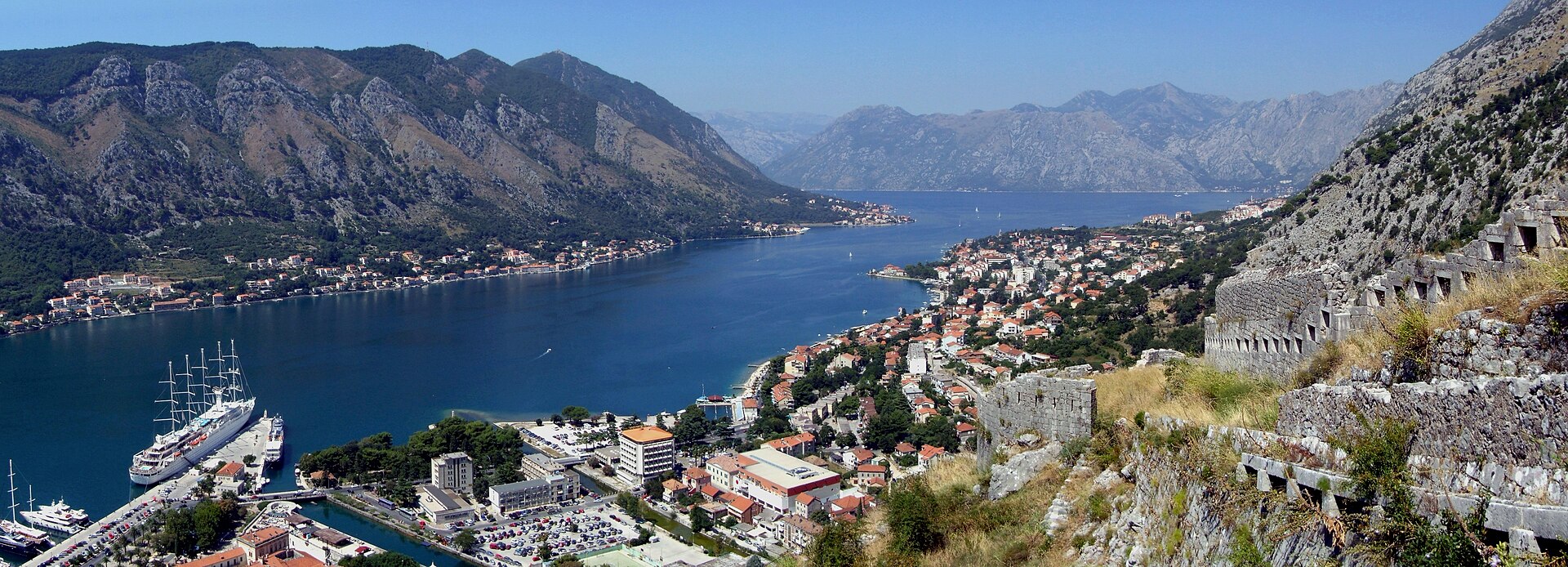
Most visitors see Kotor on foot and by boat, but the bay and the mountains behind it are a playground for anyone who likes to be active. The water is calm and sheltered, the mountains rise straight from the shore and the climate allows outdoor days for much of the year. This guide covers the best active options around the bay, how to choose between them and how to stay safe in the heat.
Hiking above the town
The classic first hike is the climb up the City Walls to the Fortress of St John, a stepped path that gains about 260 metres in less than an hour or two. It is the easiest introduction to the mountain, but it is far from the only route. The old mule trail known as the Ladder of Kotor zigzags up the cliff on the other side of the fortress, and longer hikes continue onto the high plateau behind. Trails can be steep, loose and poorly marked, so a guided hike such as the Above Clouds tour is a good choice for anyone who wants to go beyond the walls with local knowledge, and it takes the worry out of navigation.
Paddling on the bay
The inner Bay of Kotor is among the calmest places on the Adriatic to paddle. A guided sea kayak tour covers a few kilometres of shoreline in a couple of hours, passing small churches, stone houses and fishing boats, with time to swim. Stand-up paddleboarding is just as popular and surprisingly easy for beginners on such flat water. Morning is the calmest, and evening sessions give beautiful light on the cliffs. Wind can ruffle the surface in the afternoon, and operators will adjust or reschedule if conditions are poor.
Cycling the shore road
The road around the bay is a pleasant ride, mostly flat to gently rolling, passing through stone villages and beside still water. It is also a working road with buses, cars and tour coaches, so riding in a group with a guide is safer and more relaxing than going alone. Guided tours provide helmets, bikes and sometimes e-bikes, and often include a boat crossing to Our Lady of the Rocks. Start early in summer to avoid the heat and the heaviest traffic.
Going off the pavement
If you would rather drive than walk or pedal, jeep and buggy tours climb the mountain tracks above Kotor to old fortresses, stone villages and viewpoints that are hard to reach otherwise. They are bumpy, dusty and a lot of fun, and they suit mixed groups where some people prefer not to hike. Check minimum ages and driving licence rules before you book.
Beyond the bay
For something bigger, the Tara River offers white water rafting through one of the deepest canyons in Europe, and the Durmitor mountains have hiking trails around glacial lakes. Both are long days from Kotor, with several hours of driving each way, so plan them as a dedicated outing rather than a quick add-on.
Best seasons
Late spring and early autumn are the sweet spot: warm enough to swim and paddle, cool enough to climb. July and August are hot, with the stone walls and slopes holding heat, so do your exertion early or late. Winter is mild on the coast but days are short, boats and paddle sessions are reduced and mountain trails can be wet or icy, so check conditions before you set out.
Staying safe in the heat
Carry more water than you think you need, wear a hat and sunscreen and begin early. Wear proper shoes with grip, because the polished stone is slippery and mountain trails are loose. Tell someone your plan if you hike alone, and turn back if you feel unwell or the weather changes. On the water, wear a buoyancy aid when offered and keep an eye on the wind.
Combining activities
A good active day might start with the walls at opening, move on to a swim or a paddle in the middle of the day and end with a long dinner in the Old Town. A two-day plan could pair a guided mountain hike with a bike ride to Perast. Rest days are easy to fill with cooking classes, food tours and slow strolls through the lanes.
What to pack
Bring sturdy shoes, quick-dry clothes, a swimsuit, a hat, sunglasses with a strap, a small daypack and a reusable bottle. A light waterproof layer is handy in spring and autumn, when weather in the mountains can change quickly. Most operators supply helmets, life jackets and safety briefings, but check what is included when you book.
Choosing an operator
Look for small groups, clear safety briefings and guides who know the area. Ask about age limits, fitness requirements and what happens in poor weather. The best experiences are unhurried and flexible, and they leave room to stop for a swim, a coffee or a photograph.