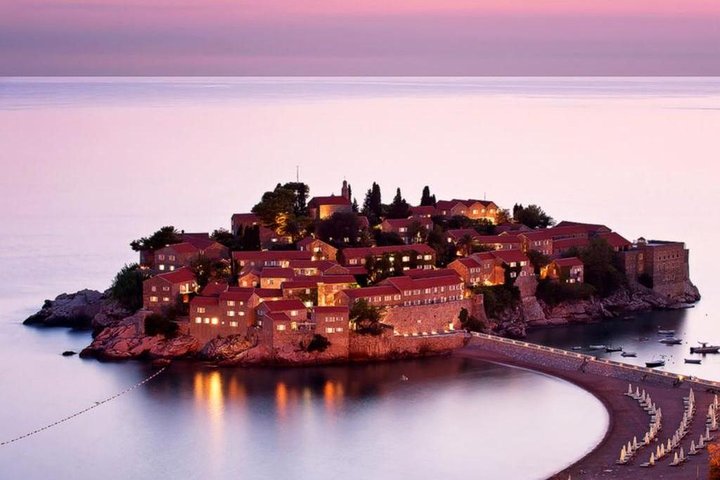
Kotor sits where the Adriatic meets the mountains, and its table reflects both. The food is a blend of Mediterranean, Venetian and Balkan traditions, built on fresh seafood, good olive oil, smoked meats, strong cheeses and wine from the vineyards beyond the hills. Eating well here is easy, and a little knowledge of what to order makes it better.
Start with the ham and cheese
The village of Njeguši, on the mountain road to Lovćen, is famous across Montenegro for its smoked ham, known as pršut, and its sharp, creamy cheese. You will find both on almost every meze board, served with olives, bread and sometimes honey. A platter of ham, cheese, olives and tomatoes with a glass of wine makes an ideal light lunch, especially after a morning on the walls. If you travel up the mountain road, stop in Njeguši itself, where family-run houses sell and serve the products at the source.
Eat what comes from the bay
The water around Kotor yields fish, squid, cuttlefish and shellfish, and mussels grown in the bay appear on many menus. Look for grilled fish sold by weight, fried squid, mussels in white wine or tomato sauce, and fish soup. Black risotto, made with cuttlefish ink, is a coastal classic, rich and dark and best shared. Ask what is fresh that day and choose a whole fish if it is available, since local waiters are proud of their catch and will usually show it to you.
Try the hearty mountain dishes
Inland cooking brings slow-cooked meat, stuffed peppers, grilled sausages and breads baked in the oven. Look for veal or lamb cooked under a metal lid with potatoes, a style of cooking found throughout the Balkans, and for burek, flaky pastry filled with cheese or meat, which makes a cheap breakfast or snack. Vegetarians will find grilled vegetables, salads, cheeses and pasta, and many places will adapt dishes if asked.
Drink the local wine
Montenegro produces good wine, especially the red Vranac, which is deep, dark and full of fruit, and the white Krstač, which is crisp and fresh with a mineral edge. Both come from the vineyards of the Crmnica region near Skadar Lake, and wine bars in the Old Town offer tastings and flights. Ask for a local label rather than an imported bottle, and for the house wine by the carafe in simple restaurants. Montenegrin beer is light and refreshing in summer, and strong coffee is served at every café, usually in a small cup, with Turkish-style coffee still common.
Meet rakija
The local fruit brandy appears at the end of many meals, and sometimes at the beginning. Grape rakija, known as loza, and plum or herbal versions are common, and a small glass is usually offered as a welcome. Sip it slowly, and remember that home-made versions can be strong. Say the local toast and enjoy the ritual.
Where to eat
The Old Town has restaurants on its squares and in the narrow lanes, and the quality ranges from touristy to excellent. As a rule, the best places are a street or two away from the main square, with short menus and local guests. Out along the bay in Dobrota and Perast, waterfront restaurants serve fresh fish with a view and are particularly pleasant at sunset. In the morning, the daily market just outside the Old Town walls is a good place to buy fruit, cheese, ham and olives for a picnic.
Guided help
If you would rather taste your way through Kotor with an expert, a guided food walk visits several small places in one go and explains the dishes along the way. It is a good first-day activity because it gives you a short list of favourites for the rest of the trip.
Sweet things
Finish with local pastries, fresh fruit in season, honey from the hills and the ice cream that appears on every lane in summer. Walnut and fig sweets, often served with a strong coffee, are a good souvenir to take home.
Practical tips
Dinner tends to start late in summer and early in low season, when some places close for the winter. Check opening hours in the cooler months and book a table in July and August. Tipping is customary, and a service charge is sometimes added, so check your bill. Carry some cash for market stalls and small cafés, and tap water is generally safe, though many visitors prefer bottled.