Kraków is a year-round city, and the best time to visit depends on what you want from it. Summer is lively and warm, spring and autumn are the most comfortable for sightseeing, and winter is cold but atmospheric, with the Christmas market and fewer crowds. The weather in central Europe can swing, so the notes below describe typical patterns rather than promises.
Spring: March to May
Spring arrives gradually. March can still be cold and grey, but by April the Planty park is in blossom and the cafe terraces start to fill. May is one of the loveliest months, with mild days, fresh green leaves, long evenings and comfortable temperatures for walking. Crowds build around Easter, when the Main Market Square hosts a traditional Easter market, and again at the beginning of summer. It is a good time for day trips, including Ojców National Park and the painted village of Zalipie, whose annual painting competition takes place around the Corpus Christi holiday. Pack layers and a light waterproof.
Summer: June to August
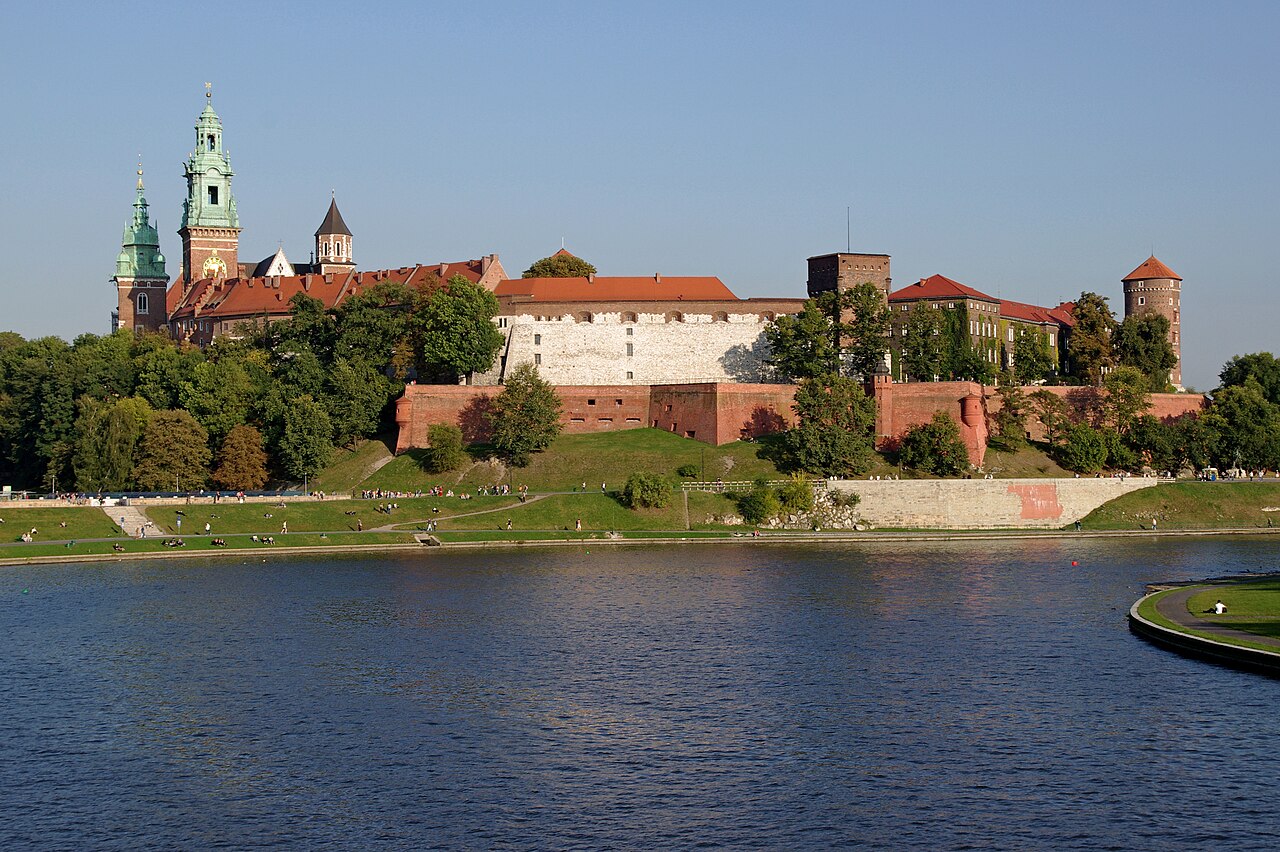
Summer is the high season, with warm to hot days, long light and a busy programme of outdoor events. Festivals fill the calendar, including the Jewish Culture Festival in Kazimierz, usually around the turn of June and July, and many open-air concerts on the squares. The Old Town is crowded and hotel prices are highest, so book early. The trade-off is that the major sights, including Wawel and Auschwitz-Birkenau, are at their busiest, and timed tickets sell out well in advance. Early morning and evening are the best times to explore. Heat can be strong, so bring sun protection and water, and consider the cool of the salt mine on the hottest days. The Wawel Dragon's Den and the Bugle Tower on St Mary's are open in the warm season only.
Autumn: September to October
Many locals consider this the best time to visit. The weather is still pleasant in September, the crowds thin out, the trees in the Planty turn gold and prices ease. October is cooler and shorter-daylight but still good for walking, and the mountains around Zakopane are beautiful in autumn colour. Pack layers, a waterproof jacket and comfortable shoes. On 1 November, All Saints' Day, Poles visit cemeteries with candles, and the cemeteries glow in the evening, a moving sight, though the day is a public holiday and some museums close.
Winter: November to February
Winter is cold, dark early and sometimes snowy, but it has a charm of its own. The city is far quieter, hotel prices are lower and museums are comfortable and uncrowded. From late November the Christmas market fills the Main Market Square with stalls selling mulled wine, grilled oscypek, handmade ornaments and gingerbread, and the Old Town lights up in the evenings. The traditional nativity scene competition, which draws crowds to the square in early December, is a local highlight. It is also the best season for the Tatra Mountains, with skiing in Zakopane. Pack a warm coat, hat, gloves and shoes with good grip, and remember that the Bugle Tower is closed and some attractions have shorter hours. Warm up in cafes and, if you can, at a hotel with a spa.
Weather in brief
Typical summer afternoons are warm, with the occasional thunderstorm, and typical winter days hover around freezing, with snow possible from December to February. Spring and autumn are changeable, so carry a compact umbrella and dress in layers whatever the month. Daylight is long in June and short in December, which affects how much you can fit into a day, so plan outdoor sights such as the Kościuszko Mound for the brighter hours.
Public holidays and quiet days
Poland observes several public holidays, including New Year's Day, Easter Monday, 1 May, 3 May, Corpus Christi, 15 August, 1 and 11 November and the Christmas period, when shops and some museums close, and museums often close one weekday. Check opening days before you plan a tight itinerary, especially in the holiday weeks.
Our pick
For the best balance of weather, light and crowds, aim for May, early June or September. For atmosphere and value, choose early December. For the mountains, go in winter or early autumn. Whatever the season, book timed tickets for Wawel, Schindler's Factory and Auschwitz-Birkenau in advance, and pick a hotel in the Old Town or below Wawel so you can walk back for a rest. Hotel Stary and Hotel Copernicus are especially inviting in winter, with their cellar pools, while Sheraton Grand and Radisson Blu are good all-year bases.