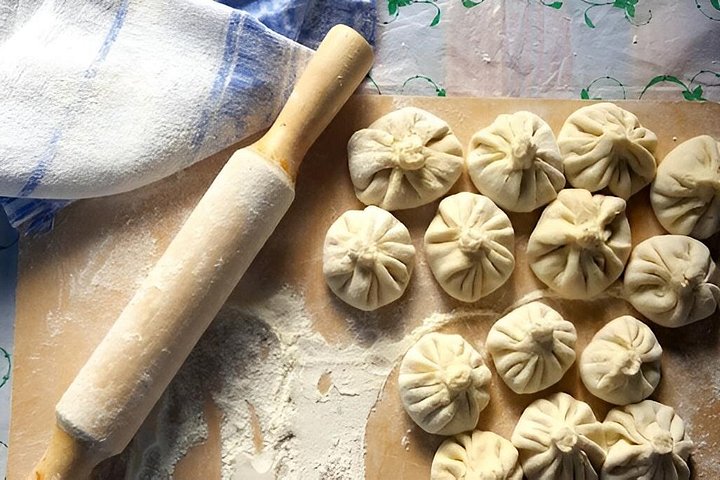
A cooking class is one of the best ways to understand Georgian food, and Kutaisi has several friendly options. In a home or small kitchen, you learn to make khinkali, the twisted soup-filled dumplings, and khachapuri, the cheese-filled bread, often with salads, pkhali and other dishes added. Hosts explain the ingredients, show the techniques, and then everyone sits down to eat the results, usually with wine or chacha. Classes run for two to three hours, suit beginners and are priced modestly. They are fun, social and delicious, and make a wonderful rainy-day activity.
Georgian cuisine is celebrated for its bold flavours, its herbs and walnuts, and its generous hospitality. In class you will meet the main ingredients: fresh cheeses, dough, ground meat and spices, plus walnuts, pomegranate and herbs. The khinkali technique takes practice, as you roll the dough, add the filling and pleat it into a tight knot with around a dozen folds, and the hosts usually make it a friendly contest.
The khachapuri comes in regional styles, and in Imereti it is a round, flat cheese bread, quite different from the boat-shaped Adjaruli version on the coast.
Beyond the main dishes, you may learn about the supra, the Georgian feast. Hosts talk about toasting etiquette, traditional drinks and the importance of sharing. Vegetarians are usually catered for, as many Georgian dishes are meatless, and you should mention dietary needs when booking. Classes are often held in family homes, giving a glimpse of daily life and the chance to ask questions about local customs.
The group is typically small, from two to ten people, and the atmosphere is informal. You wear an apron, work at a table and are encouraged to try things. Recipes are often provided afterwards so you can try them at home, though ingredients like blue fenugreek may need hunting down. Some classes include a market visit beforehand, which is a good way to see the produce and buy supplies.
Book a class early in your stay, so you can recognise the dishes on restaurant menus later. Wear comfortable clothes, bring an appetite and be ready for generous portions. Costs are low compared with many cities, making it good value. For families, check the minimum age; many hosts welcome children, who often enjoy the dumpling folding.
The class works for a variety of travellers. Solo visitors find it a friendly way to meet people, couples use it as a shared project, and groups of friends enjoy the chance to compete over the neatest dumpling. Take notes on the herbs and spice blends the host uses, since many are easy to find in the Green Bazaar and to carry home.
If you can, schedule the class on a rainy day or the evening before a long excursion, when you want something relaxed, and finish with a walk through the old town to settle the meal.
Hosts are generally flexible with dietary needs, including gluten-free and dairy-free requests where practical, though the dough and cheese are central to the main dishes. Some classes also teach a sweet such as churchkhela or a walnut-based sauce, and a few end with a coffee made in the traditional sand-heated pot. If you enjoy the experience, ask the host to recommend a favourite restaurant for further tasting, since locals know the best places.
What to expect
The experience
A small-group hands-on class in a local kitchen, ending with a shared meal and wine.
Best time
Any day; evenings suit a dinner plan.
How long
Two to three hours.
Tips
Mention dietary needs when booking. Wear comfortable clothes. Ask for the recipes.
Quick picks
- Best for
- Food lovers and anyone who wants a hands-on cultural experience.
- Families
- Often a hit with children who enjoy rolling and shaping dough.
- Couples
- A shared, social activity that ends with a meal.
- Pair with
- Green Bazaar and an Imereti wine tour.
- Time needed
- Two to three hours.
Good questions
What will I cook?+
Usually khinkali dumplings and khachapuri cheese bread, with side dishes.
Is wine included?+
Most classes include a glass or two of Georgian wine; check when you book.
Can vegetarians join?+
Yes, tell the host in advance and they can adapt.
Is it suitable for beginners?+
Yes, no experience is needed.
Can I bring children?+
Many hosts welcome them; ask about age limits.