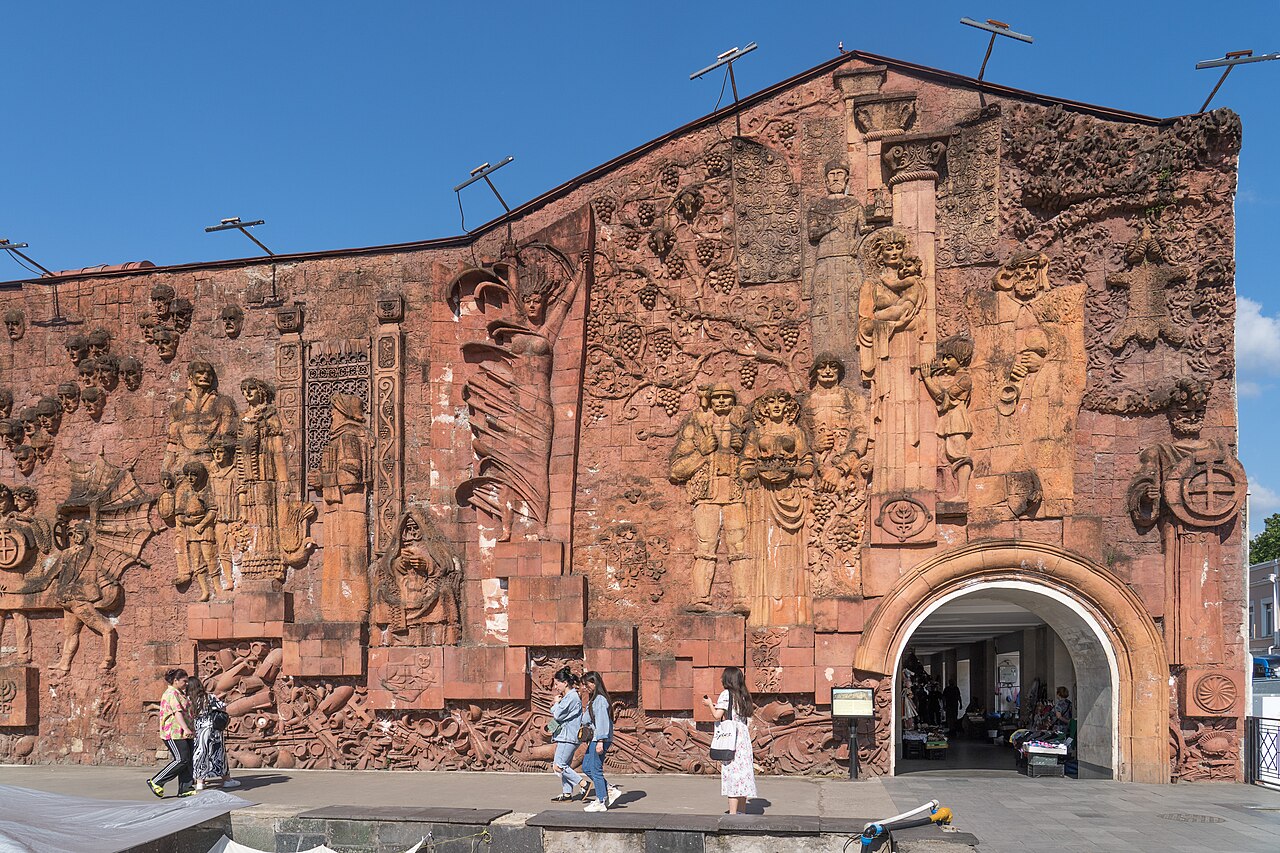
The Green Bazaar is the beating heart of Kutaisi’s everyday life and the best place to taste the region. Stalls spill across a large covered hall and into the surrounding streets, selling vegetables, fruit, walnuts, honey, cheese, pickles, freshly baked breads, spices such as blue fenugreek and ground marigold, and rows of churchkhela, the candle-shaped sweets made of nuts dipped in grape juice. Vendors call out prices and offer samples, and cooks from nearby restaurants shop beside grandmothers with string bags. Entry is free and the atmosphere is friendly and lively. A visit takes an hour or two, and it is the best way to understand why Imereti has a reputation for good food.
Start with the cheese. Imeretian cheese is a fresh, lightly salted cow’s-milk cheese, and its smoked and sulguni cousins are nearby. You will see big discs and blocks, and sellers will cut small tastes. Pair it with warm bread from the bakers, then wander to the stalls selling mountains of fresh herbs, which give Georgian food its distinctive flavour: coriander, dill, tarragon, basil and the local blue fenugreek. Look for jars of walnut-based sauces, tkemali plum sauce, and bags of dried spices labelled svanuri marili, the Svan salt mixture used in many dishes.
The sweet side is just as appealing. Churchkhela hang in garlands in many shapes and colours, made from walnuts or hazelnuts and thickened grape juice. Local honeys are sold in jars, along with dried fruit leather called tklapi. In summer, the fruit stalls display peaches, figs and grapes, and in autumn the market fills with persimmons, pomegranates and chestnuts. Buy small amounts to sample, and ask the seller what is best that day; most are happy to chat in a mixture of Georgian, Russian and English.
The market also has a practical side for travellers. It is a good place to put together a picnic for a day trip, buying bread, cheese, tomatoes and fruit for a fraction of restaurant prices. Cash is the norm, small notes are best and bargaining is mild. The surrounding streets contain small cafes where you can try khachapuri and soup, and the market is close to the central square, so it fits easily into a walking route.
Morning is the busiest and freshest time, while afternoons are quieter. Many guided city tours finish here, which is a good way to be introduced to the vendors.
Take a reusable bag, wear shoes that can handle wet floors, and keep an eye on your belongings as in any busy market. Photography is generally fine, but ask before photographing individual sellers. If you are staying in an apartment or guesthouse with a kitchen, the market is the place to stock it. Even if you buy nothing, an hour here shows you a side of Kutaisi that few sights can match, and it is free.
A few phrases help
A simple hello in Georgian, gamarjoba, and thank you, madloba, will be appreciated, and a smile goes further than any haggling. If you are curious about cooking, ask a seller how they use an unfamiliar herb or spice, and many will tell you the dish. Buy cheese and pickles in modest quantities, since they are best eaten quickly, and pack dried goods, honey and churchkhela as gifts. Those with a kitchen can turn a morning here into a memorable dinner.
What to expect
The experience
A self-guided wander through a busy covered and open-air market, sampling cheese, bread, honey and sweets as you go.
Best time
Morning, when stalls are fullest and freshest.
How long
One to two hours.
Tips
Bring small notes and a reusable bag. Taste before you buy. Keep valuables close in crowds.
Quick picks
- Best for
- Food lovers and anyone curious about daily life in Imereti.
- Families
- Children enjoy the colours and free tastes.
- Couples
- A cheerful morning stroll with picnic supplies as the reward.
- Pair with
- The Kutaisi walking tour and Bagrati Cathedral.
- Time needed
- One to two hours.
Good questions
Is the Green Bazaar free to enter?+
Yes, entry is free. You pay only for what you buy.
What should I try?+
Imeretian cheese, fresh bread, churchkhela, local honey and the herbs and spice blends, especially Svan salt.
When is the best time to go?+
Morning, when the market is liveliest and the produce is freshest.
Do vendors accept cards?+
Mostly cash, so bring small notes.
Can I buy food for a picnic?+
Yes. Bread, cheese, tomatoes and fruit are inexpensive and make a good picnic for a day trip.