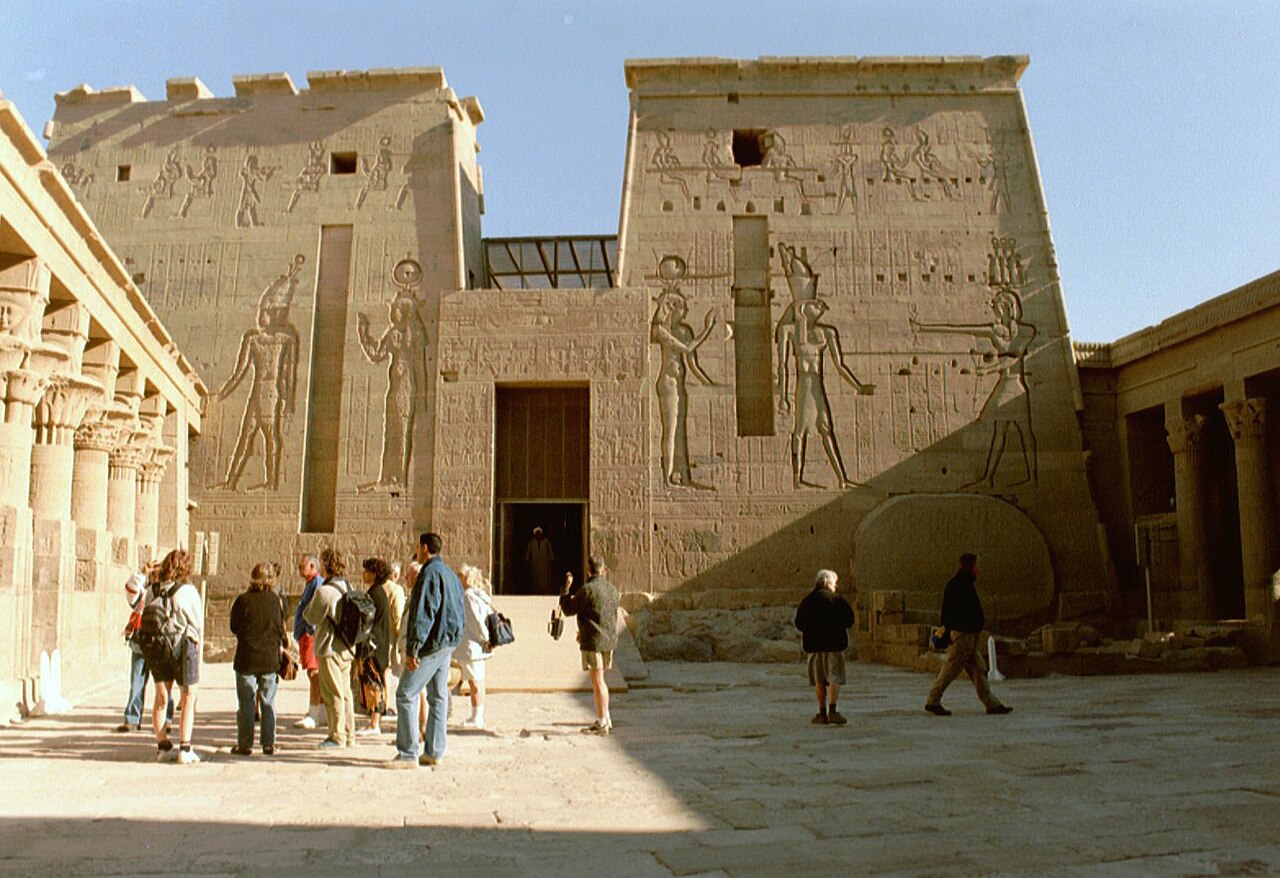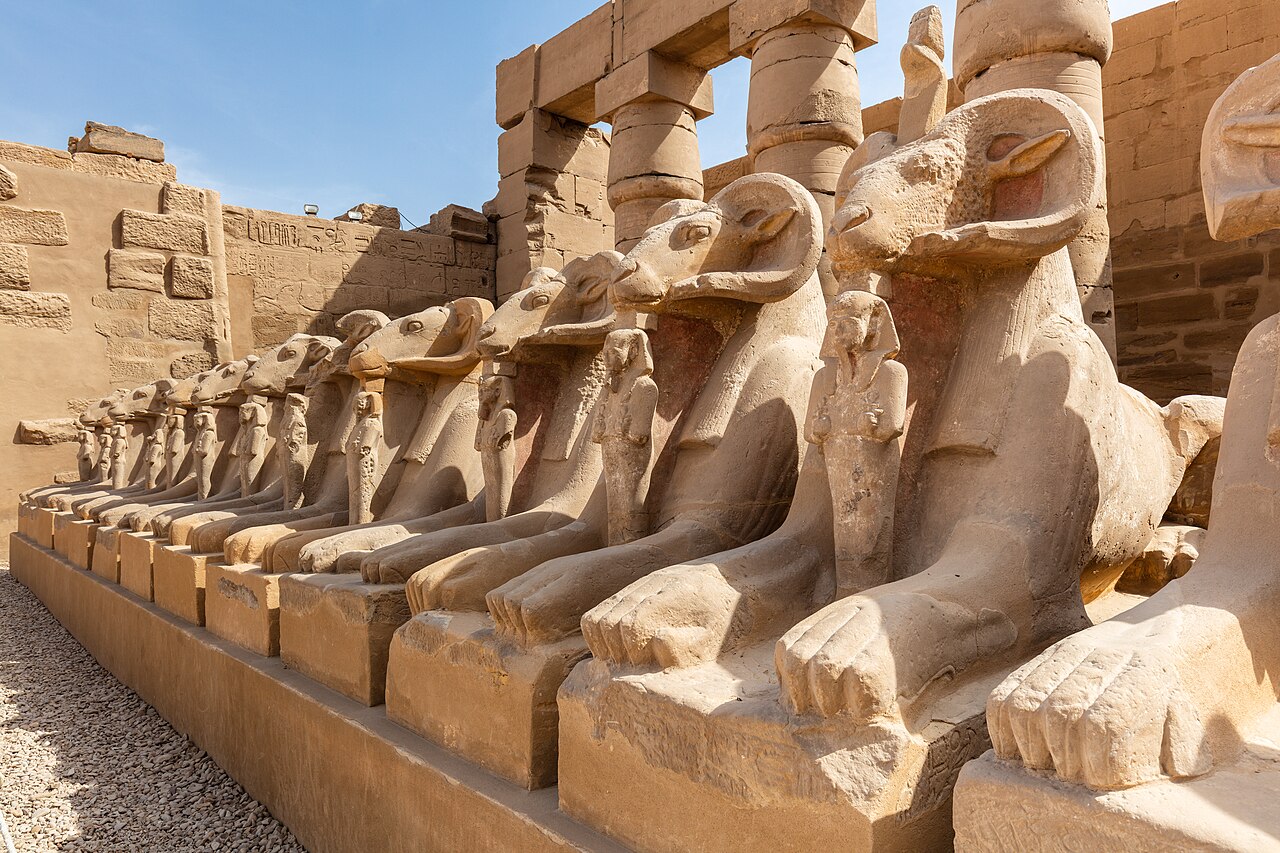
Karnak is not a temple so much as a city of temples. On the east bank of the Nile, in what was ancient Thebes, generation after generation of pharaohs added pylons, courts, halls and chapels to the great precinct of Amun-Ra, until it sprawled across more than a hundred hectares. The headline is the Great Hypostyle Hall, a stone forest of 134 columns, the tallest rising around twenty metres, their capitals carved like open papyrus flowers and every surface covered in reliefs that still hold traces of paint. Beyond it stand obelisks raised by Hatshepsut and Thutmose I, the sacred lake where priests purified themselves, the giant scarab statue that visitors circle for luck, and the courts and gateways of Ramesses II and later rulers. Approaching from the river, an avenue of ram-headed sphinxes leads to the first pylon, and the sheer scale of the entrance tells you what kind of place this is. A proper visit takes at least three hours, and more if you read the reliefs, which record battles, offerings and the rites of the gods. Go early, when the sun is low and the stone glows, or late in the day, because the middle of the day is hot and crowded with tour groups. A guide helps enormously, since the site has no single route and many of its best details are easy to walk past.
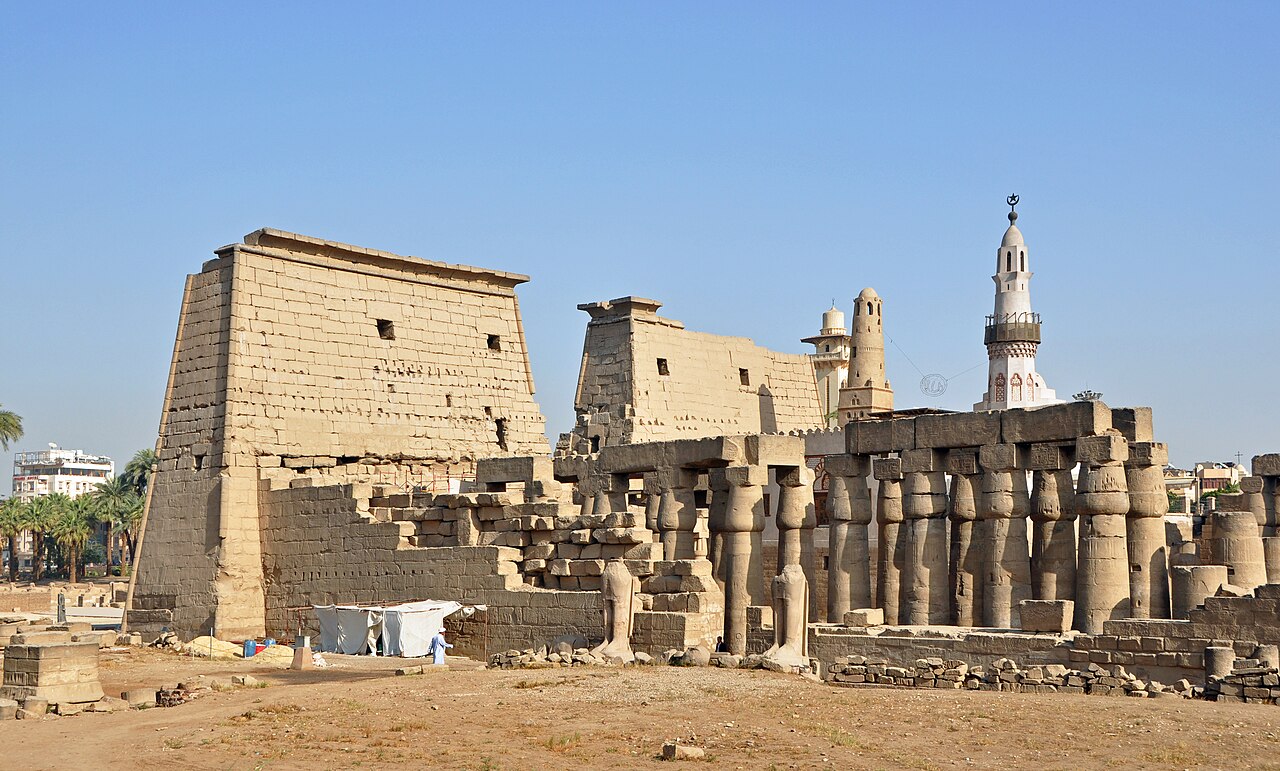
Why it matters: Karnak was the most important place of worship in Egypt for much of the New Kingdom, the home of Amun, king of the gods, and the stage for the great Opet festival, when the god travelled in procession from Karnak to Luxor Temple. That connection is still visible on the ground. An avenue of sphinxes, restored and reopened in 2021, links the two temples across roughly three kilometres of the modern city, and you can walk or ride along it to understand how the ancient processions worked.
Planning the visit: tickets are sold in Egyptian pounds and foreign visitors pay a premium over locals, so keep cash handy even if you book a guided tour online. Tiqets sells guided tours that include Karnak, usually combined with other Luxor sights. Wear a hat, sunscreen and comfortable shoes with grip, as the paving is worn and uneven, and carry water, because shade is scarce outside the Hypostyle Hall. Bring a torch or phone light for the darker corners. Many visitors return in the evening for the sound and light show, which runs on a seasonal schedule, so check times locally.
Making the most of it: head straight to the Hypostyle Hall before the crowds build, then work back toward the open-air museum and the sacred lake. Photographers should note the best light is within the first two hours after opening. Families with small children can skip the minor chapels and focus on the columns, the obelisks and the scarab. Karnak pairs naturally with Luxor Temple later in the day, since the two were once joined by the avenue of sphinxes and are best understood together.
What to expect
The experience
A self-paced walk through the great pylons, the Hypostyle Hall, the obelisks, the sacred lake and the open-air museum, best done with a guide.
Best time
Right at opening for cool air and low golden light; late afternoon is the second-best window.
How long
Three to four hours for a thorough visit, or two hours for the highlights alone.
Tips
Bring a hat, water and cash for entry and tips, wear shoes with grip, and visit the Hypostyle Hall first before the groups arrive.
Quick picks
- Best for
- Anyone who wants to feel the scale of ancient Egypt, and every first-time visitor to Luxor.
- Families
- Children enjoy the giant scarab and the columns, but the heat is tiring, so go early and plan for a break.
- Couples
- Late afternoon light on the columns, then a Nile sunset and dinner, makes a perfect pairing.
- Pair with
- Luxor Temple in the evening, linked by the avenue of sphinxes.
- Time needed
- Half a day with travel time from a hotel on either bank.
Good questions
How long do you need at Karnak?+
Allow three to four hours for a proper visit, longer if you enjoy reading the reliefs. A hurried highlights tour takes about two hours but misses most of the detail.
Do I need a guide at Karnak?+
It is not required, but the site is vast and poorly signed, so a good guide adds a great deal. Many visitors book a combined East Bank tour with Luxor Temple.
What is the best time of day to visit?+
Arrive at opening, when the air is coolest and the light is soft on the stone. Late afternoon also works, but the midday sun is harsh and the crowds are at their peak.
Can you go to Karnak in the evening?+
Yes, the sound and light show runs in the evening on a seasonal schedule. Check the current timetable and languages locally before you plan around it.
Is Karnak suitable for wheelchairs?+
Access is limited, as the ground is uneven and there are many steps and worn paving stones. Some main routes are manageable with help, so ask your guide or operator in advance.