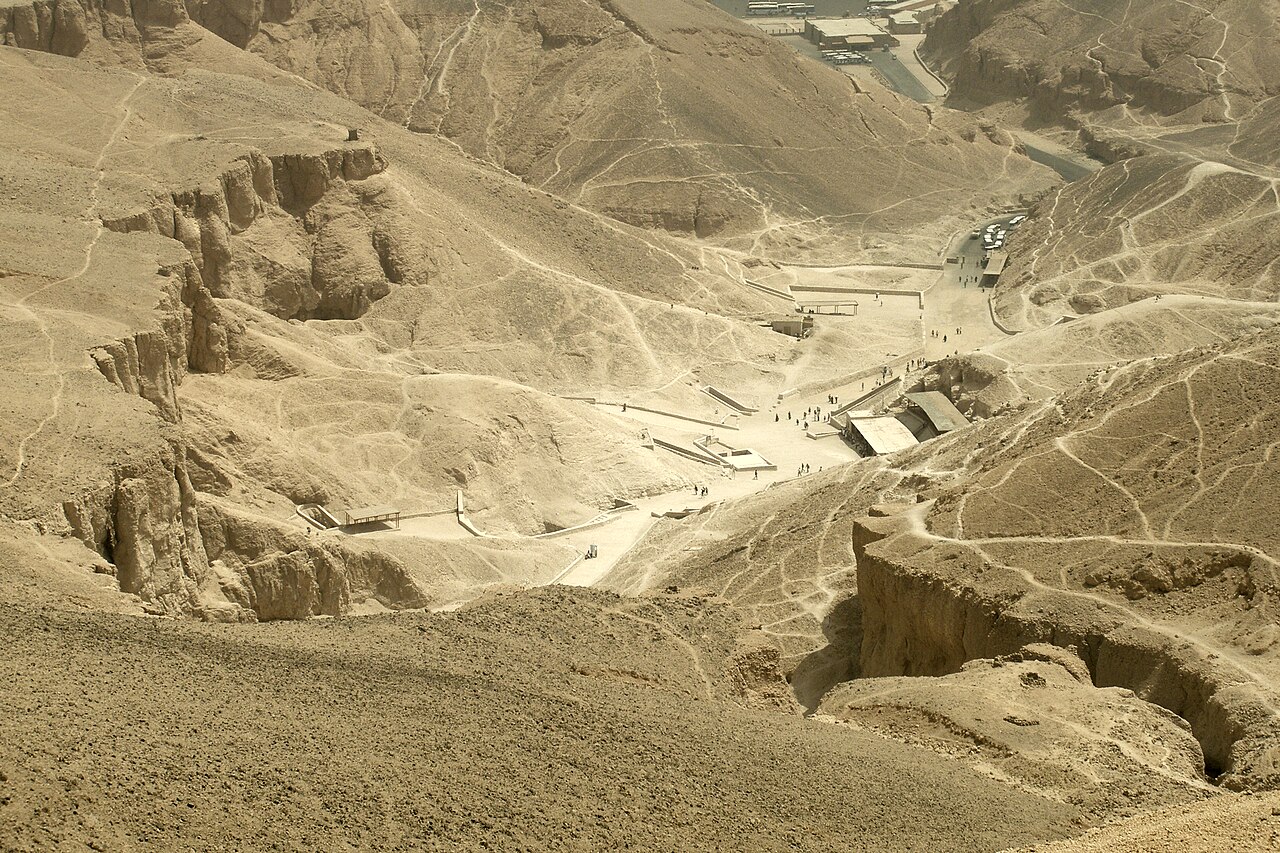
Behind the cliffs of the West Bank, in a dry limestone valley dominated by a pyramid-shaped peak, the pharaohs of the New Kingdom chose to be buried in secret, in deep rock-cut tombs rather than in pyramids that thieves could find. Around sixty tombs have been numbered, from KV1 to KV63, and about a dozen are open at any time, rotating to protect the paintings. The tombs are entered by sloping corridors that lead down through painted chambers to the burial hall, and the walls are covered with scenes from the Book of the Dead, the Amduat and the Book of Gates, vivid in blues, reds and golds. A standard ticket allows entry to three tombs of your choice from those open that day. Premium tombs, including that of Tutankhamun and the larger tombs of Seti I and Ramesses VI, are sold separately. Tutankhamun is small and modest compared with the others, famous because it was found almost intact in 1922, but its wall paintings and the mummy on view are a highlight for many. Ramesses VI, IX and III are often praised for their decoration, and the tomb of Seti I is regarded as the finest of all when open. The valley itself is hot, shadeless and stark, with the tombs a welcome cool, so plan to arrive early.
What to expect: you walk or ride a small shuttle from the entrance to the start of the valley, then choose your tombs. Photography with phones is allowed under the current rules, but flash and professional equipment may be restricted, so check at the gate. The tombs are narrow, with steep steps and sometimes stuffy air, so they are not ideal for anyone with mobility issues, claustrophobia or heart or breathing problems. Queues form at the most famous tombs by mid-morning.
Choosing tombs: since the open selection rotates, ask your guide which are in good condition that day. Good choices usually include one of the Ramesside tombs with dense decoration, one shallow tomb to compare, and either Tutankhamun or a premium tomb if budget allows. Tiqets sells private guided tours that combine the Valley with Hatshepsut's temple and the Colossi of Memnon, which is a sensible way to see the West Bank in one morning. Entry fees are paid in Egyptian pounds and foreign visitors pay a premium over locals.
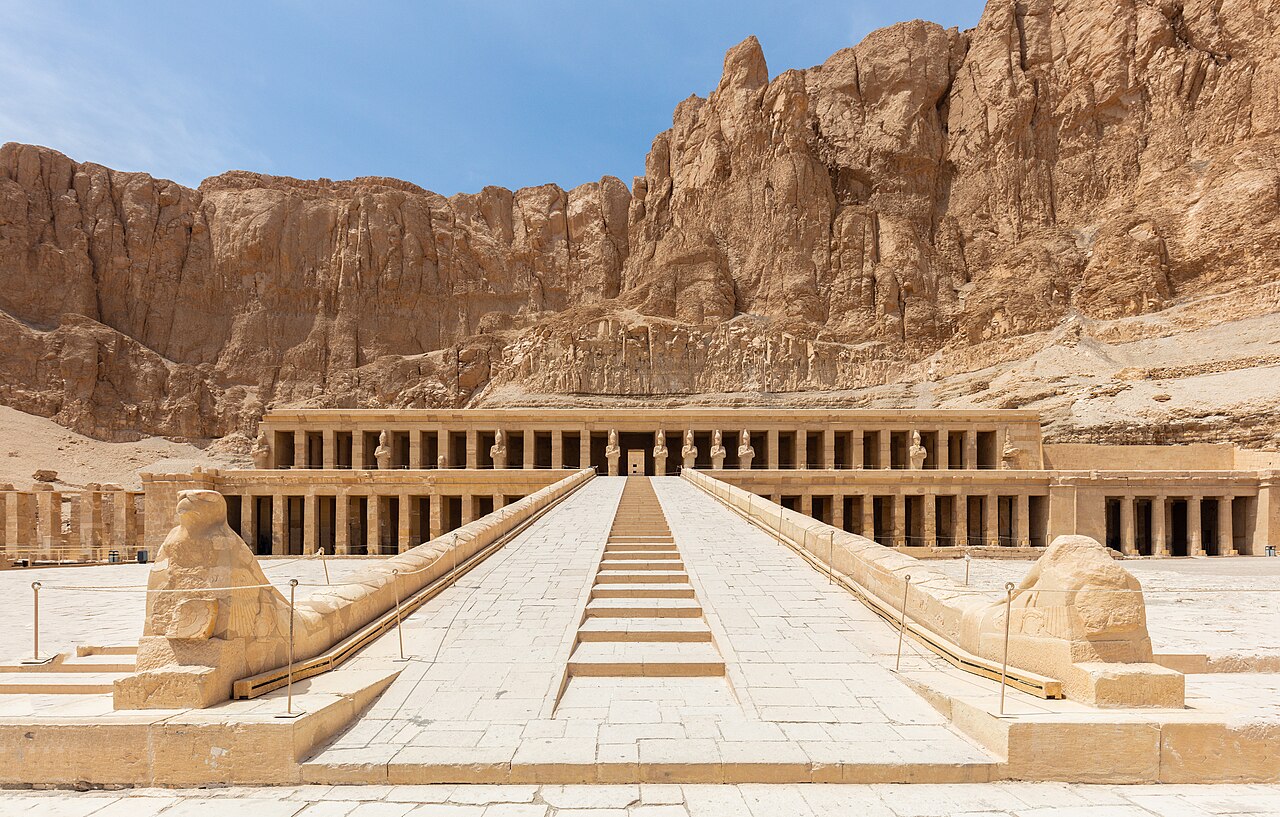
Timing and comfort: go at opening, because by midday the valley is a furnace for much of the year. Bring water, a hat and sunscreen. The shuttle runs between the gate and the tombs, but expect some walking. Pair the Valley with Hatshepsut's temple, which is a short drive over the ridge, and keep the afternoon free for rest, a swim or the East Bank temples later in the day.
What to expect
The experience
A guided or self-guided visit to three tombs of your choice, entered by sloping corridors, plus optional premium tombs such as Tutankhamun.
Best time
At opening, before the heat and the tour buses arrive.
How long
Two to three hours for the valley, including the shuttle and queues.
Tips
Ask which tombs are best that day, bring water and a hat, and leave large bags in the car as they are not allowed in the tombs.
Quick picks
- Best for
- Anyone who wants to see the painted burial chambers of the pharaohs.
- Families
- Older children enjoy the colour and the stories, but the heat and the steep steps are hard on toddlers.
- Couples
- Go at opening, then lunch and a rest, and sail on the Nile at sunset.
- Pair with
- Hatshepsut's temple and the Colossi of Memnon on the same morning.
- Time needed
- A morning, with the afternoon free.
Good questions
How many tombs can you visit with one ticket?+
A standard ticket allows entry to three tombs chosen from those open that day. Premium tombs such as Tutankhamun and Seti I require an additional ticket.
Is the tomb of Tutankhamun worth the extra fee?+
It is small and not as richly decorated as others, but it is the most famous tomb in the world and the mummy is on view. Many visitors choose it for the story rather than the art.
Can I take photos inside the tombs?+
Phone photography is allowed under the current rules, but flash and professional equipment may be restricted. Check at the gate, as regulations change.
Is the Valley of the Kings suitable for children?+
Yes for children who enjoy stories and can manage steep steps and heat. Strollers are impractical, and very young children may find the tombs stuffy.
How do I get there from Luxor?+
Cross the Nile by ferry or bridge and take a taxi, a private driver or a guided tour. Most visitors combine the Valley with Hatshepsut's temple on a half-day West Bank tour.