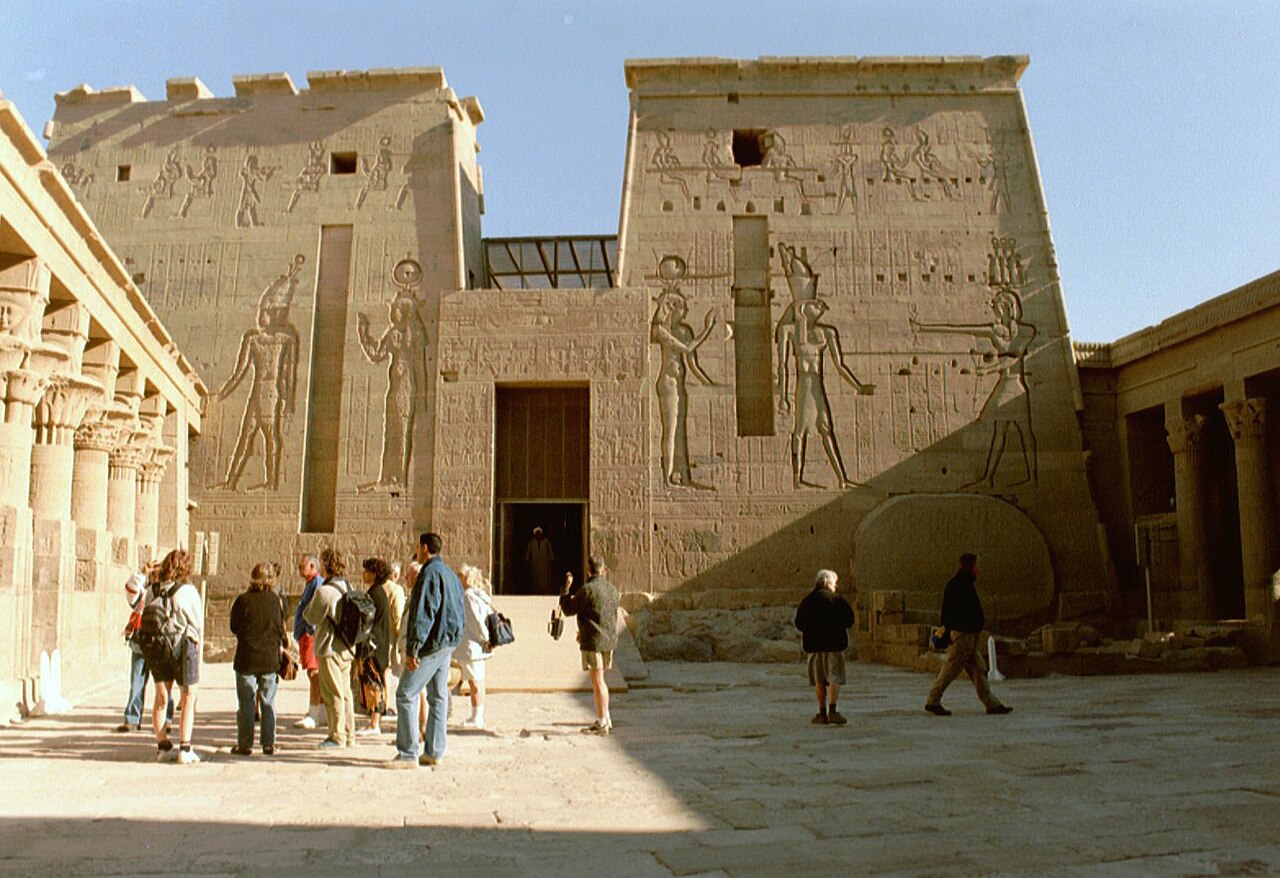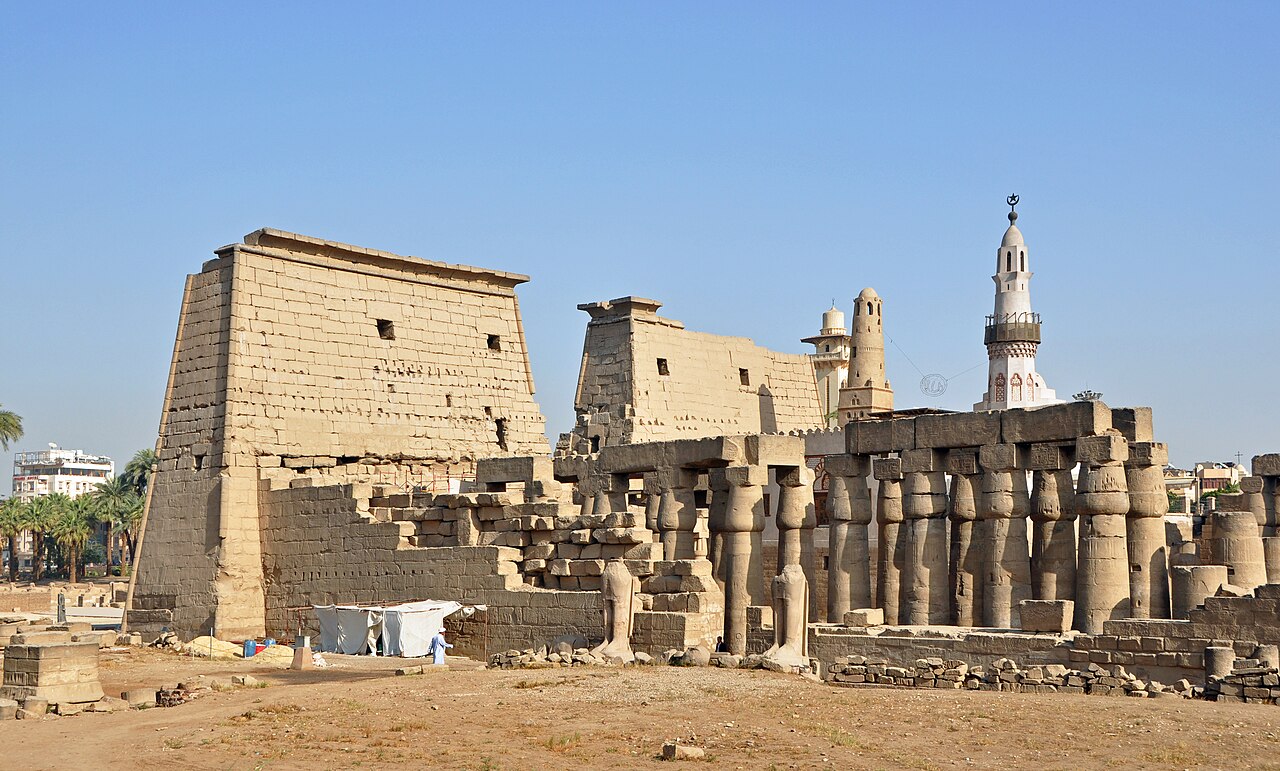
Luxor Temple rises straight out of the city centre, its pylon and colonnades standing beside the Nile and the busy streets of the east bank. It was built largely by Amenhotep III and completed by Tutankhamun and Ramesses II, and it was dedicated to the Theban triad of Amun, Mut and Khonsu. Unlike Karnak, it was not a mortuary or royal cult temple but a place where the kingship itself was renewed, which is why it was the destination of the annual Opet festival procession. Visitors enter past the great pylon of Ramesses II, flanked by colossal seated statues and the single surviving obelisk, since its twin now stands in the Place de la Concorde in Paris. Beyond lies the grand colonnade of Amenhotep III with its towering papyrus columns, the sun court, and the inner sanctuary rooms. The temple has been used continuously for worship for thousands of years: a Roman-era shrine was built into it, and the mosque of Abu el-Haggag still sits on top of the ancient walls, so the whole site is layered with ancient, Roman, Christian and Islamic history. It is best seen at dusk, when floodlights turn the sandstone gold and the heat of the day has faded. It stays open into the evening, making it the easy choice for a second sight after a hot day at Karnak or the West Bank.
Why go in the evening: Luxor Temple is lit after dark, and the combination of cooler air, softer crowds and dramatic lighting makes it feel quite different from the daytime sites. You can still see the carved reliefs clearly, including the scenes of the Opet festival that line the colonnade, and the shadows in the court are superb for photographers. It is also close to most east bank hotels and restaurants, so it is an easy walk back for dinner.
Practical details: tickets are priced in Egyptian pounds with a higher rate for foreign visitors, and Tiqets sells a skip-the-line ticket as well as guided tours that combine Luxor Temple with Karnak. Opening hours extend into the evening but change with the season, so check before you go. The ground is uneven, so wear sturdy shoes. Expect some hassle from touts outside the gate, and a firm no thank you is enough.
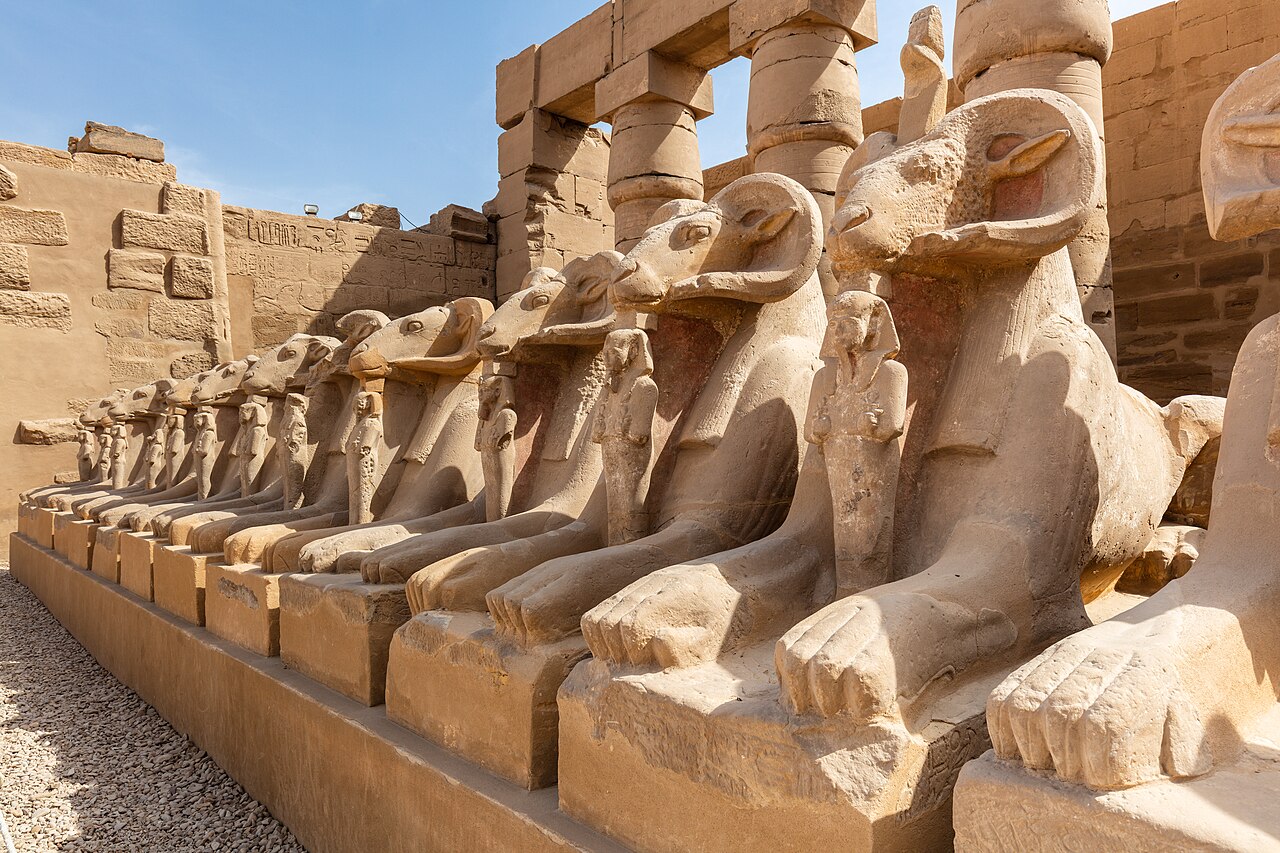
How to fit it in: the classic plan is Karnak in the morning, a long lunch and rest in the heat, then Luxor Temple at sunset. You can also walk the avenue of sphinxes between the two sites, though the distance is roughly three kilometres, so many visitors take a calèche or taxi one way. Luxor Museum, a short walk north along the Corniche, makes a good air-conditioned addition if you have the time.
What to expect
The experience
A self-guided walk through the pylon, the colonnade of Amenhotep III, the sun court and the sanctuary, with the mosque of Abu el-Haggag above.
Best time
Late afternoon through dusk, when the stone glows and the floodlights come on.
How long
About ninety minutes to two hours.
Tips
Book the skip-the-line ticket, bring a light layer for the evening, and watch your step on the uneven paving.
Quick picks
- Best for
- An atmospheric evening visit and an easy second sight after a hot day.
- Families
- Compact and flat, so manageable for children, with plenty of statues to spot.
- Couples
- Walk the temple at dusk, then dinner on a Corniche terrace.
- Pair with
- Karnak Temple earlier in the day, and a Nile felucca at sunset.
- Time needed
- Two hours, plus time for the Corniche walk.
Good questions
Is Luxor Temple open at night?+
Yes, it stays open into the evening and is lit after dark. Hours shift with the season, so check the latest times before you go.
How is Luxor Temple different from Karnak?+
Luxor Temple is smaller, more compact and built mostly in a single reign, while Karnak is a vast complex built over centuries. Luxor Temple is also in the middle of the city and lit at night.
Where is the second obelisk?+
Its twin was given to France in the nineteenth century and now stands in the Place de la Concorde in Paris. The remaining obelisk stands in front of the great pylon.
Can I walk from Karnak to Luxor Temple?+
Yes, along the restored avenue of sphinxes, but it is roughly three kilometres in the heat. Most visitors walk part of it or take a carriage or taxi.
Do I need a guide?+
A guide is helpful for the Opet reliefs and the layered history, but the site is small enough to explore alone. An audio guide or a short guided tour works well.