A Maasai Mara safari can be a life-changing trip for children, but it takes planning. The days are long, the drives are bumpy and the rules are strict. With the right camp, a sensible itinerary and a little preparation, families can have an unforgettable adventure. This guide covers the practical points.
What age is right?
There is no single answer, but many families find that children aged six and over cope best with long drives and early starts. Younger children can enjoy a safari too, particularly in camps with a children’s club and a pool, but many conservancy camps set minimum ages for walks and night drives, and balloon operators usually set a minimum age and height. Always check age rules with each camp and activity provider.
Choose a family-friendly camp
Some camps are far better suited to children than others. Sarova Mara Game Camp has a children’s pool, a kids’ club for ages four to twelve and activities such as mini golf and archery. Mara Intrepids Tented Camp offers a children’s club, supervised childcare, a shared playground and free cribs, and AA Lodge Masai Mara has a children’s pool and playground. Muthu Keekorok Lodge offers kids’ meals and connecting rooms. These facilities give children somewhere to burn energy between drives.
Plan the drives
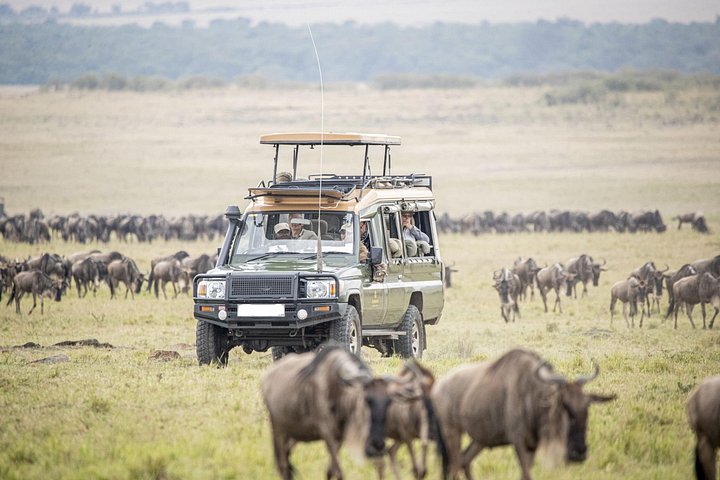
The long road trip from Nairobi can be tiring for young children, so consider flying one way or choosing a trip of four days or more. Shorter game drives of two to three hours, with breaks, suit younger travellers better than a long day in the vehicle. Bring snacks, water, games and books, and agree on a quiet-time routine. Pop-up roofs let children stand and look, but always under supervision.
Safety rules
Safari rules protect animals and people. Children must stay inside the vehicle, keep their hands inside and remain quiet near wildlife. They should never run in camp, and should be escorted after dark. Hippos and buffalo can be dangerous, and crocodiles live in the rivers. Talk to your children before the trip about why the rules matter, and reinforce them on the first day.
Keep them engaged
Give each child a notebook or a checklist of animals to spot, a pair of child-sized binoculars and a camera. Ask the guide to explain animal behaviour in simple terms, and let children choose what to look for each day. A Maasai village visit with singing and dancing is a highlight for many children, and a bush breakfast adds adventure.
Health and comfort
Consult a doctor or travel clinic well ahead about vaccinations and malaria precautions for children, as rules and advice change. Pack sun hats, sunscreen, insect repellent, warm layers for cold mornings and any medication. Bring a small first-aid kit and wet wipes. Most camps can cater for dietary needs with notice.
Add a pool day
On a longer trip, build in time at the camp for swimming and rest. Children cope better with early starts when they have an easy afternoon. Choose a camp with a pool and shade, and use the middle of the day for rest, which is also when wildlife is least active.
Make the most of it
The best family safaris combine early drives, relaxed afternoons and a sense of adventure. Aim for at least three nights, choose a camp that welcomes children and keep expectations realistic: some drives will be quiet, and others will deliver extraordinary sightings. Many parents say watching their children see a lion for the first time was the highlight of their trip.
Travelling light with children
Pack a small day bag for each child with snacks, a water bottle, a hat and a favourite toy or book, and keep wet wipes and tissues in the vehicle. Soft luggage is easier to load, and a lightweight rain jacket and fleece cover the weather swings. Ask your camp for a quiet tent away from the dining area so that early bedtimes are respected.
Talk to the guide
A good driver-guide loves sharing the bush with young visitors. Tell the guide the children’s ages and interests on the first day, ask them to point out smaller animals such as dung beetles and chameleons, and let children ask questions. That attention often makes the difference between a bored child and a budding naturalist.