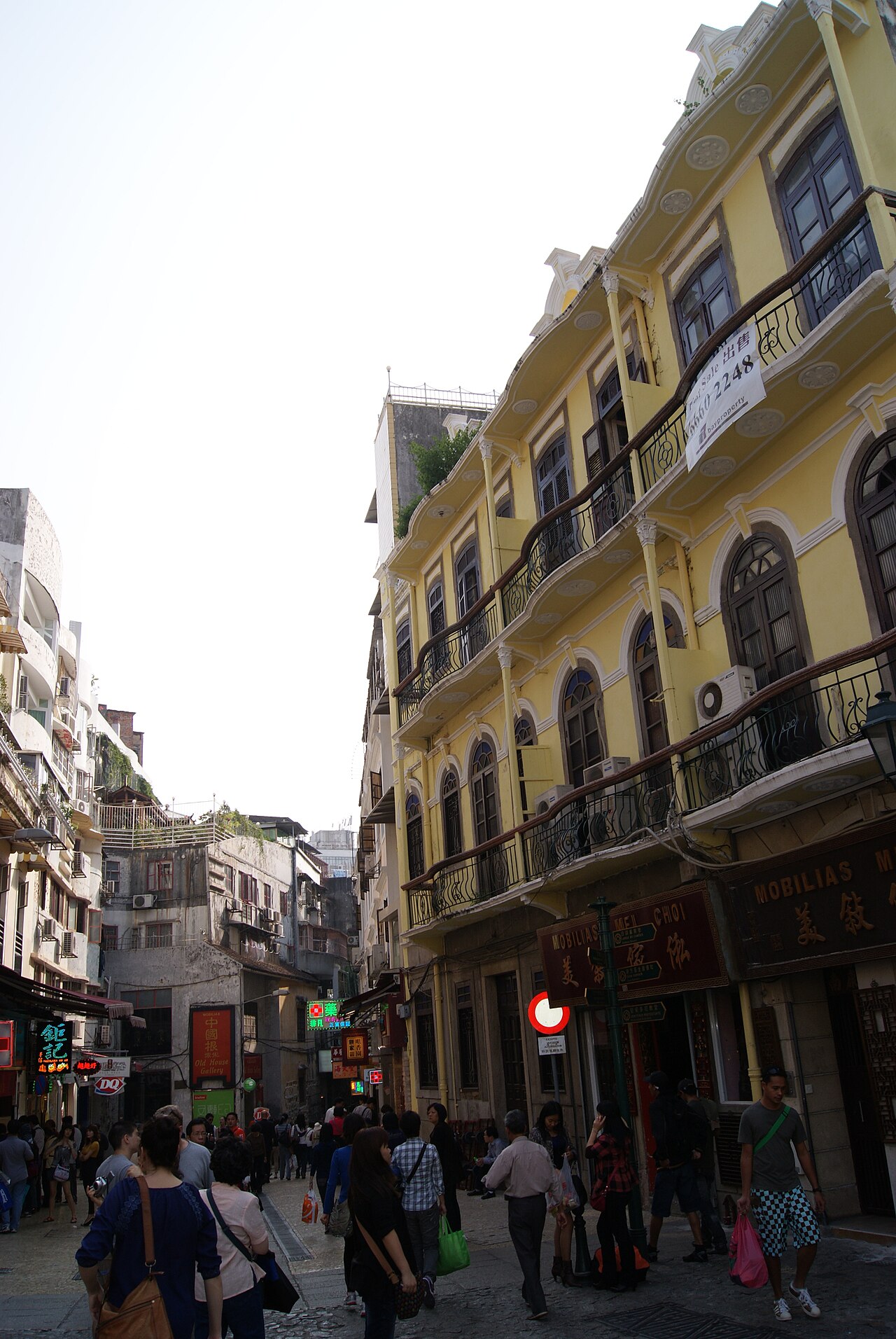
Taipa Village is the historic core of the island of Taipa, a short distance from the Cotai Strip but a world apart in atmosphere. Until the reclamation of the land between Taipa and Coloane, the village was a fishing and trading settlement, and its low-rise buildings, narrow lanes and small squares still give it a village feel. Pastel-coloured colonial houses line the waterfront promenade, a white-and-yellow church stands on a small hill above the lanes, and the pedestrian street of Rua do Cunha is packed with bakeries, snack shops and restaurants. The result is one of the most pleasant places in Macau for an unhurried afternoon, and a natural choice for lunch, snacks and an evening meal. Food is the main draw. Rua do Cunha sells almond biscuits, jerky, egg tarts, pork chop buns and other Macanese favourites, and the surrounding lanes hold restaurants serving Portuguese, Macanese and Cantonese cooking. It is a good place to try dishes that blend the two cuisines, such as African chicken, minchi or baked rice dishes, and to wander between small shops selling souvenirs and local snacks. Because the village is compact and walkable, it is ideal for travellers who want to eat and explore without a rigid itinerary.
How to visit
Taipa Village is on the island of Taipa, between the peninsula and Cotai. From the Cotai resorts it is a short taxi ride or a ride on the light rail line, and from the old town on the peninsula it is roughly fifteen to twenty minutes by taxi, depending on traffic.
Buses also serve the village. There is no entry fee, since the village is a living neighbourhood, and you can arrive at any time of day, although most shops open late morning and many restaurants close for a break in the afternoon.
What to expect
The best way to see the village is on foot, starting at the waterfront promenade with its row of colonial houses, which have been converted into small museums and cultural spaces, and then walking up through the lanes to the church square. Rua do Cunha is the busiest stretch, with queues outside the best-known bakeries and snack shops, especially at weekends.
Quieter lanes branch off it, with small cafés, local noodle shops and craft stalls. Temples and small squares are scattered through the village, and you can see how everyday life continues around the visitors.
Making the most of it
Arrive in the late morning, walk the promenade and lanes, and have lunch at a Macanese restaurant before the afternoon lull. Return for a stroll in the early evening, when the lanes are lit and the food street is at its liveliest. A sensible plan is to combine the village with a morning on Cotai or an afternoon at Coloane. Buy snacks to take away, and take cash for the smaller shops, as some do not accept cards.
Good to know
Weekends and public holidays are very busy, so a weekday visit is more relaxed. Summers are hot and humid, with heavy afternoon showers, and many of the lanes are not covered, so carry an umbrella. The village is compact but has gentle slopes and cobbled sections, so wear comfortable shoes. If you want the village at its quietest, aim for a weekday morning, and if you want the best atmosphere, go in the early evening.
What to expect
The experience
A free, self-guided walk through a historic village, with food stops, small museums and a hillside church.
Best time
Late morning for lunch and snacks, or early evening when the lanes are lit and lively.
How long
Two to three hours, longer if you linger over a meal.
Tips
Go on a weekday if you can, carry some cash for small shops, wear comfortable shoes and bring an umbrella in summer.
Quick picks
- Best for
- Food lovers and anyone who wants a village atmosphere between visits to the old town and Cotai.
- Families
- The lanes are compact and the snack shops are a hit with children, but weekends can be crowded, so a weekday visit is easier.
- Couples
- Walk the waterfront at dusk, then have dinner in one of the Macanese restaurants on or near Rua do Cunha.
- Pair with
- A Cotai resort visit or Coloane Village, which are both a short ride away.
- Time needed
- Allow two to three hours, or an evening if you plan a full dinner.
Good questions
What is Taipa Village known for?+
It is known for its food street, Rua do Cunha, as well as its pastel colonial houses, small squares and hillside church. It is the easiest place in Macau to try Macanese snacks and meals in a village setting.
How do I get to Taipa Village from Cotai?+
It is a short taxi ride or a ride on the light rail line from the Cotai resorts, and buses also serve the village.
Is Taipa Village free to visit?+
Yes, it is a living neighbourhood with no entry fee. You pay only for food, drinks, souvenirs or any small museums you choose to enter.
When is the best time to visit Taipa Village?+
Late morning is good for lunch and snacks, and early evening gives the best atmosphere. Weekdays are less crowded than weekends and public holidays.
What should I eat in Taipa Village?+
Try Macanese dishes such as African chicken, minchi or baked rice, along with local snacks including almond biscuits, jerky, egg tarts and pork chop buns.