Málaga is a rare Spanish city where you can walk from a cathedral to a beach in a few minutes. The sea is part of the daily rhythm: people swim before work, families gather on the sand at weekends and the fishing neighbourhoods east of the port still grill sardines over open fires. This guide explains which beaches to choose, what to eat beside the water, how the seasons affect swimming and how to build a seaside day around the rest of your sightseeing.
La Malagueta: the city beach
La Malagueta lies just east of the port, within walking distance of the old town, and it is the easiest place to get into the sea after a morning of sightseeing. The sand is fine and dark, the promenade is wide and lined with palm trees, and there are showers, sunbeds and lifeguards in the season. It is busy at weekends, but it never loses its local feel. If you are staying in the centre, this is the beach to pick for a short swim and a snack, and it is a pleasant spot at sunset when the light turns the hills gold.
Pedregalejo and El Palo: fishing-village beaches
A few kilometres east of La Malagueta, the neighbourhoods of Pedregalejo and El Palo began as fishing villages and still keep the atmosphere. A promenade runs along the shore, lined with simple beach restaurants known as chiringuitos, where the speciality is the espeto: fresh sardines threaded on a cane and grilled over a wood fire in an old fishing boat filled with sand. Sitting at a table with a plate of sardines, a salad and a cold drink is one of the defining Málaga experiences. You can reach both areas by bus or taxi from the centre, or by a long walk along the seafront.
Playa de la Misericordia and the west
West of the port, the Misericordia beach is long and wide and has more room to spread out than La Malagueta. It is popular with locals, has good facilities and is a good alternative on the busiest summer weekends. Further along the coast, the beaches of Torremolinos and Benalmádena have their own resort atmosphere, with big promenades and hotels, and they are easy to reach by the local train.
Muelle Uno and the port
The Muelle Uno quay is not a beach, but it is part of the seaside experience. A long promenade lined with shops, cafés and restaurants leads past the Centre Pompidou’s glass cube and out toward the sea, and boats of all sizes tie up along the way. In the evening it fills with families and couples out for a stroll. It is also the departure point for the sunset catamaran, which is the best way to see the city from the water.
Swimming seasons
The sea is warmest from July to October and still pleasant for many people in late May and June. Winter water is cool, but sunny days from November to March are mild enough for walks along the promenade and lunch at a chiringuito, even if few people swim. Beaches have lifeguards and flag systems in the main season, so look for the flags before entering the water. A green flag means calm conditions, yellow means caution and red means do not swim. In summer, the sand can be very hot, so bring sandals.
What to bring
Sun protection is the first priority, since the Andalusian sun is strong even in spring. Bring a hat, water, a towel and sandals, and rent an umbrella and sunbeds on the busiest beaches if you want shade. Many chiringuitos serve food all day, so you do not need to carry a picnic. Valuables are best left at the hotel, and you should keep a close eye on bags as you would on any busy city beach.
Building a seaside day
A good day starts with an early walk through the old town before the heat builds. After lunch, head for La Malagueta for a swim or take a bus to Pedregalejo for sardines and a long afternoon by the water. Return along the promenade as the sun drops, then catch the catamaran from Muelle Uno or settle into a bar for tapas. If you have children, the shallow, sandy beaches near the port are the most convenient,.
Beyond the city
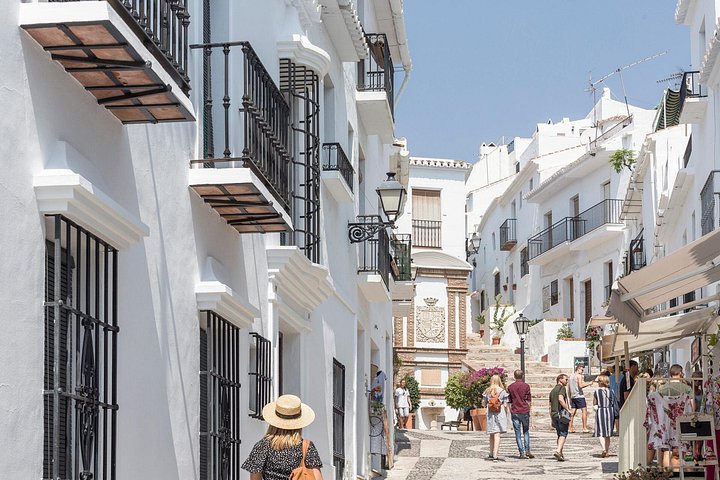
For a different seaside experience, head east to Nerja, where coves and clifftop viewpoints replace the long city beaches, or visit Frigiliana in the hills for views down to the coast. Day trips west lead to Mijas, Marbella and the glamorous marina at Puerto Banús, where the beach clubs and promenades have a different, more polished style. Whichever direction you choose, you are never far from the water in Málaga, and that is a large part of its appeal.