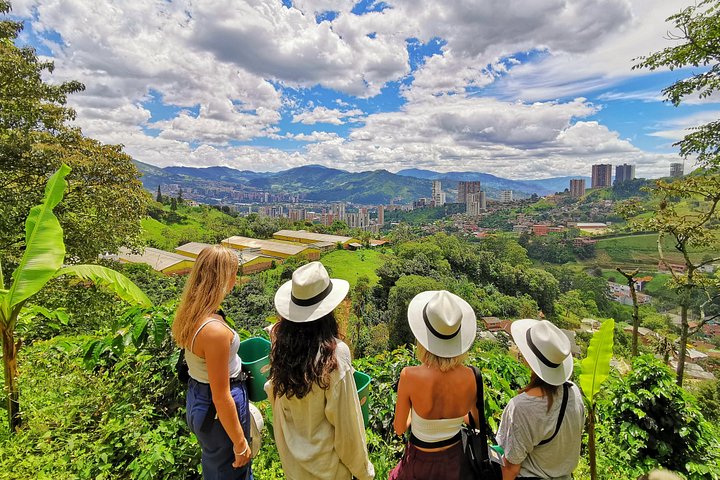
Medellín is a city of strong coffee, fresh fruit and generous plates, and food is one of the best ways to understand the people of Antioquia, the paisas. The cooking is hearty and rooted in the mountains, built around beans, corn, plantain, pork, rice and a long list of fruits that rarely leave the tropics. This guide explains the dishes to look for, how markets and street food work, how to approach coffee and which food experiences are worth booking ahead.
Start with the regional plate
The famous dish of the region is the bandeja paisa, a platter that can include beans, rice, ground beef, crispy pork belly, sausage, a fried egg, plantain, avocado and an arepa. It is enormous, so share it or come hungry. Lighter classics include sancocho, a hearty soup of meat and root vegetables, and mondongo, a tripe soup that locals eat on weekends. Arepas, round corn cakes, appear at almost every meal and come plain, with cheese or with toppings. If you want something simpler, a corn-based empanada from a street stall is a good, inexpensive snack.
Learn the fruit
Colombia grows far more fruit than most visitors have ever tried, and Medellín is a good place to taste it. Look for lulo, granadilla, guanábana, maracuyá, mamoncillo and tomate de árbol, often served as fresh juices or blended with milk or water. Ask for juices without added sugar if you prefer them tart. A morning at Plaza Minorista, the city's largest market, is the clearest introduction, and a guided visit explains the names and the tastings. The private market tour and cooking class we link combines the market with a hands-on lesson, which suits travelers who want to take a few recipes home.
Coffee in the city and on the farm
Colombian coffee is mostly arabica, grown at altitude, and Medellín's cafes have raised the standard of what ends up in the cup. Specialty cafes in El Poblado and Laureles serve filter and espresso drinks with beans from different regions, and many offer tastings or short workshops. To see how coffee is grown, picked, dried and roasted, the coffee farm tour is a half-day trip from the city, and a longer day trip to Jardín puts you in the heart of coffee country. Whichever you choose, try a tinto, the small, sweet black coffee that locals drink throughout the day, alongside the espresso-style drinks.
Street food and snacks
Street stalls sell grilled corn, empanadas, fried plantain, arepas with cheese and fresh fruit cups. They are a cheap and tasty part of any day, and the best stalls are the ones with a steady line of locals. Choose busy vendors, ask what is freshest and carry small bills. If you are unsure where to begin, an evening food tour is a safe way to sample a range of dishes in one night with a guide who explains what you are eating. The small-group tour we link meets in the west of the city and runs for about two and a half hours, so eat lightly beforehand.
Dining out in El Poblado and beyond
El Poblado has the largest range of restaurants, from traditional paisa cooking to modern Colombian tasting menus and international kitchens. Laureles, a leafy residential district, is known for relaxed cafes and neighborhood restaurants, and the historic center has simple lunch counters serving set meals, the corrientazo or menú del día, which usually includes soup, a main course and juice at a modest price. Reservations help at popular places on Friday and Saturday nights, and dinner starts later than in many countries, so do not be surprised to find kitchens busy at nine.
Drinks
Beyond coffee and juice, try aguardiente, the anise-flavored spirit that is the national tipple, in small shots with friends, and local craft beer, which has grown quickly in recent years. Cocktail bars in El Poblado range from casual to elaborate, and rooftop lounges offer views of the valley. Taste the sweet, warm drink canelazo if you are in the mountains on a cool evening, and ask locals about the regional specialties that change with the season.
Practical tips
Many visitors stick to bottled water, and it is fine to ask how a juice was prepared. Eat fruit and street snacks from busy stalls, tell restaurants about dietary restrictions in advance and remember that vegetarian options are growing but still limited in traditional places. Tipping is customary in restaurants, and a service charge is often added to the bill, so check before you add more. Museums and some restaurants close on Mondays, so plan a market morning or a food tour for the start of the week instead.
Eat widely, take at least one guided food experience and give yourself time for slow mornings with coffee. For a base close to the best restaurants, our where-to-stay guide compares the neighborhoods and the hotels we recommend.