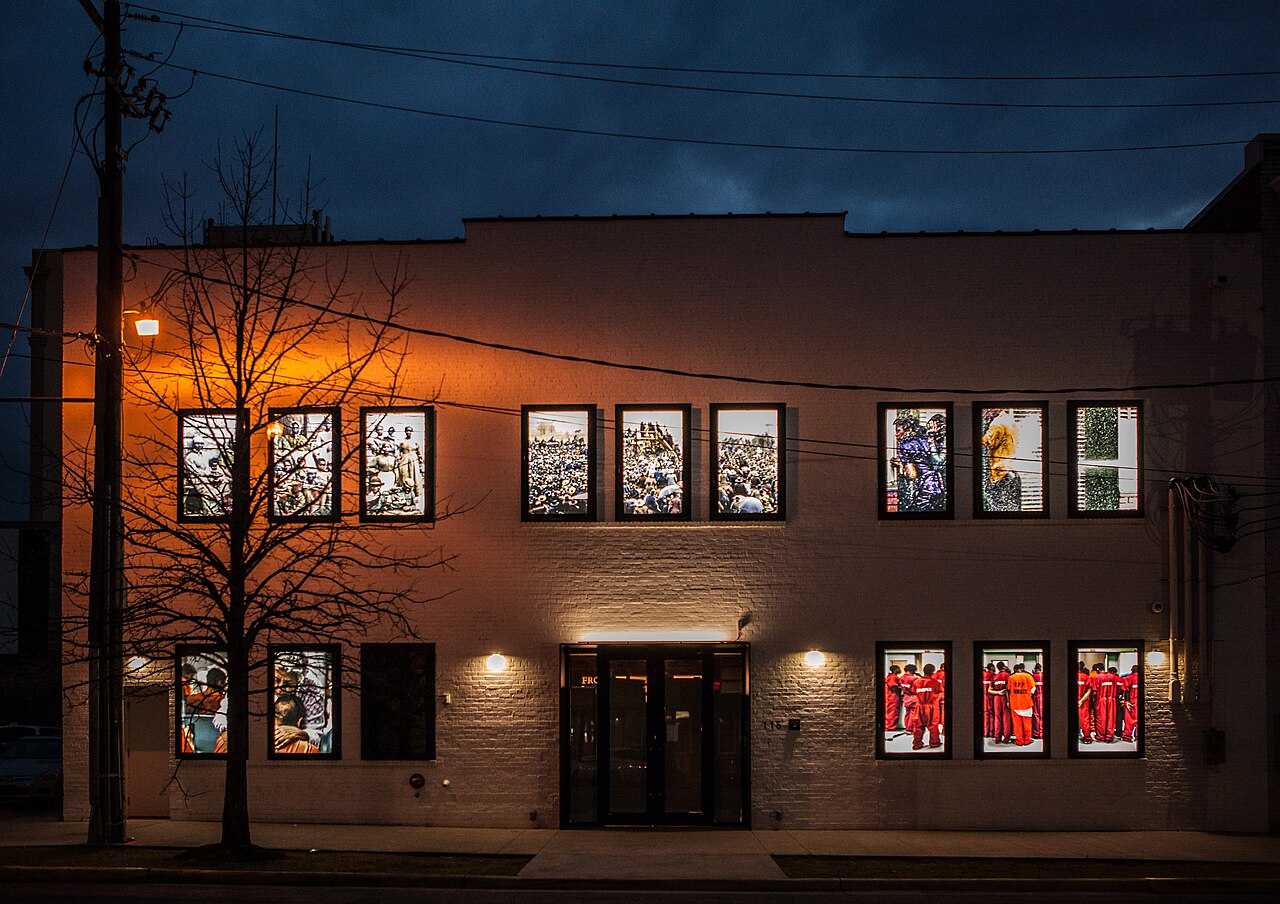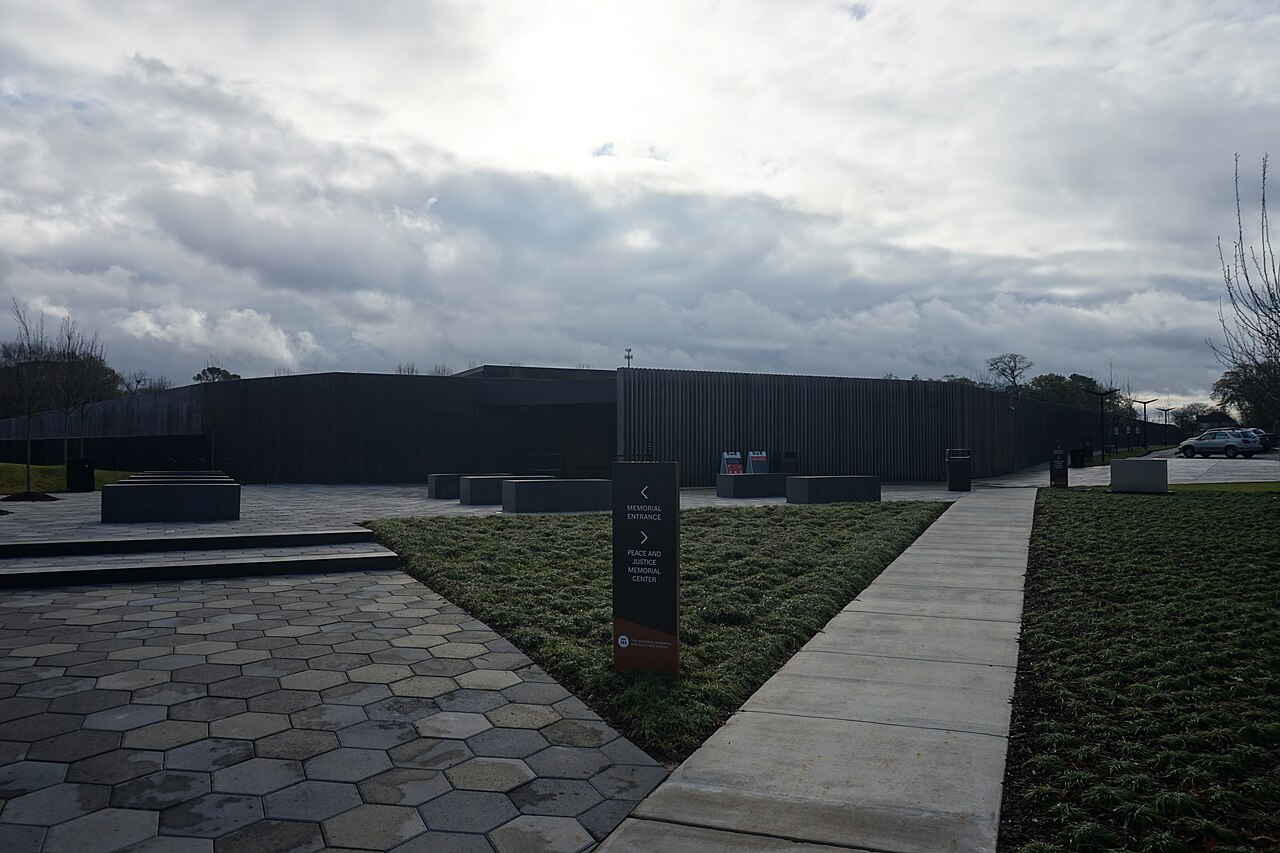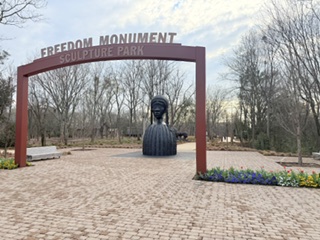
The Freedom Monument Sculpture Park is the newest addition to the cluster of sites created by the Equal Justice Initiative, and it gives the Montgomery story a hopeful, reflective setting beside the Alabama River. Where the Legacy Museum and the National Memorial for Peace and Justice confront the history of racial terror, this park turns toward the people who endured slavery and built lives and communities in spite of it. It stands on Walker Street, a short distance from downtown, and was designed as an outdoor space for walking, looking and thinking, with monuments, sculpture and landscaping arranged to hold both grief and dignity. The monument honors the formerly enslaved by name, using the surnames that people took or were given, so that the scale of the history becomes visible as a wall of words. Even if you have only a short time in Montgomery, a stop here fills in the second half of a story that begins at the museum.
The park is part of the same admission arrangement as the neighboring sites, and the most common itinerary is to visit the museum, then the memorial, then the park. Because it is outdoors and open in layout, it feels different in tone from the other two: more room to move, more sky and a gentler pace.
The sculptures use scale and figure to make the human story concrete, and the walls of names invite visitors to look for familiar family names or simply read slowly. Benches and shaded spots make it possible to rest between the heavier galleries of the museum and the memorial.
Because the park is newer and is still developing, details such as exhibits, programs and parking arrangements can change. The most reliable plan is to check the current visiting information before you arrive, confirm last-entry times and decide whether to walk, drive or use a rideshare between the sites. The sculpture park is accessible by path, and there is typically more shade near the river side than in open areas. In summer, bring water and sun protection, and in cooler months a light jacket is useful in the wind off the river.
To make the most of the visit, treat the three sites as a sequence rather than separate stops. Start with the museum for context, spend your quietest hour at the memorial and finish here with a walk by the river. That order moves from fact to witness to remembrance, and it ends in open air.
Allow at least an hour at the park, longer if you like reading inscriptions or sitting with the sculptures. Respectful behavior is expected, as at the other sites, and photography is permitted in most outdoor areas for personal use. Pair the day with a meal downtown so that you can talk through what you have seen.
For travelers with limited time, the park is a good fallback when the museum's timed slots are sold out, since it can often be visited with more flexibility than indoor galleries. It is also a fitting stop for those who have already visited the other two sites on a previous trip and want to see what has been added. Keep an eye on current programming, because the park is used for events, tours and community gatherings that can change the atmosphere of a visit.
What to expect
The experience
An outdoor riverside sculpture park with monuments and walls of names.
Best time
Late afternoon, after the museum, when the light is softer.
How long
About an hour.
Tips
Wear sun protection, check last-entry times and treat it as the third stop after the museum and memorial.
Quick picks
- Best for
- Visitors completing the Equal Justice Initiative trio.
- Families
- Open space makes it easier for children, though the subject is serious.
- Couples
- A reflective river walk after the museum.
- Pair with
- The Legacy Museum and the National Memorial for Peace and Justice.
- Time needed
- One hour.
Good questions
What is the Freedom Monument Sculpture Park?+
An outdoor park on Walker Street that honors people who were enslaved, using sculpture and a wall of surnames beside the Alabama River.
Is it included with the Legacy Museum ticket?+
The group of Legacy sites has operated with a single e-ticket. Confirm what it covers when you book.
How long does it take?+
Around an hour, more if you read the inscriptions closely.
Is it outdoors?+
Yes. Dress for the weather and bring water in warm months.
Should I visit it last?+
Many visitors do. Museum first, memorial second and the park as a reflective close.