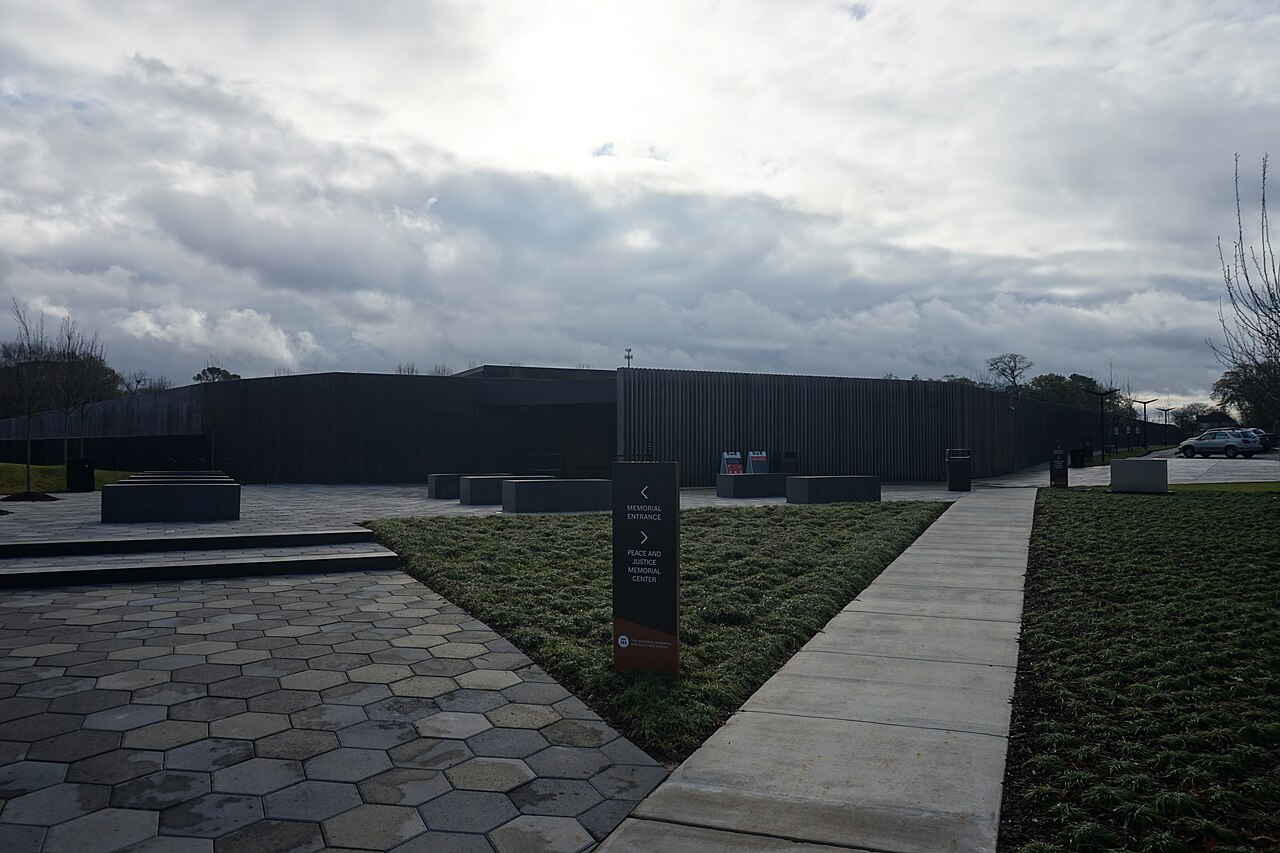
The National Memorial for Peace and Justice occupies a hill above downtown Montgomery and is among the most powerful public memorials in the United States. Opened in 2018 by the Equal Justice Initiative, it honors the thousands of Black men, women and children who were lynched in the decades after the Civil War. You approach along a path that gradually descends while rows of weathered steel monuments, each the size of a coffin, hang overhead from above. Each monument represents a county where lynchings took place and carries the names of victims, with dates. By the time you reach the end, the monuments hang high above your head, a quiet image of lives taken. The design does the work without raising its voice. It is a place for silence, reading and reflection, and most people spend longer than they expect, walking the rows slowly and finding the name of the county they know.
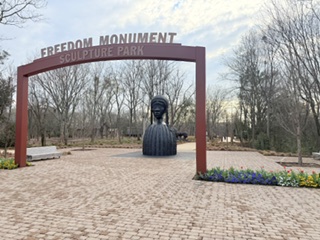
The memorial grounds extend beyond the main structure. A field outside holds duplicate monuments, laid flat in rows, which counties are invited to claim and take home to install in their own communities as a way of confronting local history. Sculptures along the paths, including a work that depicts the shackled figures of enslaved people, add context to the central structure.
Informational panels explain the research behind the names, which draws on years of documentation in the Equal Justice Initiative's reporting on racial terror in America, and you can see which counties in your own region appear.
The memorial is part of the same group of sites as the Legacy Museum, and the two are usually visited together. Many people begin at the museum and walk or drive up to the memorial, since the story from the museum prepares the ground for the memorial's quiet. The memorial is largely outdoors, so weather matters: bring water and sun protection in summer, a light layer in cooler months and an umbrella if rain threatens.
Paths are accessible, and benches around the site give a chance to pause. Last entries are earlier than closing time, so arrive with time in hand.
Respect shapes the visit. Visitors are asked to keep voices low, and photography is welcome in the open areas, though many choose to put the camera away. Some come to find the name of an ancestor or a hometown, and others come simply to witness, so give people space.
Allow at least ninety minutes for a thoughtful walk, longer if you read the monuments closely. Check the opening days and seasonal hours before you go, because the group of sites keeps a closing day each week, and combined tickets are best confirmed on the day you plan to visit.
Consider the time of day carefully. Morning light makes the names easier to read and the paths less crowded, while late afternoon tends to bring long shadows through the hanging monuments that photographers admire. The site can feel emotionally weighty, so there is no pressure to see everything at once. Take the benches when you need them, read the interpretive panels at your own pace and give yourself permission to leave a gap in your schedule afterward for a drink of water, a walk and some quiet.
What to expect
The experience
An outdoor memorial of hanging steel monuments, with sculpture, names and interpretive panels.
Best time
Morning or late afternoon, when the light is soft and the site is quieter.
How long
One and a half to two hours.
Tips
Bring water, wear comfortable shoes, mind last-entry times and visit with the museum if you can.
Quick picks
- Best for
- Visitors who want a moving, reflective place to take in the history.
- Families
- Suitable for teens and older children with preparation; the site itself is quiet and non-graphic.
- Couples
- A contemplative walk at golden hour.
- Pair with
- The Legacy Museum and the Freedom Monument Sculpture Park.
- Time needed
- Ninety minutes to two hours.
Good questions
What is the memorial?+
A national memorial to the victims of racial terror lynchings, with a monument for each county where a lynching was documented.
Where is it?+
On a hill in downtown Montgomery, reachable on foot or by a short drive from the Legacy Museum.
Is it indoors or outdoors?+
Mostly outdoors, so dress for the weather. Allow time to walk the grounds as well as the main structure.
Can I see it on the same ticket as the museum?+
A single e-ticket has covered the group of Legacy sites. Confirm what is included when you book.
What are the opening days?+
The sites close one weekday a week and on certain holidays, with seasonal hours. Check before you go.