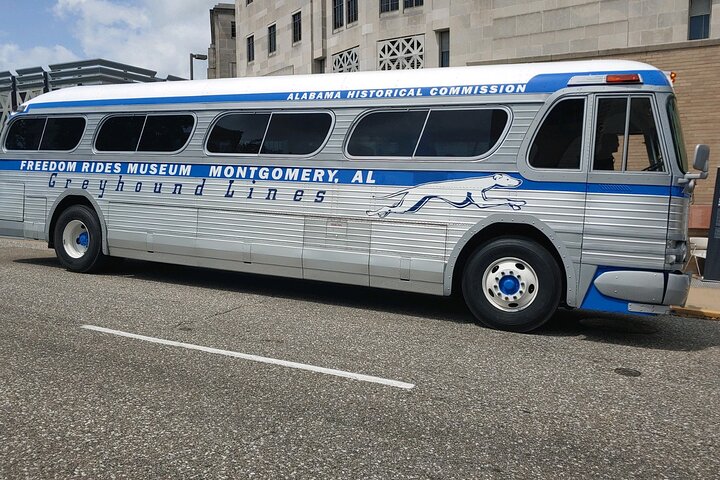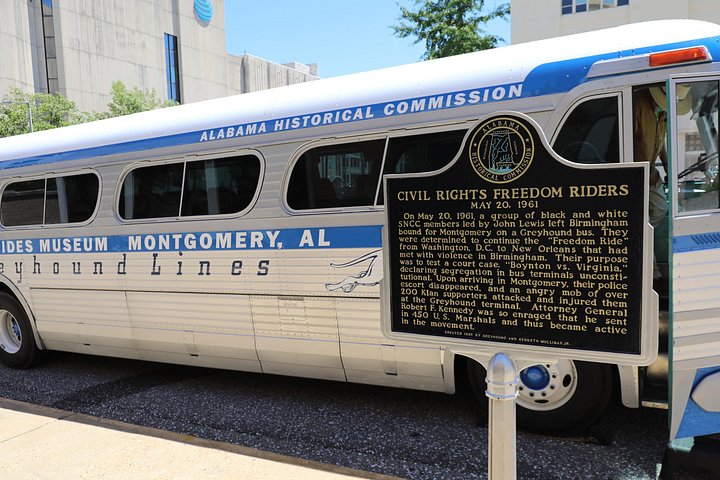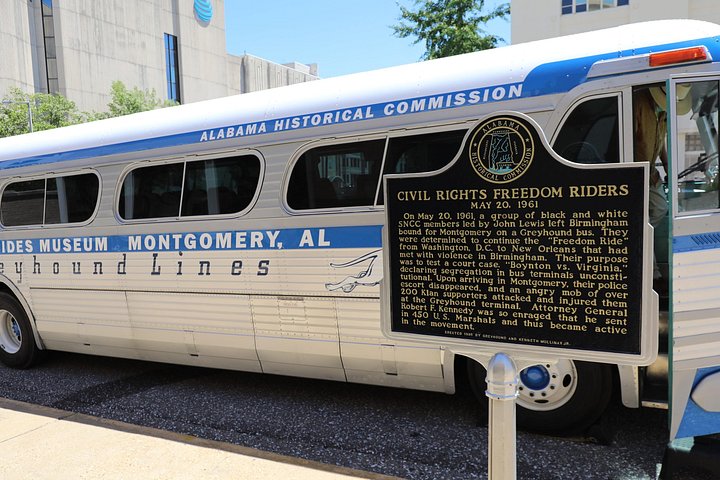
The Rosa Parks Museum stands on Montgomery Street, close to the place where Rosa Parks boarded a Cleveland Avenue bus on December 1, 1955 and refused to give up her seat. Operated by Troy University's Montgomery campus, it opened in 2000 and tells the story of her arrest, the 381 days of the bus boycott that followed and the people who organized and sustained it. The centerpiece is a guided, immersive exhibit in which a recreated scene of the 1955 bus, with a station wagon of the type used for carpools, helps visitors sense what that day felt like. Surrounding galleries use documents, photographs, film and artifacts to explain the layers of Montgomery's segregation and the choices people made. It is one of the best-organized and most accessible civil rights museums in the South, and one that works equally well for adults, teens and curious younger children.
The museum presents the boycott not as a single moment but as a community effort that lasted more than a year. Church mass meetings, the carpools that moved thousands of workers each day, the legal case that ended segregation on city buses and the role of leaders such as Jo Ann Robinson and E.
D. Nixon all appear. Rosa Parks herself is shown as an experienced activist and a longtime secretary of the local NAACP chapter, not only as a tired seamstress, which is how popular memory sometimes reduces her. The result is a fuller and more accurate picture of how change was organized in Montgomery.
A separate children's wing offers a time-travel style experience that introduces the story to younger visitors in a gentle format, which makes the museum one of the more family-friendly civil rights sites in the city. The museum is also a short walk from Court Square, the Alabama State Capitol and other downtown landmarks, so it fits easily into a walking day.
Because it is on a university campus, parking and bus details can vary, and the staff can advise on the best approach if you are driving. The museum is also included on the city multi-attraction pass, which is worth considering if you plan to see several sites.
Practical advice
Arrive in the morning for the tour groups to be smaller, allow about ninety minutes and check the opening schedule, since weekday and weekend hours can differ. The galleries are step-free, and staff will help with any access questions. Photography rules vary by exhibit, so ask at the desk.
After your visit, a walk to the Dexter Avenue church and the Capitol follows the same route that the boycott leaders and later marchers used. Many guests find that visiting here before the Legacy Museum gives helpful context for the wider story the day will tell.
The museum also rewards a second look at the context of the street itself. Montgomery Street and the surrounding blocks were part of the ordinary commercial life of the segregated city, and standing in the area helps you imagine the bus stops, department stores and sidewalks of 1955. A short self-guided walk afterward, using a map from the front desk or a GPS walking route, ties the museum to the Capitol, Dexter Avenue and Court Square, and makes the geography of the boycott clearer than any gallery can on its own.
What to expect
The experience
A guided immersive exhibit with a recreated bus scene, plus galleries and a children's wing.
Best time
Weekday mornings, when tour groups are smaller.
How long
About ninety minutes.
Tips
Check opening hours, consider a city pass if you plan several stops, and walk on to Court Square afterward.
Quick picks
- Best for
- Anyone who wants the full story of the bus boycott.
- Families
- One of the best civil rights museums for children, with a dedicated children's wing.
- Couples
- A thoughtful morning followed by lunch near Court Square.
- Pair with
- Dexter Avenue King Memorial Baptist Church and the Alabama State Capitol.
- Time needed
- Ninety minutes.
Good questions
Where is the Rosa Parks Museum?+
On Montgomery Street in downtown Montgomery, near the place where Rosa Parks was arrested in 1955.
What will I see?+
A guided recreated bus scene, galleries about the 381-day boycott and a children's wing with a time-travel style exhibit.
How long should I allow?+
About ninety minutes, plus extra time if you want to read the galleries in full.
Is it suitable for children?+
Yes. The children's wing is designed for younger visitors, and the main story is told with care.
Is it included on a city pass?+
The Montgomery multi-attraction pass includes the museum, which can save money if you plan several visits.