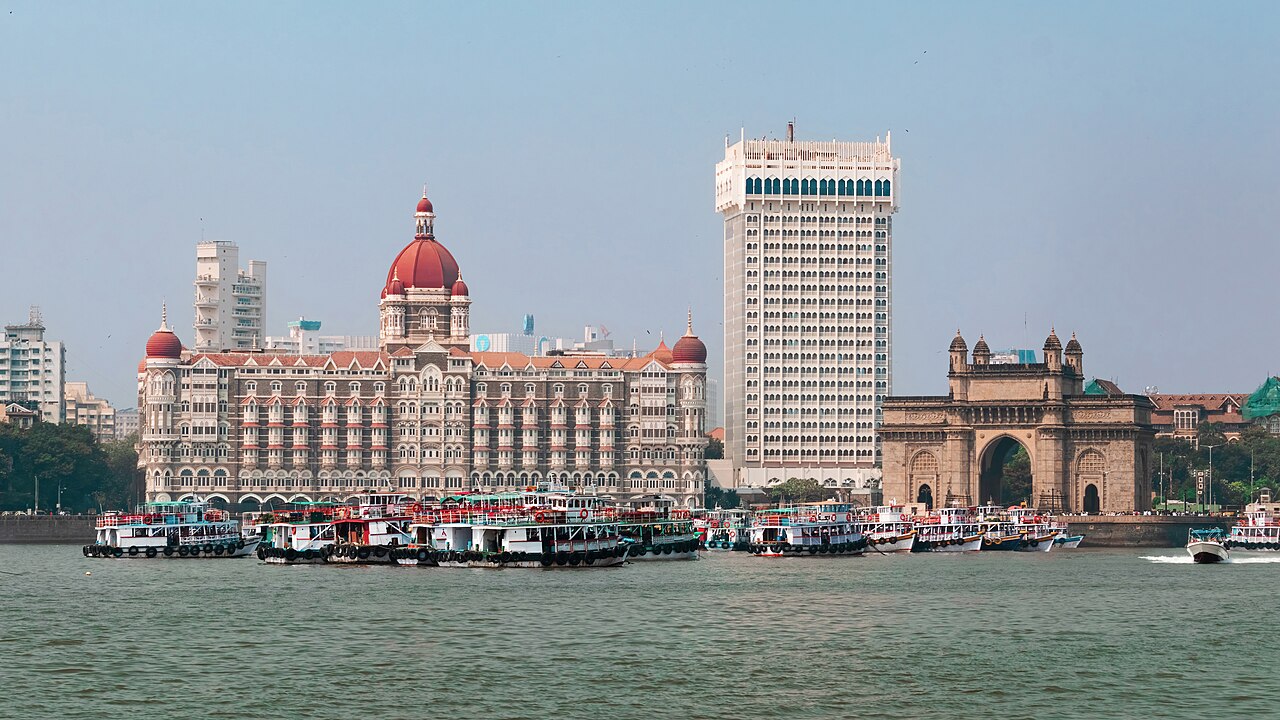
The Gateway of India is where Mumbai meets the sea. The Scottish architect George Wittet designed the arch to mark the 1911 visit of King George V and Queen Mary, the first British monarch to land in India, and it opened to the public in December 1924. Built of local yellow basalt with carved jali screens, it blends Gujarati and Islamic motifs with a triumphal-arch form, and it rises about 26 metres above the Apollo Bunder promenade. It later became the symbolic exit of the colonial era, because the last British troops marched through it in 1948. Today it is the city’s great open-air meeting place: families, street photographers, pigeons, vendors and tourists all gather on the square, while the Taj Mahal Palace hotel stands across the road and small boats bob in the harbour behind. There is no ticket to see the arch itself, which makes it an easy first stop.
How to visit
The Gateway is on the Colaba waterfront in South Mumbai, a short walk from the Taj Mahal Palace and the museum district, and about 15 minutes by taxi from Churchgate or CSMT stations. The square is open throughout the day and into the night, there is no entry fee, and bags are screened at the security checkpoint on the approach, so travel light. The area was tightened after the 2008 attacks, so expect barriers and police rather than a free-roaming plaza.
What to expect
The best light is early morning, when the arch glows and joggers and pigeon-feeders have the square to themselves. By midday it is crowded and hot, and photographers will approach you offering instant prints; a polite refusal is enough. The jetties behind the arch are where the ferries to Elephanta Island depart, and harbour boat rides are sold from kiosks nearby, so agree the price and what is included before boarding. In the evening the arch is lit and the sea breeze makes this one of the nicest places to linger.
Making the most of it
Combine the Gateway with the CSMVS museum, Colaba Causeway market and the Taj Mahal Palace lobby, all within walking distance, and plan the Elephanta ferry for the morning so you can pass through the square on your way.
What to expect
The experience
A free, self-guided stroll around the basalt arch and the Apollo Bunder promenade, with the harbour and ferry jetties behind it.
Best time
Early morning for soft light and few people, or after dark when the arch is lit and the sea breeze cools the square.
How long
Half an hour for photos, an hour if you add the promenade and a look at the Taj Mahal Palace across the road.
Tips
Pass the bag check with a small bag, politely decline touts and instant-print photographers, and agree the price before any harbour boat ride.
Quick picks
- Best for
- First-time visitors, photographers and anyone starting an Elephanta ferry trip.
- Families
- Children enjoy the pigeons and the boats, though the crowds and traffic mean holding hands near the road.
- Couples
- A sunrise or evening stroll by the water is one of the simplest romantic things to do in the city.
- Pair with
- The CSMVS museum and the Taj Mahal Palace lobby, both a few minutes on foot.
- Time needed
- Under an hour on its own, or the start of a half-day in Colaba.
Good questions
Is there an entry fee for the Gateway of India?+
No, the arch and the square around it are free to visit. You only pay if you take a ferry or a harbour boat from the jetties behind it.
What time is best to visit the Gateway of India?+
Early morning is quietest and has the softest light for photographs. After dark the arch is lit and the square is lively but busy.
Can you go inside or climb the Gateway of India?+
No, the monument is viewed from the square rather than entered. The interest is in the carved basalt, the harbour setting and the people-watching.
Where do the Elephanta Island ferries leave from?+
They leave from the jetties beside the Gateway of India, and the crossing takes roughly an hour. Guided Elephanta tours usually meet you here.
Is the Gateway of India safe for tourists?+
Yes, it is heavily patrolled, but crowds attract touts, instant-photo sellers and pickpockets. Keep valuables close and agree prices before accepting any service.