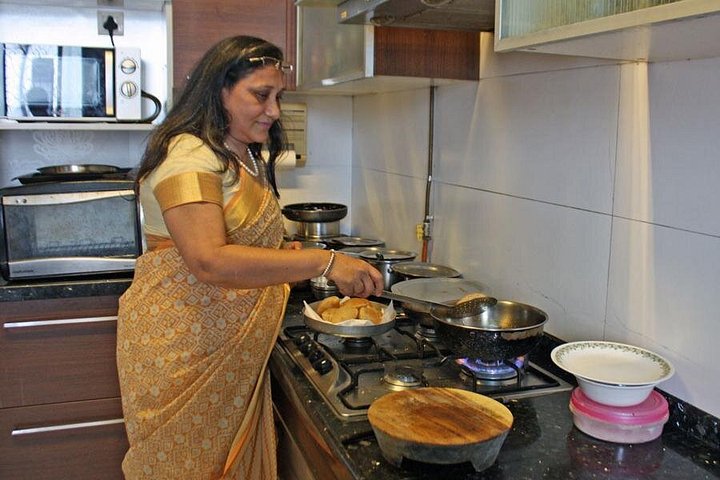
One of the most rewarding ways to understand Indian food is to cook it in someone’s home. A home cooking class in Mumbai takes you out of the hotel and the restaurant and into a family kitchen, where a local host teaches you how to build flavour step by step: toasting whole spices, grinding fresh masalas, tempering oil with mustard seeds and curry leaves, and shaping dough into soft rotis. You learn techniques that make everyday dishes work, from the first sizzle of the pan to the final garnish, and you leave with recipes you can reproduce at home with ingredients available in most supermarkets. A typical class covers a full meal rather than a single dish. The menu might include a vegetable curry, a dal, a rice dish, a flatbread and a chutney or raita, with variations that reflect the household’s region and the season. Many hosts are Mumbai natives from Gujarati, Maharashtrian or other communities, and they share the customs behind what they serve, the way food is offered, and the role of spices in daily health and celebration. The best classes are small, friendly and unhurried, with plenty of tasting along the way and time to ask questions. The final meal is eaten together around the table, often with the whole family.
How to join
Classes usually run for three to four hours and are offered at lunchtime or in the early evening, so you finish with a meal. Confirm the menu, whether it is vegetarian or includes meat, the location of the home, and whether pickup or transport is included.
Say clearly if you have allergies, if you avoid certain foods, or if you want a vegetarian or vegan menu, because most hosts can adapt. Wear comfortable clothing, tie back long hair and expect to work with sharp knives, hot pans and strong spices, though everything is guided.
What to expect
A warm welcome, usually with tea or a drink, followed by a briefing on the ingredients and a hands-on cooking session. You chop, grind, stir, roll and season, while your host demonstrates techniques and explains the reasoning behind each step. Expect to learn some new vocabulary, from tadka to garam masala, and to taste as you go.
Some classes begin with a visit to a local market to select vegetables and spices, which adds time but also an excellent introduction to the ingredients. At the end you sit and eat what you have cooked, and you often receive a recipe sheet to take home.
Making the most of it
A cooking class is a good option if you are travelling as a couple, with a group of friends or as a family with older children, and it balances a day of sightseeing with a relaxed, social evening. It also suits solo travellers who want to meet a local household. It pairs well with a morning at the markets or a walk through Crawford Market, where the spices on sale will make more sense after you have cooked with them.
If you are interested in a specific cuisine, such as Parsi, Gujarati or Maharashtrian cooking, check whether the host specialises in it, and book early in the busy season from November to February. Always confirm the start time and exact meeting point.
What to expect
The experience
A hands-on cooking class in a local family home, ending with a shared meal of the dishes you prepare.
Best time
Late morning for a lunch class or late afternoon for an evening meal.
How long
Around three to four hours including the meal.
Tips
Mention dietary needs when booking, wear comfortable clothes, confirm the menu and ask for the recipes to take home.
Quick picks
- Best for
- Food lovers, couples and families who want a hands-on, local experience.
- Families
- Well suited to older children who enjoy cooking, with the usual care around hot pans and knives.
- Couples
- A relaxed shared activity ending in a homemade meal with a local family.
- Pair with
- A morning market walk or Crawford Market, then dinner at a Parsi café.
- Time needed
- Half a day or an evening.
Good questions
What will I cook?+
Typically a full meal, such as a vegetable curry, dal, rice, flatbread and a chutney or raita. The menu depends on the host, so confirm it when booking.
Is the class suitable for vegetarians?+
Yes, many classes are fully vegetarian and others can adapt the menu. Say what you need when you book.
Do I eat the food I cook?+
Yes, the class normally ends with a shared meal of the dishes you prepared, often with the host family.
Is it suitable for beginners?+
Yes, hosts explain each step and no experience is needed. Be ready to chop, stir and taste.
Will I get the recipes?+
Many hosts share recipes in writing or by message, but check when you book.