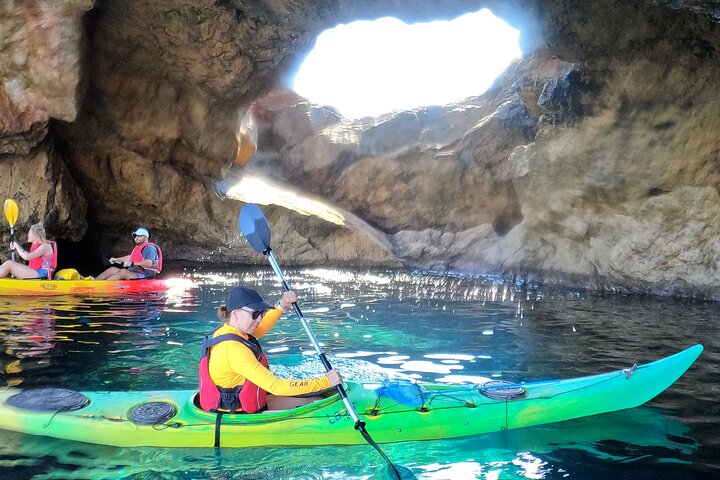
Mykonos is known for what happens above the water, but the sea around it is clear, warm in summer and full of rock walls, small caves and shoals of fish, and a discover scuba session is a way to see it for the first time. The programme is designed for people who have never dived before. You meet an instructor at a dive centre, learn the basic skills and safety signals, practise breathing from the equipment in shallow water and then swim out for a guided dive in a calm, protected area. The depth is limited, the group is small and the instructor stays at your side throughout. Do not expect the coral gardens of the tropics. The Aegean is rocky, with sea grass, sponges, small fish, octopus and the occasional bigger surprise, and the main attraction is the sensation of floating weightless in clear blue water with the sun coming down in beams. For many people it is a highlight because it is so different from a day on a sunbed. It suits adventurous travellers, couples and teenagers who are comfortable in the water, and it can be the first step towards a full diving certificate if you enjoy it. If you would rather stay near the surface, snorkelling or a kayak trip is a gentler alternative.
How it works
You book a date and a time and meet the dive centre at the point named on your ticket. A briefing covers the equipment, the hand signals and the safety rules, followed by practice in shallow water. When the instructor is satisfied that you are ready, you go out for the dive itself, normally for a short session at a limited depth. Check the meeting point, the length of the programme, whether equipment, photographs and transport are included and the health requirements before you go, because the details differ between centres.
Season and weather
Diving is possible from late spring to autumn, with the warmest water from July to September and the best visibility often in May, June and October. The north wind affects the sites on the north and east coast, so instructors choose sheltered bays on the south and west coasts when the sea is rough. A dive may be rescheduled if conditions are poor. Outside the season, centres run fewer sessions and the water is cold, so check availability if you travel in winter or early spring.
Making the most of it
You will be asked to fill in a health form, and conditions such as asthma, heart problems, recent ear or sinus trouble and pregnancy may prevent you from diving, so read the requirements when you book. Do not fly for the period the centre recommends after diving, which matters if your flight home is soon, and avoid heavy drinking the night before.
Bring a swimsuit and towel, and tell the instructor if you feel nervous. A good instructor will go at your pace, and many first-time divers are surprised at how calm it feels.
Good to know
You do not need to be a strong swimmer to try a discover dive, but you should be comfortable in water and able to clear your ears, which the instructor will teach you. Underwater photographs are often offered as an extra, so ask about them in advance if you want a souvenir of your first dive.
What to expect
The experience
A beginner dive with an instructor, covering a briefing, shallow-water practice and a guided dive in a sheltered bay.
Best time
Calm mornings from May to October, with the warmest water from July to September.
How long
About three hours including the briefing and practice.
Tips
Read the health requirements before booking, avoid flying soon afterwards and tell the instructor if you feel nervous.
Quick picks
- Best for
- Adventurous travellers who have never dived and want to try it in a safe, supervised setting.
- Families
- Suitable for older children and teenagers who meet the minimum age and are comfortable in the water; check the rules when you book.
- Couples
- A memorable shared first, with an instructor to keep you both comfortable.
- Pair with
- A relaxed lunch in town and sunset at Little Venice.
- Time needed
- Half a day.
Good questions
Do I need diving experience?+
No. A discover scuba session is designed for beginners and begins with a briefing and practice in shallow water.
How deep will I go?+
Beginner dives are kept to a limited depth in a sheltered area. The instructor decides the depth and stays with you.
Can anyone do it?+
You must be healthy, comfortable in water and meet the minimum age. Some medical conditions prevent diving, so read the health form carefully.
Can I fly after diving?+
Divers are advised to wait before flying. Ask the dive centre how long, and plan your dive well before your departure.
What will I see?+
Expect rocks, sea grass, sponges, shoals of small fish and sometimes octopus. The attraction is clear water and the feeling of weightlessness.