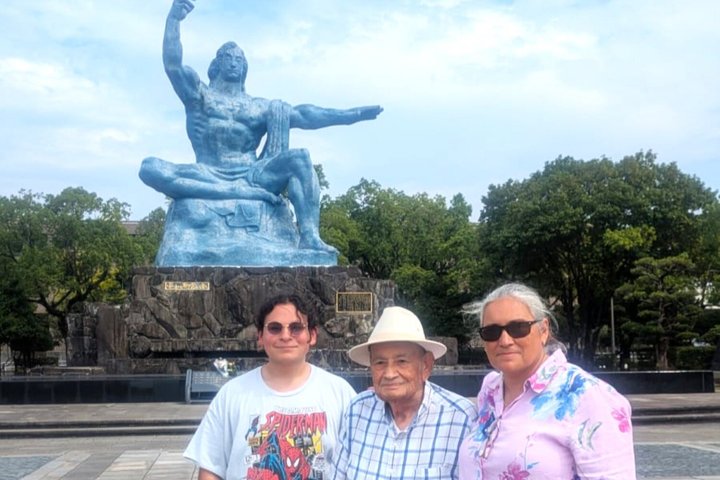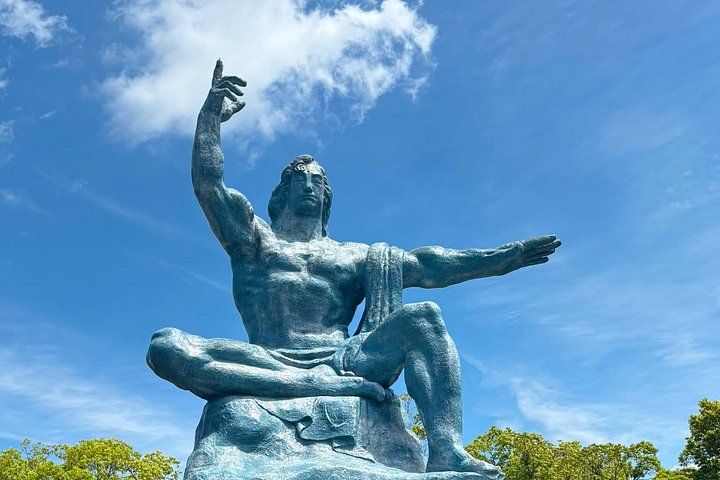
Nagasaki Peace Park sits in the Urakami district, a few tram stops north of the downtown core, on the slope above the place where the bomb detonated. The park opened in the 1950s and has grown into a layered memorial landscape: the Peace Statue, a seated figure with one arm raised to the sky and the other stretched out horizontally, dominates the northern end, while the Fountain of Peace, built in memory of those who died begging for water, sits at the southern end of the main plaza. Between them runs a walkway lined with monuments donated by cities and countries around the world, each with its own message about peace and the abolition of nuclear weapons. The hypocenter itself is a short walk away in its own small park, marked by a black stone column and a section of the original ground exposed under glass, with fragments of the old Urakami Cathedral wall and the rubble of buildings that stood here in 1945. Taken together, the hypocenter, the Peace Park and the nearby museum make a coherent half day, and a guided walk adds names, survivor stories and context that signs cannot supply.
Start at the hypocenter and walk uphill, because the sequence tells the story in order. The hypocenter park is small and calm, and the black column marks the point about 500 metres above which the bomb exploded. A short flight of steps leads up to a hillside terrace with the remains of Urakami Cathedral's wall, left standing as a reminder, and from there the path climbs to the Peace Park proper.
The Peace Statue is best seen from the foot of the plaza, where the scale of the figure and the stillness of the surrounding space become clear. Look for the paper cranes that schoolchildren leave in the park, the monuments in different national styles, and the water features, which are central to the park's symbolism.
Every visitor should know that 9 August is the anniversary, and the city holds a peace ceremony in the park each year with a large public attendance and a minute of silence at 11:02, the time of the explosion. The park is busy and security-conscious on that day, so plan accordingly or avoid the area unless you intend to attend. On ordinary days the park is quiet, open at all hours and free to enter. Benches are scattered along the paths, and there is shade from mature trees, which matters in the humid summer.
A guided group walk is a good way to see the park with context. Local guides explain who donated each monument, point out the details most people walk past, and often include the nearby museum and Urakami Cathedral in the same morning. If you prefer to go alone, allow about an hour for the park and hypocenter, plus the museum afterwards, and finish with a quiet coffee in the Urakami neighbourhood rather than rushing to another sight.
Wear comfortable shoes, as the slope between the hypocenter and the plaza is steeper than it looks on a map.
If you have more time, extend the morning with the National Peace Memorial Hall for the Atomic Bomb Victims, a quiet modern building close to the museum that houses a hall of remembrance and a library of survivor accounts. The architecture is calm and the space invites reflection, which makes it a gentle counterpoint to the museum's more intense displays. Entry to the hall is usually free, and the staff can help you find testimonies in English.
What to expect
The experience
A free, open-air memorial park you can walk alone, or a guided group walk that links the hypocenter, the monuments and the museum.
Best time
Early morning or late afternoon, when the light is soft and the park is quiet. Avoid 9 August unless you plan to attend the ceremony.
How long
About one to two hours for the park and hypocenter, more with the museum.
Tips
Take a tram to Hamaguchi-machi or Matsuyama-machi, wear walking shoes, bring water in summer and keep voices low.
Quick picks
- Best for
- Every first visitor, and anyone who wants to understand why Nagasaki matters beyond its harbour views.
- Families
- Suitable for children with a conversation beforehand; the park itself is gentle, but the museum next door has graphic displays.
- Couples
- A reflective morning together, followed by a quiet lunch in Urakami.
- Pair with
- The Atomic Bomb Museum, Urakami Cathedral and the National Peace Memorial Hall.
- Time needed
- Half a morning for the park and hypocenter alone.
Good questions
Is Nagasaki Peace Park free to enter?+
Yes. The park and the hypocenter are open-air public spaces with no entry fee and no closing time. Guided walks charge their own fee.
How far is the Peace Park from the Atomic Bomb Museum?+
They are within a short, gently uphill walk of each other, around five to ten minutes on foot, so most people see both on the same morning.
How do I get to the Peace Park by tram?+
Take the tram toward Akasako and get off at Hamaguchi-machi or Matsuyama-machi. Both stops are a short walk from the park and hypocenter.
What happens on 9 August?+
The city holds an annual peace ceremony at the park with a minute of silence at 11:02. It is moving but crowded, and access can be restricted, so plan ahead.
Is a guided tour worth it?+
Yes if you want stories and context. A local guide explains the monuments, survivor accounts and the history behind each site, and can link the park, the hypocenter and Urakami Cathedral in one walk.