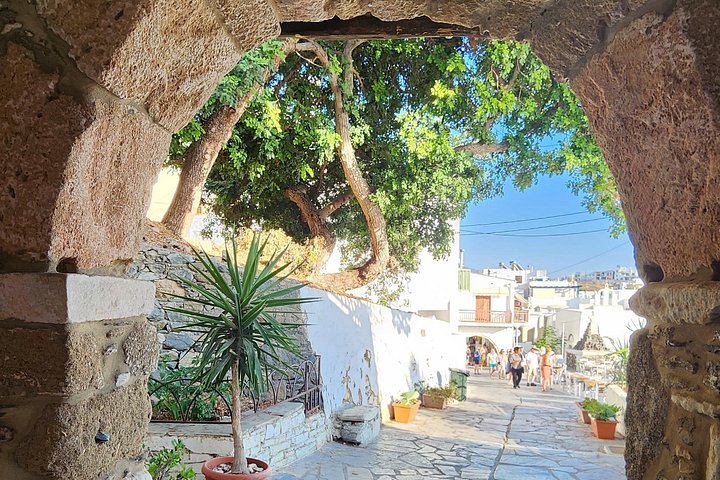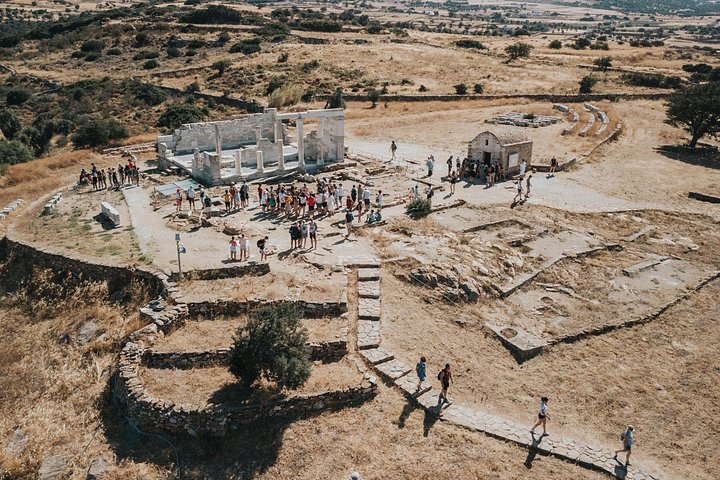
Chora, as the locals call Naxos Town, is two towns in one, and the pleasure of wandering it comes from the way they fit together. The lower quarter, Bourgos, was the Greek town, a tangle of narrow lanes lined with shops, tavernas and bakeries that runs back from the waterfront. Above it, on the hill, is the Kastro, the fortified quarter that Marco Sanudo built after he took the island for Venice in 1207 and made it the capital of his Duchy of the Archipelago. Its houses were arranged in a ring so that their outer walls formed the fortifications, and a handful of gateways, arches and towers survive, along with the coats of arms of the Catholic families who lived inside. Some of those families still have descendants in the old houses, and the Catholic cathedral and a few mansions still show the Latin faces of the island. Walking up through the Kastro gateway from the market lanes is like moving from one century to the next in a few steps.
Allow half a day to do the old town justice, and start early or late when the lanes are cooler. The streets are deliberately confusing, a defensive design that survives in the layout, so do not worry about getting lost; every route eventually leads downhill to the waterfront or uphill to the castle walls. Inside the Kastro you will find quiet squares, stone arches, a Venetian tower house and the Archaeological Museum, housed in a historic building that is well worth a visit if you want to see the island's Cycladic figurines and marble finds.
Hours and ticket prices change, so check locally on the day you plan to go. The upper lanes have fewer visitors and a lived-in feel, with washing lines, potted basil and cats on the steps.
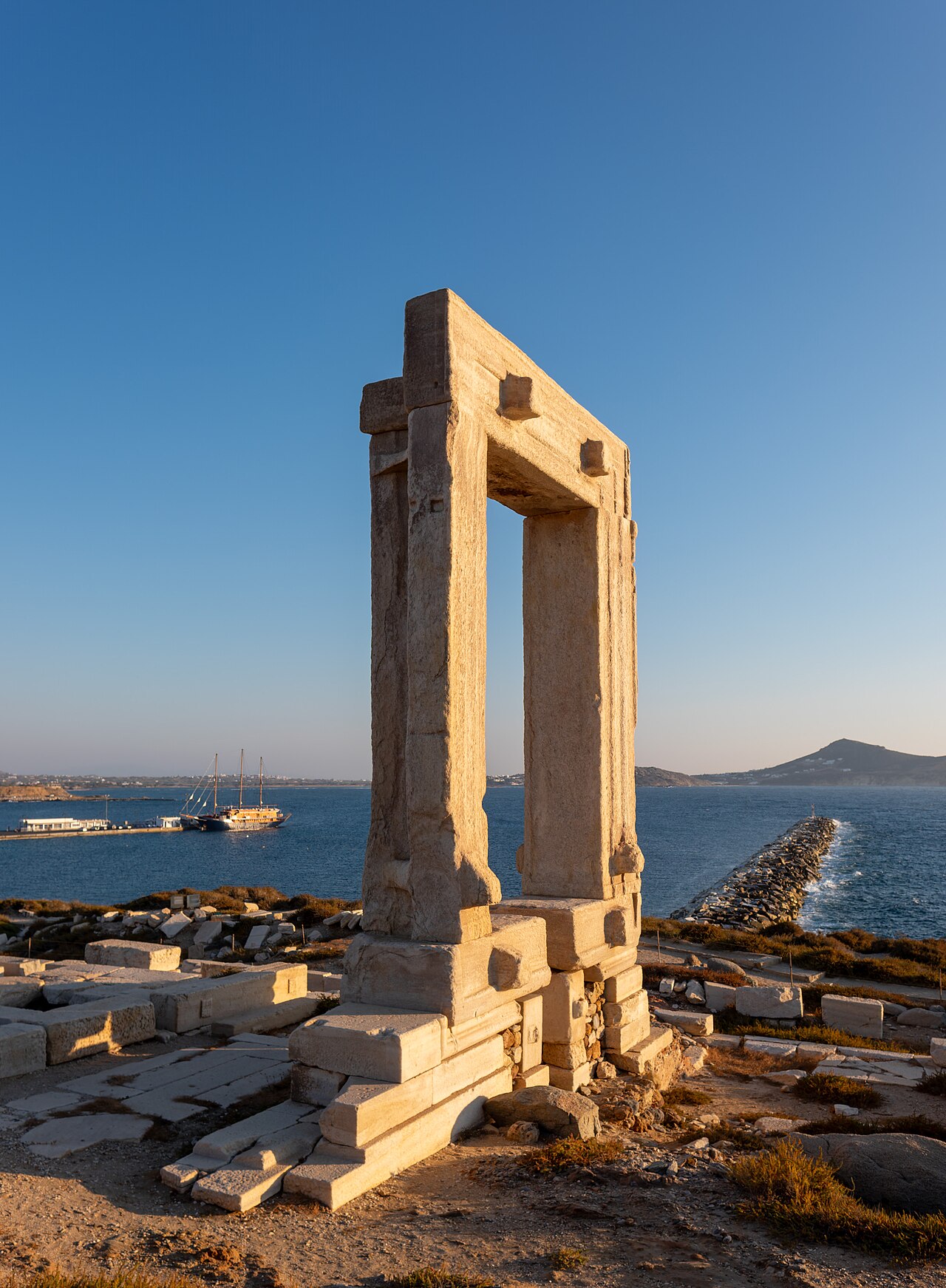
Bourgos is where you will eat and shop. Look for the market street with its bakeries, cheese shops, tavernas and sweet shops, and try local products such as graviera cheese, citron liqueur and honey. In the evening the lanes fill with people, and the waterfront restaurants serve fish and grilled meats with a view of the Portara. The streets are paved with uneven stone and many are steep, so wear comfortable shoes and avoid heels.
Pushchairs and wheelchairs struggle in the upper town, though the waterfront is flat. If you prefer a story with your steps, a guided sunset walk or a food tour will connect the pieces. The municipality of Naxos publishes an English-language guide to Chora that is a good starting point for planning your route.
Look for small details as you climb: carved coats of arms above doorways, wooden balconies that overhang the lane, arched passages that join one house to the next and little shrines set into walls. The Kastro was designed so that its outer houses formed a defensive ring, with a few gateways that could be closed at night, and you can still find the thick walls and a surviving tower.
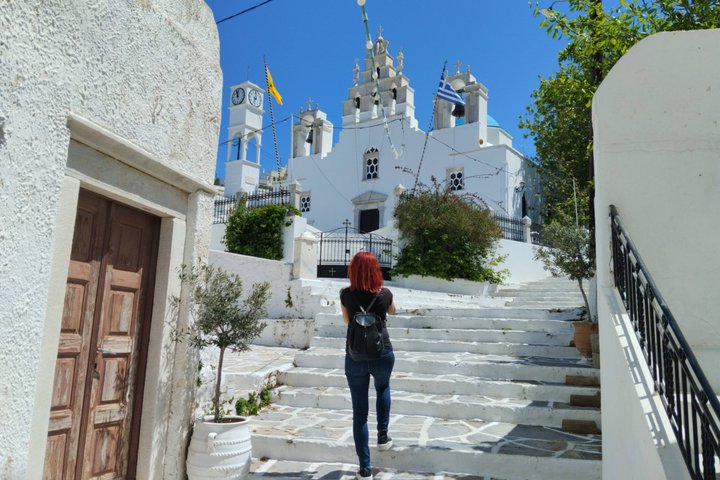
Churches of both the Orthodox and Catholic traditions stand within a short walk of each other, a reminder that the two communities shared the island for centuries. If you are short on time, climb to the Kastro first and wander down through Bourgos, which is easier on the legs and ends at the waterfront cafes.
What to expect
The experience
A self-guided walk through the lower market lanes of Bourgos and up through the Kastro gateway into the Venetian quarter; free to wander, with the museum charging its own entry.
Best time
Early morning or late afternoon for cooler air and softer light; evenings for dining in the lanes.
How long
Three to four hours with stops, longer with the museum and a meal.
Tips
Wear shoes with grip for the stone steps, carry water in summer and expect the upper lanes to be quiet and steep.
Quick picks
- Best for
- First-time visitors who want atmosphere, history and a good meal in one place.
- Families
- Fine for walkers, though the steps and uneven paving are hard with pushchairs.
- Couples
- Wander the Kastro at golden hour, then dinner in a courtyard taverna.
- Pair with
- The Portara at sunset, a food tour or a waterfront dinner.
- Time needed
- Half a day.
Good questions
What is the Kastro on Naxos?+
It is the fortified Venetian quarter at the top of Chora, built after 1207 when Marco Sanudo made Naxos the centre of the Duchy of the Archipelago.
Is it free to walk around the old town?+
Yes, the lanes and gateways are free to wander. The museum inside the Kastro charges its own entry, so check locally for hours.
How long do I need in Chora?+
Half a day gives you time for the lanes, the Kastro, a coffee and a long lunch; a full day if you add the museum.
Is the old town hard to navigate?+
The lanes are intentionally winding, but the town is small and you cannot stray far from the waterfront.
Is it accessible with a pushchair?+
The waterfront is flat, but the upper town has steps and uneven stone, so a carrier or a lighter pushchair works best.