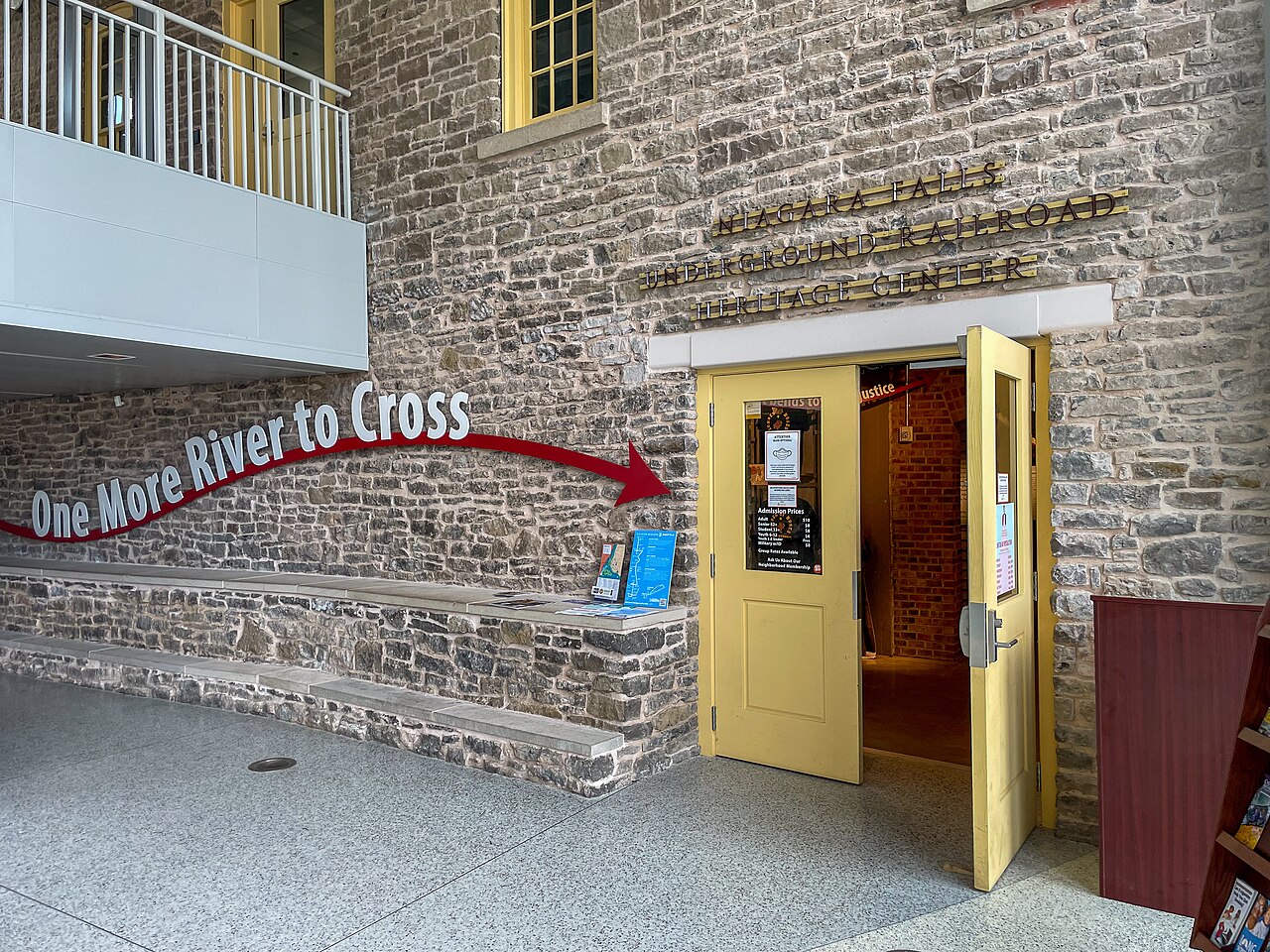
Niagara Falls was one of the last stops on the road to freedom, and the Niagara Falls Underground Railroad Heritage Center is where that story is told. It occupies the 1863 U.S. Customs House at 825 Depot Avenue West, a building on the National Register of Historic Places that overlooks the former site of the International Suspension Bridge, a crossing used by many freedom seekers, including Harriet Tubman. The center sits within the Niagara Falls National Heritage Area, and it is run as an experiential museum rather than a quiet gallery of objects. The visit begins in the atrium of the Amtrak station and moves through exhibits that include a Network Wall, which shows the Underground Railroad as a network of people, routes and transport, interactive scenarios built around figures from the period, and a recreation of the Cataract House dining room and reception, which tells the story of the African American waiters who aided freedom seekers while working at tourist hotels. The final section follows the last crossing of the Niagara River into Canada, with accounts of people such as Harriet Tubman, Frederick Douglass, John Morrison and Patrick Sneed. It is a compact, moving visit that gives the falls a human history alongside the natural one, and it is an excellent addition for families with older children, school groups and anyone interested in the abolitionist movement. The center is a short drive from the state park and is easy to reach from downtown hotels. Hours and admission change, so check current details before you visit.
The context
In the decades before the Civil War, Niagara was a gateway to Canada, where slavery had been abolished. Tourist hotels on the American side employed Black waiters and porters, and some of them were part of the network that helped freedom seekers cross the river. The museum draws these threads together, showing how ordinary jobs, churches and families formed the network and what it meant to make the final crossing. Because the building sits where the suspension bridge once stood, the setting itself reinforces the story.
How the visit works
The experience is built around the idea of a journey, with exhibits that you move through in sequence and interactive elements that ask you to put yourself in someone else's position. The scenarios and the Cataract House recreation are the most memorable parts, and the Network Wall is a good way to understand the scale of the effort.
Allow around an hour for a first visit, and more if you like to read every panel. Check the current hours and admission before you go, and call ahead for groups. The center can be reached by phone at 716-300-UGRR.
Who it suits
History-minded visitors, families with children old enough to engage with the subject, educators and anyone who wants Niagara to mean more than scenery. It fits easily into a day on the American side, between the state park and a meal downtown, and it makes a thoughtful contrast to the thrill rides. If you are crossing to Canada, the story continues on the other side, where freedom seekers settled in communities across Ontario. It is a short, serious and rewarding stop, and one of the most meaningful places in the area.
What to expect
The experience
An experiential museum in the 1863 U.S. Customs House with a Network Wall, interactive scenarios, a recreation of the Cataract House dining room and accounts of the final crossing into Canada.
Best time
Any day it is open; a good indoor option for wet or cold weather. Confirm current hours before you visit.
How long
About one to two hours.
Tips
Start in the Amtrak station atrium. Allow time to read the accounts of freedom seekers. Call ahead for groups on 716-300-UGRR.
Quick picks
- Best for
- Visitors who want the human history of Niagara alongside the scenery.
- Families
- Best for children old enough to engage with the subject; the interactive scenarios help.
- Couples
- A reflective, thought-provoking stop between the park and dinner.
- Pair with
- Niagara Falls State Park and a walk to the Rainbow Bridge.
- Time needed
- About two hours.
Good questions
Where is the Niagara Falls Underground Railroad Heritage Center?+
At 825 Depot Avenue West in Niagara Falls, New York, in the 1863 U.S. Customs House beside the Amtrak station.
What will I see?+
A Network Wall showing the Underground Railroad as a network of people and routes, interactive scenarios, a recreation of the Cataract House dining room and accounts of the final crossing into Canada.
Why was Niagara Falls important to the Underground Railroad?+
Canada lay just across the river, and the International Suspension Bridge and ferries made Niagara one of the last stops for many freedom seekers, including Harriet Tubman.
Is it suitable for children?+
It suits children old enough to engage with the history. The exhibits are interactive, but the subject is serious.
How can I check opening hours?+
Hours and admission change, so check before you visit or call the center on 716-300-UGRR.