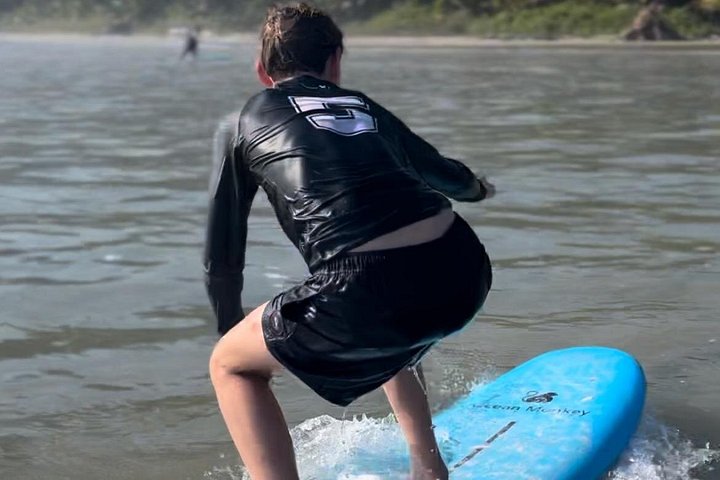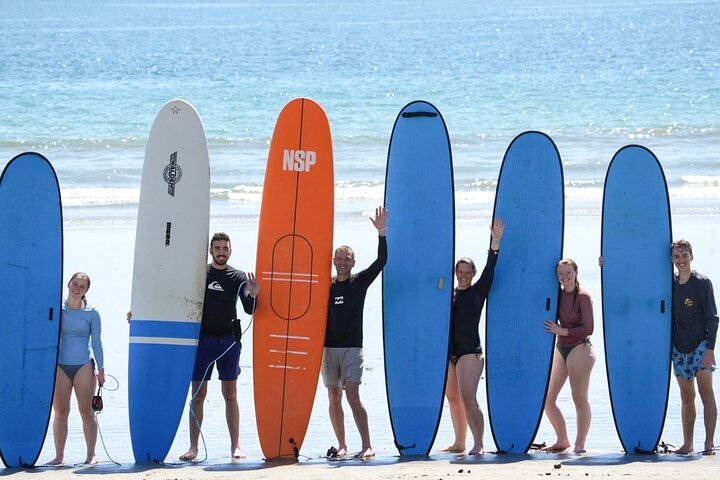
Samara has built a name as one of the friendliest places in Costa Rica to learn to surf, because the reef and island offshore take the sting out of the swell and leave long, forgiving waves that break over sand. The lesson linked here is described as suitable for the whole family, which signals a patient, accessible format: a talk on the sand about safety and technique, dry-land practice of the pop-up and then time in the water with an instructor who pushes you into waves and cheers you on. Foam boards keep falls harmless, and the water is warm enough that you will not need a wetsuit. By the end of an hour or two, many people have stood up and ridden a wave to the shore, which is an irresistible feeling. Parents and children can learn together, and the beach is wide, with cafes and shade close by, so spectators are comfortable as well.
How it works
You book a time and meet the instructors at the meeting point on the beach. Group size, lesson length, board and rash vest inclusion and age limits depend on the option, so check them when you book. Lessons are scheduled around tide and swell to find the gentlest window.
What to expect
Expect a short briefing, then paddling and pop-up practice on the sand, followed by waist-deep water where the instructor turns your board and gives a push. You will fall, and you will likely be tired afterwards because paddling works unfamiliar muscles. Private options give more attention, and group lessons are cheaper and fun for friends and families.
Making the most of it
Apply reef-safe sunscreen and wear a rash guard, since the sun is intense. Morning lessons tend to have calmer wind. Bring a towel and water and plan a relaxed hour afterwards for a smoothie. If you enjoy it, book a second lesson the next day, since progress is quick, and consider Santa Teresa or Nosara later in your trip for more advanced waves.
Where it fits in your stay
A lesson on your first full day gives you something to build on, since a second or third session after the first usually brings the biggest improvement. Because Samara is calm, it is also a good base for families with mixed ability, with some members surfing, some paddling and others simply enjoying the sand.
Good to know
Surf etiquette matters even for beginners, so your instructor will explain right of way, how to avoid collisions and how to fall safely. Reef-safe sunscreen protects both skin and sea life, and a rash guard prevents board rash. Check the tide and swell forecast with your school, since conditions change, and do not hesitate to ask for a smaller or larger board if you want a different feel. A patient, encouraging instructor is the best predictor of a good lesson.
Seasonal notes
Waves in Samara are generally gentle year round because of the protective reef, but swell varies with the season, and the green season tends to bring bigger surf and more wind in the afternoons. The dry season usually offers cleaner mornings. Tides matter, since the reef and sandbars work best at certain heights, and schools adjust the schedule.
Water is warm throughout the year, so a rash guard is enough for most people. If you are travelling with a mixed group, ask whether the school can supply different board sizes, and consider a private lesson for anyone who is nervous.
What to expect
The experience
A beginner surf lesson on Samara beach for families and first-timers, with instruction on the sand and in the water.
Best time
Mornings usually have lighter wind; tides determine the best window.
How long
Roughly two hours including briefing and water time.
Tips
Use reef-safe sunscreen, wear a rash guard and consider booking a second lesson.
Quick picks
- Best for
- First-time surfers and families who want an easy, sociable introduction.
- Families
- Specifically suited to families; confirm minimum ages and board sizes for children.
- Couples
- A fun shared activity, or choose a private lesson for more focus.
- Pair with
- A beach lunch and a smoothie.
- Time needed
- Allow half a day with rest afterwards.
Good questions
Is Samara good for beginners?+
Yes, it is widely seen as one of the gentlest places to learn on this coast because the reef softens the waves.
Do I need to swim well?+
You should be comfortable in water. Tell your instructor about concerns.
Are boards included?+
Normally, but confirm the inclusions when you book.
Can children take part?+
The lesson is described as suitable for the whole family, but ask about minimum ages.
When is the best season?+
Waves are present year round, with bigger swell in the green season and gentler conditions in the dry months.