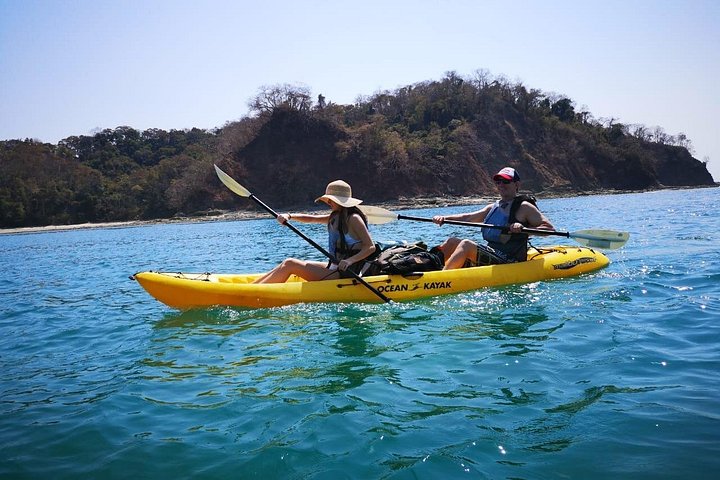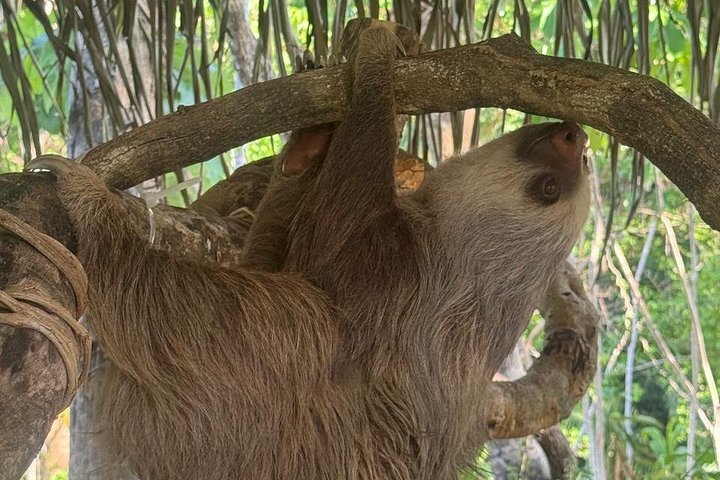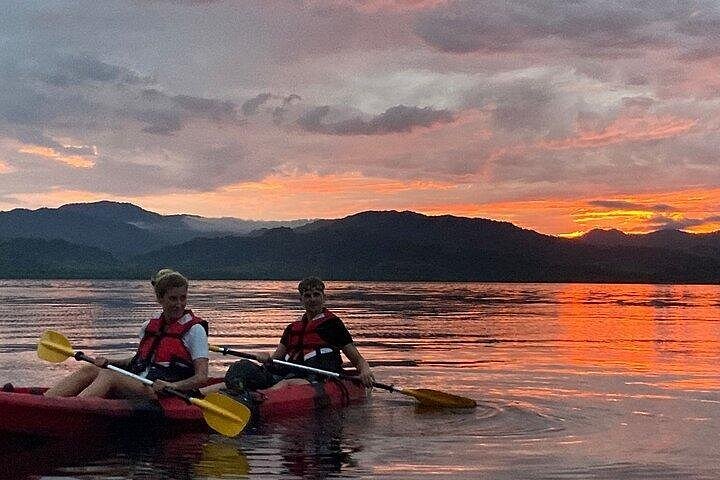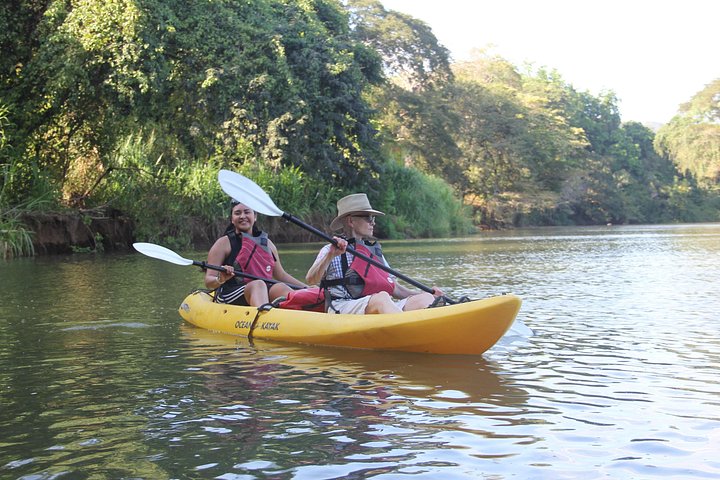
Beyond the beach, the coast near Samara is stitched with tidal creeks and mangrove forest, and paddling through them is a different experience from the open-sea kayak trips. This tour takes you into the shaded channels where the water is flat, the roots arch overhead and birdlife is easy to spot. Mangroves are nurseries for fish and crabs, which draws herons, egrets, kingfishers and, depending on the day, roseate spoonbills. Troops of howler or white-faced capuchin monkeys sometimes watch from the branches, and crocodiles are present in some Pacific-side estuaries, so the guide keeps a safe distance and the group stays in the boats. The pace is slow, the effort is light and the atmosphere is meditative, with the sound of paddles and bird calls. It is a very good choice for families, older travellers and anyone who wants wildlife without heavy exertion.
How it works
You book a slot, usually timed with the tide, and the operator meets you at a launch point near the river mouth or estuary, sometimes with a short transfer from town. A guide gives instructions, hands out paddles and life jackets and leads the group along the channels. Kayaks are generally stable and may be doubles. Confirm group size, tour length and pickup arrangements when you book.
What to expect
Expect calm water, shade from the mangrove canopy and frequent stops to watch birds or point out animals. Guides often explain how mangroves protect the coast and filter water, which gives the outing educational value. Because tides drive both the water level and the activity, operators schedule trips for the best conditions, so be flexible about the time. Insects can be present in still places, especially around dusk.
Making the most of it
Wear light long sleeves and a hat, use insect repellent and bring binoculars if you have them. Keep hands and feet inside the boat, and follow the guide on wildlife distances. If you enjoy this, the island kayak trip on the open bay makes a lively contrast, and a Werner Sauter reserve walk adds forest birds to your list.
Where it fits in your stay
Mangrove outings are a quiet counterpart to beach days, and they are particularly good value for nature lovers because the animals are close and the effort is small. Many travellers book the mangroves on a day when the surf is up or the sun is too strong for the beach, since the canopy provides shade and the water is protected from swell.
Good to know
Tides matter more than the clock here. At low tide, some channels are shallow and the group may paddle in a different direction than at high tide, so be flexible. Guides often talk about the role of mangroves in protecting coastlines from storms and in supporting fisheries, and travellers who ask questions get more from the trip. Take your rubbish with you and avoid touching the roots, which are fragile habitat.
Seasonal notes
In the dry season the water is lower and clearer, bird numbers are high around the remaining pools and the air is hot, so a morning start matters. In the green season the channels fill, the forest turns an intense green and afternoon storms become likely, which is why most operators prefer morning departures.
Migratory birds visit in the northern winter months, adding variety to the resident herons and kingfishers. Whatever the month, a hat, a refillable bottle and light, quick-drying clothing make the outing more comfortable. Ask the guide to explain how the mangroves work, because the story of roots, tides and nursery fish is the best part.
What to expect
The experience
A guided kayak through the tidal channels and mangrove forest near Samara, watching for birds, monkeys and other wildlife.
Best time
Timed with the tide, usually morning, when birds are most active and the air is cooler.
How long
Roughly three hours including transfer, briefing and paddling.
Tips
Wear long sleeves, use insect repellent and bring binoculars if you have them.
Quick picks
- Best for
- Wildlife lovers and gentle paddlers who prefer calm water to ocean swell.
- Families
- Very family friendly; ask about minimum ages and double or triple kayaks for children.
- Couples
- A quiet, shaded paddle with plenty of animal-spotting is relaxing for couples.
- Pair with
- An afternoon on the beach or a visit to the nature reserve trails.
- Time needed
- Allow half a day, with a morning start and lunch in town.
Good questions
Are there crocodiles?+
Some Pacific estuaries host crocodiles, and guides know where to paddle and keep a safe distance. You stay in the boat throughout.
Is it good for beginners?+
Yes. The water is flat and the kayaks are stable, so it is one of the easiest paddle outings on the coast.
Will I see monkeys?+
Often, but not always. Birds are more reliable, and guides will point out whatever is active on the day.
What time of day is best?+
Mornings are usually best for birds and cooler air, but the schedule depends on the tide, so follow the operator.
What should I wear?+
Light, quick-drying clothes, a hat, sunscreen and insect repellent. Wear shoes that can get wet.