The landing coast is a single long arc of sand, but it is easier to plan as five beaches in three national sectors. Understanding the geography first saves hours of driving and gives each site the context it needs. From west to east, the beaches are Utah and Omaha, the American sector, then Gold and Sword, the British sector, with Juno, the Canadian sector, between them. The whole stretch is about eighty kilometres, and Bayeux sits a short drive inland from the middle of it.
Utah Beach and the airborne drop
Utah is the westernmost beach, on the Cotentin peninsula, and its story begins inland, where American paratroopers dropped into the night around Sainte-Mère-Église. Pair the two. The Airborne Museum in the village holds aircraft, a glider and personal items, and the church on the square, with its mannequin hanging from the tower, is the best-known image of the night. Utah Beach Landing Museum, on the sand itself, covers the seaborne landing and closes every year from mid-November to mid-December. Allow most of a day, and add the Cité de la Mer in Cherbourg only if you are staying on the peninsula.
Omaha Beach and the cliffs
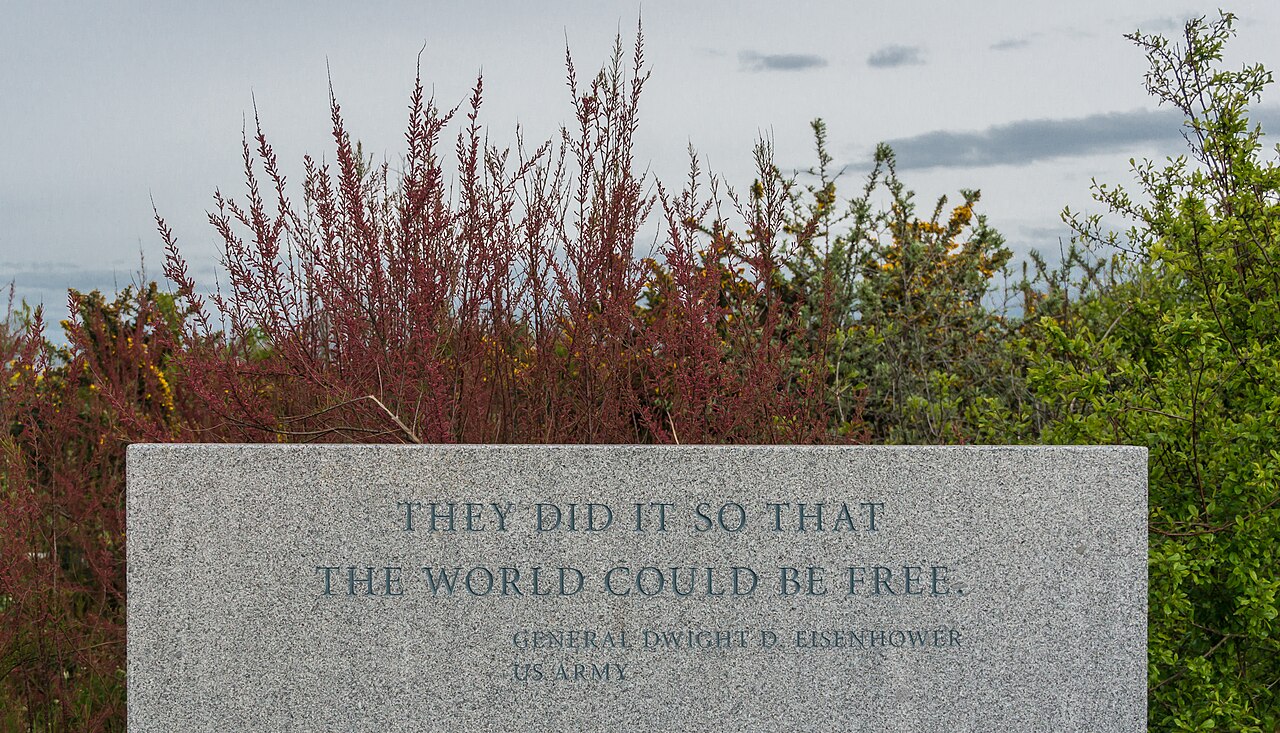
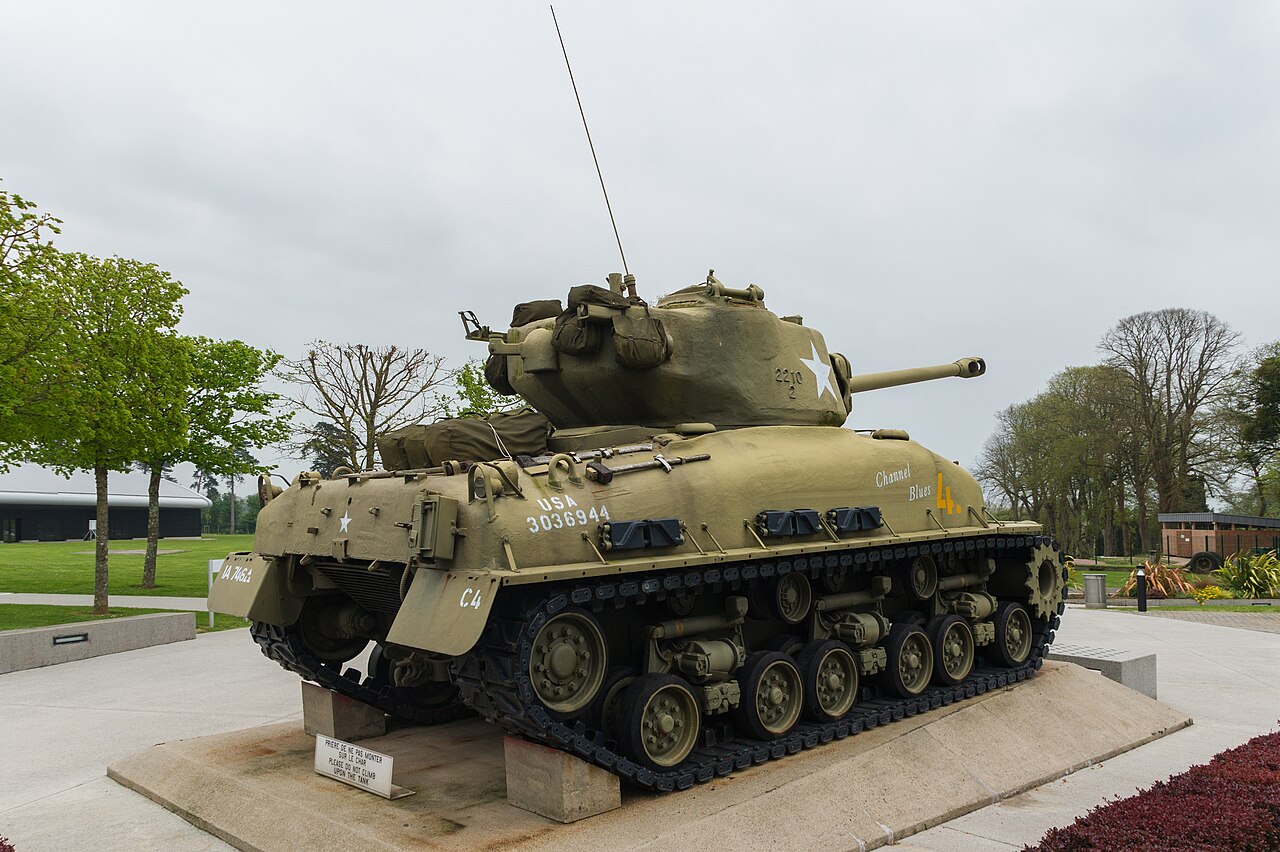
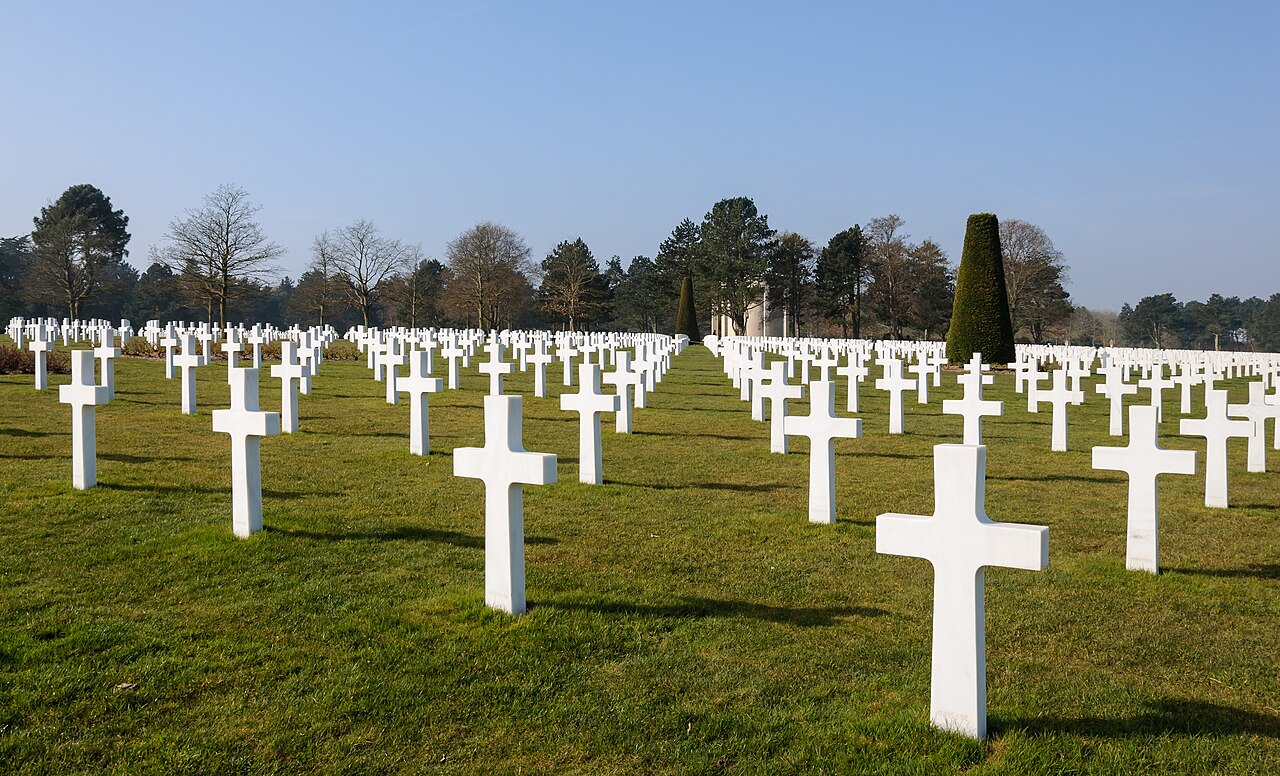
Omaha is the beach most people come for. The landing here was the costliest of the five, and the sites cluster closely. Pointe du Hoc Ranger Monument, a few miles west, is free and shows the cratered headland that the Rangers climbed. The Normandy American Cemetery at Colleville-sur-Mer sits on the bluff above the beach and is free to enter, with a visitor center that tells the individual stories. The Overlord Museum next to it holds vehicles, uniforms and equipment. A small-group full-day tour from Bayeux covers all of this in the right order with a guide, and is the simplest way to do the American sector. Keep Omaha for the end of the day, when the light is soft and the tide is often low enough to walk on the sand.
Gold Beach, Arromanches and Longues
Gold is the western British beach, and Arromanches, at its heart, is the best place to understand the logistics of the invasion. The Mulberry harbour was a prefabricated port towed across the Channel, and its concrete caissons are still visible in the bay at low tide. Arromanches 360 shows a short film on a circular screen and has a viewpoint over the remains. Just west, Longues-sur-Mer Battery, free to enter, has four casemates that still contain their original naval guns, and it makes a good short stop before or after Arromanches. Together they take half a day.
Juno and the Canadian story
Juno is where Canadian forces landed, at Courseulles-sur-Mer and nearby villages. The Juno Beach Centre is a modern museum with an exhibition on Canada in the war, and the Juno Park guided tour, led by Canadian guides, takes you through German bunkers on the sand. Tours run in English and French on a seasonal timetable, and the museum is best combined with a seafood lunch in Courseulles-sur-Mer. Allow half a day.
Sword, Caen and the wider battle
Sword is the easternmost beach, and the fighting there led toward Caen, which the Allies hoped to take on the first day and did not for weeks. The Caen Memorial covers the road to war, the occupation, the battle and the Cold War, and needs about half a day. Back in Bayeux, the Battle of Normandy Memorial Museum follows the campaign from 7 June to 29 August 1944 and sits beside the Bayeux War Cemetery. Together they show what came after the beaches.
Putting it together
A two-day trip should give one day to the American sector and one to the British and Canadian sectors. A three-day trip adds Caen and the Memorial or the airborne sites. Do not try to cross from Utah to Sword in a day without a guide, because the distances and the number of stops make it tiring and shallow. Start at the west end and work east, or the reverse, but avoid zigzagging.
Etiquette and weather
All of these places are memorials as well as sights. Keep voices low at cemeteries, stay on marked paths, keep children close and do not remove objects from beaches or battery sites. Wind is constant on the clifftops, so bring a windproof layer in any season. Many sites have shorter hours and some close for weeks in winter, so check each one before you go.