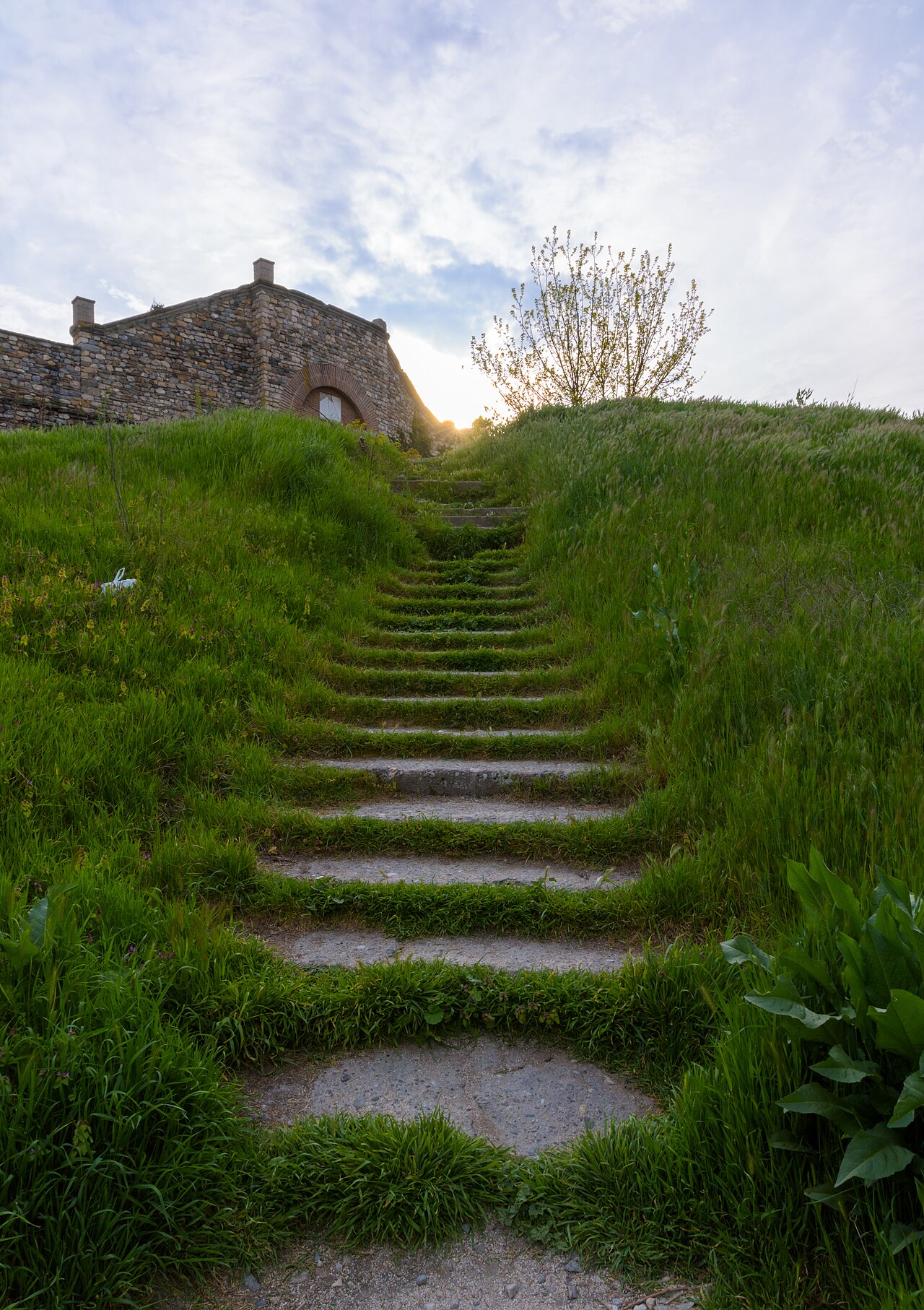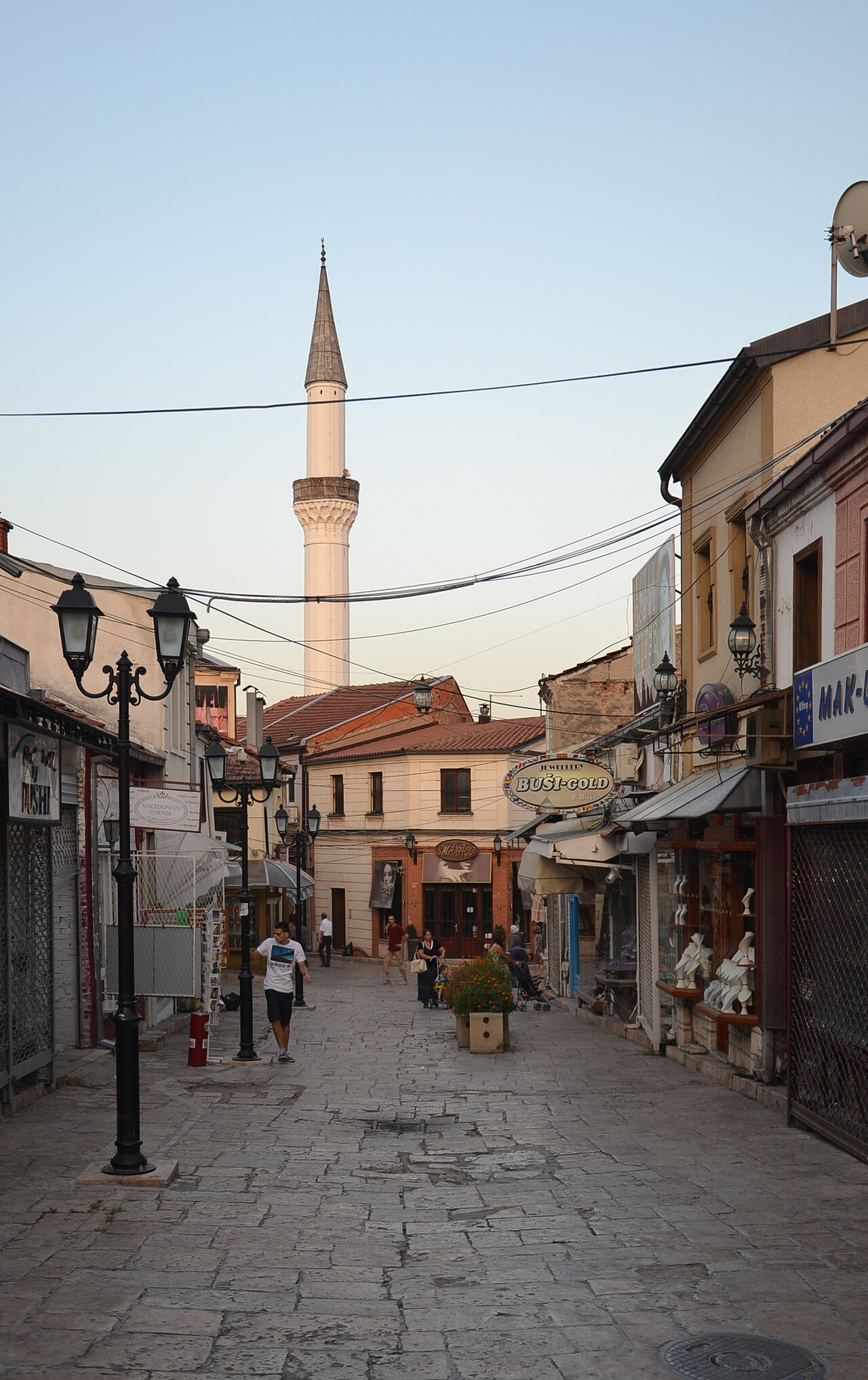
Bitola is the country's second city, in the south-west near the Greek border, and it feels very different from Skopje. Under the Ottomans it was called Monastir and served as a regional capital where foreign consuls kept offices, which is why its main pedestrian street, Širok Sokak, is lined with handsome neoclassical buildings from the late 19th and early 20th centuries. Today that street runs from the clock tower area down to Magnolia Square, and it is where Bitola strolls, drinks coffee and watches life go by. Around it you find an Ottoman covered market, mosques, churches, a lively old bazaar and the green slopes of the Pelister mountain range rising behind the city. Just south of the centre lie the ruins of Heraclea Lyncestis, founded in the 4th century BC and later a stop on the Roman Via Egnatia. Visitors walk among the remains of a Roman theatre, baths, a basilica and a portico, and the highlight is a set of well-preserved floor mosaics with vivid animals and plants, usually protected from the weather with covers or roofs. Bitola gives a calm, elegant counterpoint to Skopje's statues and Ohrid's lake. Compared with the capital, prices are lower, crowds are thinner and conversations come easily, with students, shopkeepers and waiters all keen to tell visitors about their town. It is also a good place to eat, with simple restaurants serving grilled meat, salads and local wine at friendly prices.
Why go
Bitola rewards travellers who like atmosphere over checklists. A good visit combines a morning at Heraclea Lyncestis, when the light on the mosaics is best and the site is quiet, with a long lunch and an afternoon along Širok Sokak. Look for the old consulates behind the shopfronts, the Ottoman market buildings and the clock tower, and stop for coffee or a beer in one of the many terrace cafes.
Students from the local university keep the street lively into the evening. The slower rhythm of the town is part of its charm, and an evening walk under the lamps of the main street is the best way to end the day before the drive back.
Working the visit
Bitola is roughly two to two and a half hours by road from Skopje and about an hour from Ohrid, so it fits three ways. You can take a full-day tour from Skopje, break the Skopje to Ohrid journey with a stop, or visit from an Ohrid base. A tour handles the driving and is the simplest way to cover the ancient site and the old town in one day, while independent travellers can use a rental car or a bus.
Allow about an hour at Heraclea Lyncestis and the rest of the day for the town. Itineraries, stops and any extra visits such as Pelister National Park or the nearby mountain town of Kruševo are set by the operator, so check what your trip includes.
Good to know
Archaeological sites keep their own hours and may close earlier in winter, so confirm opening before you travel. The mosaics are protected, and you may be asked to stay on marked paths. Širok Sokak is flat and easy to walk, but cobbled side lanes can be slippery in rain. Summer is hot, autumn is golden and mild, and winter is cold with an atmospheric, almost empty centre. If you only have a few days in the country, treat Bitola as an optional extra after the Skopje and Ohrid core.
What to expect
The experience
A full-day tour or independent visit combining the Roman ruins of Heraclea Lyncestis with a walk along the Širok Sokak pedestrian street and the old bazaar.
Best time
Morning at the ruins for quiet and good light, then an afternoon and early evening in the old town; spring and autumn are the most comfortable seasons.
How long
A full day from Skopje, or half a day from Ohrid; about an hour at the ruins and three to four hours in town.
Tips
Confirm the opening hours of the archaeological site, stay on marked paths near the mosaics, and save time for a long coffee on Širok Sokak.
Quick picks
- Best for
- Travellers who enjoy elegant old towns and Roman history and want a calmer alternative to the headline sights.
- Families
- Easy walking on the main street and space to roam at the ruins, though the day includes a lot of time in the car.
- Couples
- A long lunch, coffee on the pedestrian boulevard and golden-hour light on the old consulate facades make for a relaxed day.
- Pair with
- Lake Ohrid and the Ohrid old town, or Mavrovo National Park on a slow route between the two cities.
- Time needed
- A full day from Skopje, or half a day from Ohrid.
Good questions
How far is Bitola from Skopje and Ohrid?+
Roughly two to two and a half hours by road from Skopje and about an hour from Ohrid, so it works as a day trip or as a stop between the two cities.
What is Heraclea Lyncestis?+
An ancient city founded in the 4th century BC and later developed under Rome. Visitors see a Roman theatre, baths and a basilica, with a set of well-preserved floor mosaics as the highlight.
What is Širok Sokak?+
Bitola's main pedestrian street, lined with 19th and early 20th-century neoclassical buildings, cafes and shops. It is the best place to feel the old consular-city atmosphere.
Is Bitola worth a day if I am short on time?+
If you have only three or four days, put Skopje and Ohrid first. With a fifth day or a car, Bitola is one of the most rewarding additions.
Do tours stop anywhere else?+
Itineraries vary by operator. Some add the mountain town of Kruševo or Pelister National Park, so check what your trip includes.