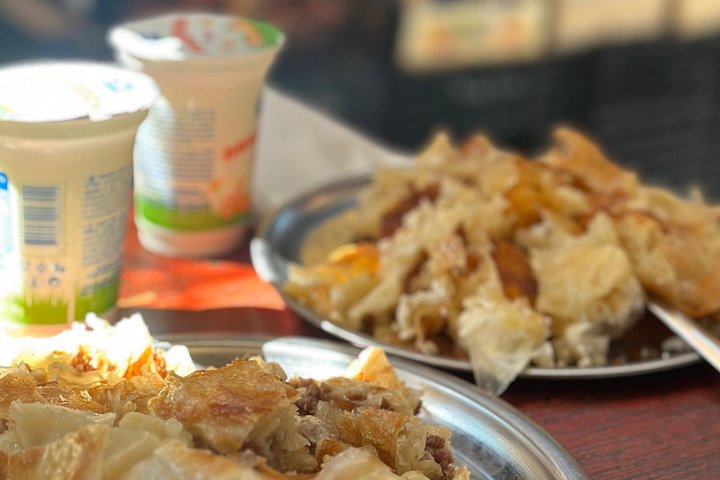
Macedonian cooking is hearty, generous and built around seasonal vegetables, beans, peppers, cheese and grilled meat, and a cooking class is one of the most enjoyable ways to understand it. In Ohrid, classes are run by local hosts who welcome small groups into a kitchen or home, explain the ingredients and guide you step by step through several dishes. Typical menus draw on staples such as shopska salad with white sirenje cheese, tavce gravce, the baked beans in a clay dish that is often called the national dish, stuffed peppers, ajvar made from roasted red peppers, banitsa pastry with cheese or leeks, and a sweet finish such as baked apples, tulumba or a walnut cake. You may learn how to roll thin pastry by hand, how to roast and peel peppers and how to season with the local mountain tea and herbs, and your host will explain which dishes belong to which season or festival. Wine or rakija is often part of the experience, and many hosts share family stories alongside the recipes. The lake region adds its own accent to the table, and a class is a good chance to ask about Ohrid trout and why it is protected, and about how locals shop at the market for fresh produce. Because it is participatory, it suits people who like to learn, and because you eat the meal at the end it also counts as dinner. It is a warm, personal activity that fits any weather and works as a restful break between sightseeing days.
Why go
Food is one of the great pleasures of this country, and a class gives you the knowledge to recognise dishes on menus and the confidence to recreate them at home. You get time with a local host rather than a crowd, which makes it easier to ask questions about customs, ingredients and daily life. It is especially good on a rainy day or at the end of a busy sightseeing schedule, when you want something slower and social.
Working the visit
Classes in Ohrid commonly last around three to four hours and finish with a shared meal. You will usually cook in a group, so be ready to chop, stir and taste. Wear clothes you do not mind getting flour on, tie back long hair and tell the host in advance about allergies, vegetarian or vegan needs, as many dishes are easy to adapt.
Ask whether the class includes a market visit and whether drinks are part of the price. Most hosts are in or close to the old town, so you can walk or take a short taxi from the lakefront hotels.
Good to know
The menu can change with the season, so you may cook peppers and tomatoes in autumn and greens, beans and pies in colder months. Group sizes are generally small, which keeps it friendly, but it also means popular times such as summer evenings can fill up, so book early. Recipes are often shared afterwards, and some hosts sell spice mixes or jars of ajvar if you want something to take home.
If you are travelling with children, check whether they can take part, since the kitchen can be busy and involves knives and hot pans. Pair the class with a walk through the old town beforehand to build an appetite.
What to expect
The experience
A small-group hands-on cooking class with a local host, followed by a shared meal of the dishes you prepared.
Best time
Any season; it is a good choice on rainy or cold days when outdoor sights are less appealing.
How long
Around three to four hours including the meal.
Tips
Tell the host about allergies, wear clothes that can get messy and ask whether drinks and a market visit are included.
Quick picks
- Best for
- Food lovers who want a hands-on, social evening and a deeper understanding of Macedonian cooking.
- Families
- Older children who like to help in the kitchen can enjoy it; check with the host about age limits and safety.
- Couples
- Cooking, eating and sharing a glass of local wine together is a relaxed evening away from restaurants.
- Pair with
- An Ohrid old town walk, the Skopje street food tour and a wine day in the Tikves region for a full tour of the country's table.
- Time needed
- An evening or half day.
Good questions
What will I cook?+
Menus vary, but classes often include shopska salad, baked beans, stuffed peppers, ajvar, a savoury pastry and a simple dessert.
Do I eat what I cook?+
Yes. The class normally ends with a shared meal of the dishes you prepared, so it can replace dinner.
Can vegetarians join?+
Usually yes. Many traditional dishes are vegetable and bean based, but tell the host when you book so they can plan the menu.
How long does a class last?+
Most last around three to four hours including the meal, though exact timings depend on the host and the menu.
Where do classes take place?+
Hosts are typically in or near Ohrid's old town, so you can walk or take a short taxi from the lakefront.