Nuremberg's cooking is unpretentious, regional and satisfying. It draws on pork, sausage, carp, cabbage, potatoes and dumplings, flavoured by spices that arrived along trade routes, and it is served in taverns, beer halls and bakeries across the old town. If you know a few dishes and a few rules, eating well here is easy and affordable.
The bratwurst
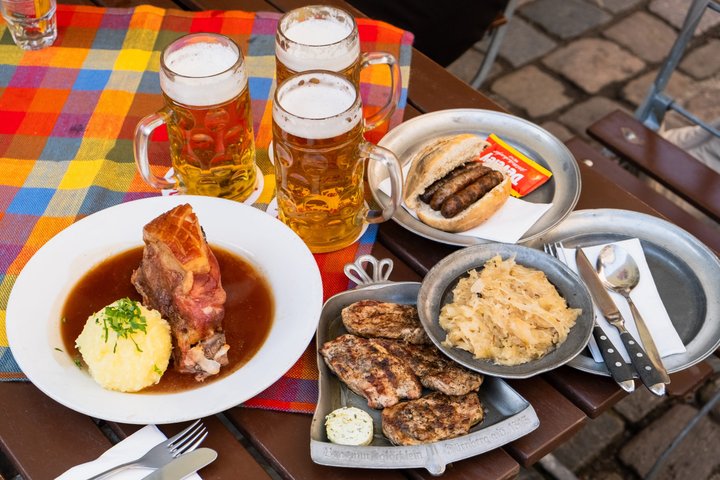
Nuremberg Rostbratwürstchen are small, thin sausages, seasoned with marjoram and grilled over beechwood. They are traditionally served in sets of six, eight, ten or twelve, with sauerkraut or potato salad and a dab of mustard. In a bread roll, three at a time, they are the classic street snack known as Drei im Weggla. Try both versions: the plate in a tavern and the roll at the market. Many taverns near the Hauptmarkt specialise in them.
Hearty mains
Schäufele is a slow-roasted pork shoulder with a crackling crust, served with a dark gravy and a dumpling. It is the signature Franconian Sunday dish, and portions are large, so share if you are not hungry. Sauerbraten, a marinated roast, and Fränkische Bratwurst variations appear on menus, as do Blaue Zipfel, sausages poached in a vinegar and onion broth. In autumn and winter, carp is a traditional dish in the region. Potato dumplings, red cabbage and spätzle noodles accompany many plates.
Sweet things
Lebkuchen is the city's famous gingerbread, softer and nuttier than many versions, often baked on a thin wafer base and sold in decorated tins. Bakeries and specialist shops sell it all year, but autumn and winter are the peak. Try a Schneeball in Rothenburg, and look for fruit tarts and strudel in bakeries. Zwetschgenmännla, figures made of dried prunes, are a quirky souvenir.
Beer culture
Franconia is one of the world's great beer regions. Amber lagers, dark beers and the unfiltered Kellerbier are common, and local breweries range from large producers to tiny family operations. Beer is served in half-litre glasses or stoneware mugs. Rotbier, a reddish local style, is worth a taste. In Bamberg, the smoked Rauchbier is a regional legend. Beer gardens, many with chestnut trees, are open in warm months, and tavern tables are often shared, which is a good way to meet locals. Tell your server how much you want and be aware that glasses may be refilled until you stop.
Where to eat
The old town has a good concentration of traditional taverns near the Hauptmarkt, the castle and the river. Look for places with a short menu in German and English, a regular local crowd and house beer on tap. Department-store food halls and bakeries offer quick, cheap meals. Markets around the Hauptmarkt provide fruit, bread and snacks. For a special evening, book ahead at one of the better restaurants, especially on weekends and in December.
Food tours and cellars
A guided food tour is a pleasant way to taste several dishes and learn the stories behind them. Combined with a visit to the rock-cut cellars, where beer was once stored, you get a sense of how closely the food and brewing traditions are linked. If you like walking, a beer hike in Franconian Switzerland takes you between small breweries and cellars in the countryside.
Vegetarian and special diets
Traditional cuisine is meat-heavy, but many taverns now offer vegetarian dishes such as cheese spätzle, mushroom plates, salads and potato dishes. Vegan options are growing, especially in cafes and international restaurants. Tell the staff about allergies clearly, as ingredient lists can be complex. Bakeries and markets provide easy vegetarian snacks.
Budget and etiquette
Lunch menus and bakery meals keep costs down, and tap water is safe, though restaurants often charge for bottled water. Tipping is usually a round-up or about ten percent for good service. Many places close on Sunday evenings or one day a week, so check hours. In German taverns it is normal to seat yourself, wait for the server to come to you, and ask for the bill when you are ready to leave.
A sample day of eating
Start with a bakery breakfast of a pretzel or a roll with cheese and a coffee. Have a light lunch of soup or a bratwurst roll from a stall, then a coffee and a slice of cake in mid-afternoon. Save the main event for dinner: Schäufele or a plate of bratwurst in a tavern, with a half-litre of local beer. If you have room, finish with a small glass of fruit schnapps, which Franconian hosts offer as a digestive.