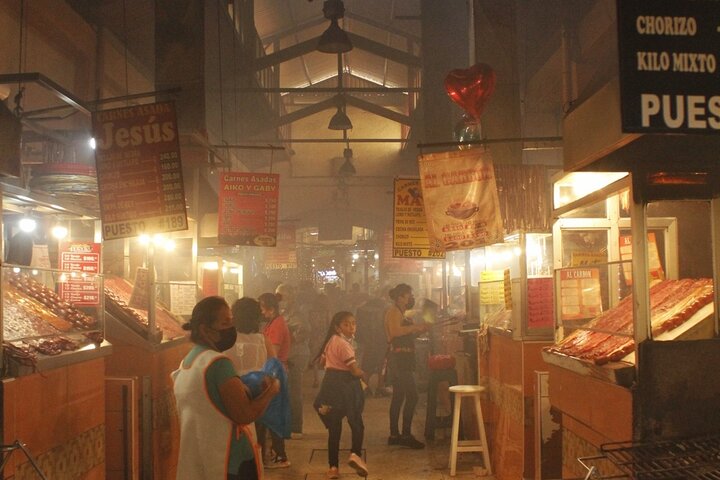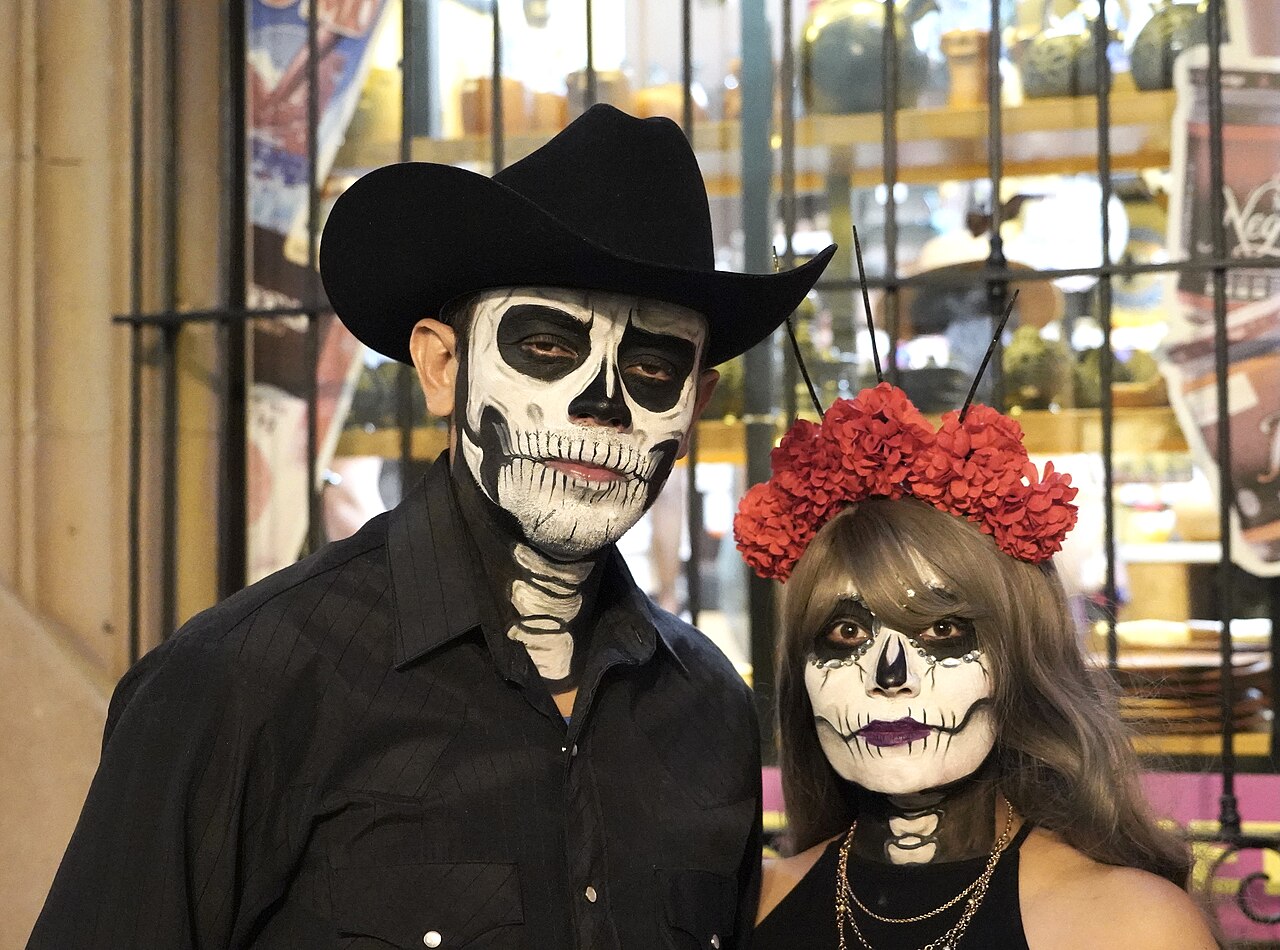
Día de Muertos is a time when families welcome the spirits of the dead back home, and Oaxaca celebrates it with extraordinary depth. The season runs from late October to early November, with the main days on 31 October to 2 November, when altars are built with marigolds, candles, bread, fruit, mezcal and photographs of loved ones. In the city, markets fill with orange cempasúchil flowers, sugar skulls and pan de muerto, and plazas host sand tapestries and altar displays. At night, comparsas, costume parades with bands, dancers and faces painted as skeletons, wind through the streets, and cemeteries such as those in nearby villages glow with candlelight as families sit with their dead. Evening walking tours explain the symbolism, take you to altars and parades and, in some cases, to a cemetery with local guides. The festival is a living tradition rather than a performance, so respect is essential: ask before photographing families, keep your voice low in cemeteries and do not step on graves. Because the season is short and demand is high, it is best to plan well ahead.
The meaning
The altar, or ofrenda, is built in layers, with the path of petals guiding spirits home, candles lighting the way and favourite foods and drinks set out. Many families spend the night at the graves, eating, singing and remembering. The mood is a mix of grief and warmth, which surprises many visitors who expect a macabre celebration.
Planning ahead
Accommodation fills months in advance and prices rise, so reserve hotels, tours and restaurant tables as early as you can. Choose a guided evening walking tour that is led by local guides who explain the customs and arrange respectful access, and avoid tours that treat the cemeteries as a spectacle. Dress warmly for evenings, wear comfortable shoes and bring a small torch and cash.
Outside the season
You can still see the traditions year-round in the cemeteries, markets that sell festival crafts and workshops that make papel picado and alebrijes. Museums such as the Museo de las Culturas show how rituals developed, and many hotels and restaurants set altars during the weeks around the festival. If you cannot travel in the season, visiting at another time gives you quieter streets and a chance to learn about the customs from guides and craftspeople.
What to expect
The experience
An evening guided walk to altars, markets, street parades and, with respectful access, a village cemetery during the festival days.
Best time
31 October to 2 November, with the build-up from late October and the markets busy in the days before.
How long
A long evening of around five hours.
Tips
Reserve hotels and tours many months ahead, dress warmly, ask before taking photographs and treat cemeteries with respect.
Quick picks
- Best for
- Travellers who want to experience a living tradition rather than a show.
- Families
- Older children can learn a great deal, but crowds and late nights make it challenging for the very young.
- Couples
- Walk the candlelit streets and share pan de muerto and hot chocolate.
- Pair with
- The Museo de las Culturas, the markets and a cooking class.
- Time needed
- An evening.
Good questions
When is Día de Muertos in Oaxaca?+
The main days are 31 October to 2 November, with the season starting in late October and preparations in the weeks before. Plan well ahead, because the season is short and demand is high.
Is it a sad occasion?+
It blends remembrance and celebration. Families honour their dead with food, music and flowers, and the mood is warm.
Can visitors attend the cemeteries?+
Visitors can attend some, but should go with respectful guides, keep quiet and ask permission before photographing. Some families prefer privacy.
How early should I plan?+
Hotels and tours fill many months ahead, so start planning around a year before your trip.
What if I am here outside the season?+
You can still see altars in museums, hotels and markets, and workshops that make festival crafts operate year-round.