Plitvice Lakes is open all year, but the park you see in July is very different from the one in January. Crowds, water levels, colour, temperatures, ticket prices and even which paths are open change from season to season. This guide walks through the year so you can choose the months that suit you, with honest notes on the trade-offs.
Spring, March to May
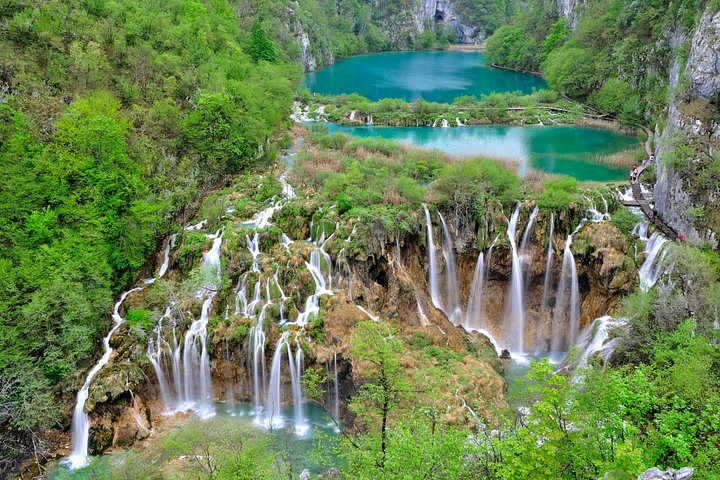
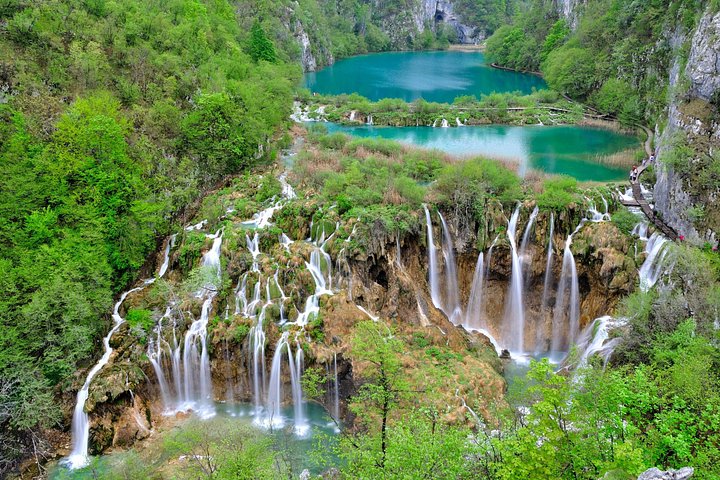
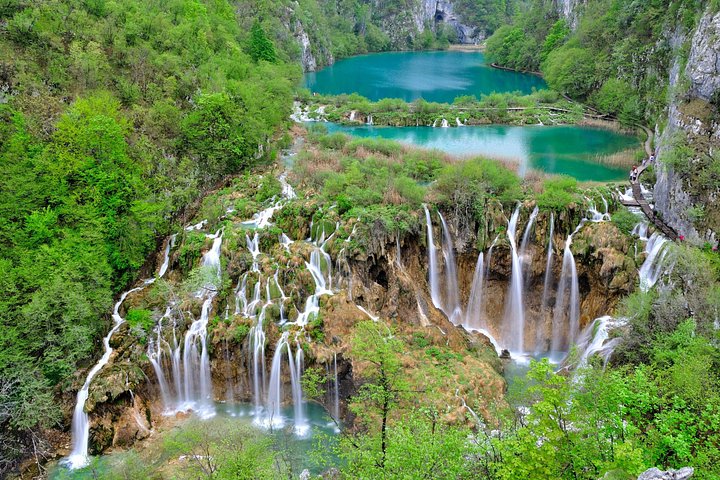
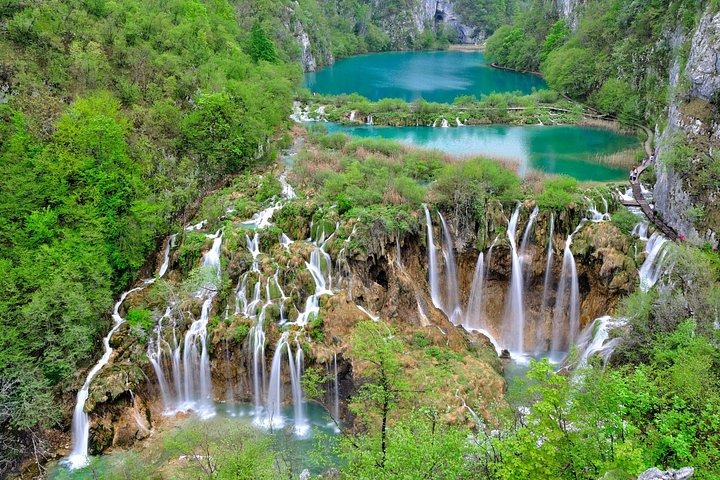
Snowmelt and rain make the waterfalls strongest in spring, and the sound of the water is constant. The beech forest is just coming into leaf and the light is fresh. Paths can be wet and some stay closed early in the season, and the weather swings from cold mornings to warm afternoons, so layers matter. Crowds build through April and May, and tickets rise with the season, but weekday mornings are still calm. For many photographers, May is the best compromise.
Summer, June to August
Summer brings the warmest weather and the longest days, with the tallest crowds. The park is at its busiest from late morning, and the boardwalks can feel slow and packed, with queues for the boat and train. Tickets cost the most and can sell out on peak days, so book ahead and arrive at opening time or late in the afternoon. The water is a vivid turquoise in strong light, and the shaded forest keeps the walk cooler than the surrounding countryside. Swimming is not allowed, so bring a plan for the heat, such as a river paddle on the Mrežnica.
Autumn, September to November
Many regulars consider early autumn the best time. The crowds thin after the start of September, the weather is mild and the beech and maple turn gold and copper by October, reflected in the lakes. Rain is more likely, so bring a waterproof layer. Days shorten steadily, and by November the park moves toward its winter programme, with reduced boat and train times and earlier closing.
Winter, December to February
Winter is the quietest and cheapest season. Ice forms along the edges and over parts of the waterfalls, snow can settle on the boardwalks and the whole canyon feels hushed. The trade-offs are practical: daylight ends around four in the afternoon, some paths close for ice, especially in the Upper Lakes, and boats and trains run on a reduced schedule. The Lower Lakes and Veliki Slap are the dependable section. If you come in winter, wear boots with a deep tread, carry gloves, and finish by mid-afternoon. A visit can feel magical, but it requires flexibility.
Water colour through the year
The colour of the lakes depends on minerals, light and the amount of sediment, so it varies from deep green to bright turquoise to pale blue-grey. After heavy rain, the water can turn cloudy for a day or two. Sunny days with the sun high give the most vivid colour, which favours late spring through early autumn.
Crowds and timing within a day
In any season, arriving at opening time and finishing early gives you the quietest walk. Coach groups tend to arrive from mid-morning and leave by mid-afternoon. Weekdays are calmer than weekends. If you can, enter by the less crowded entrance and walk against the main flow.
Which month for whom
First-time visitors who want the full experience with boats and open paths should choose May or September. Photographers will love late October for colour and January for ice. Families with young children do well in late spring or early September, when the weather is mild. Budget travellers should look at the winter and shoulder months, when tickets and rooms are cheaper. Travellers who want swimming, caving or kayaking nearby should choose summer.
Practical reminders
Check the park's current notice for open paths and transport before you go, book accommodation early for summer and weekends, and remember that some guesthouses close in winter. Hotels such as Hotel Jezero and the Lakeside hotel have been the dependable winter options.
A few last tips
Buy tickets for peak dates early, check the forecast the day before and be willing to swap your Lower and Upper Lakes routes if conditions change. Wear layers in every season, because the valley is cooler and damper than the surrounding plateau. Keep a flexible morning, since fog can lift to reveal the lakes in a very different light, and always leave time to be out of the park before dusk.