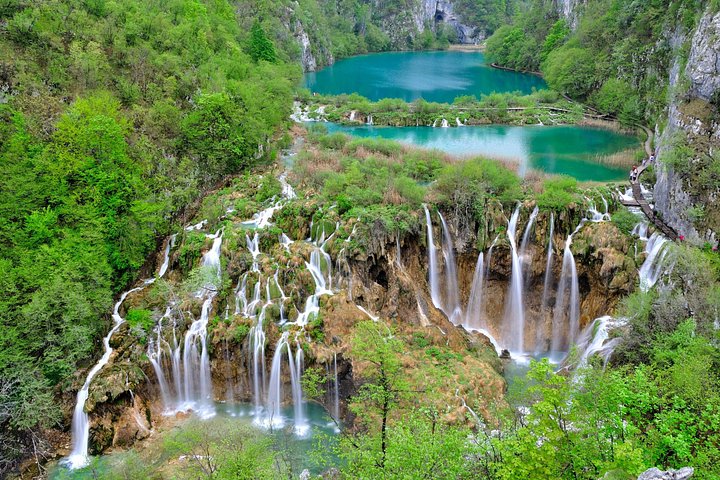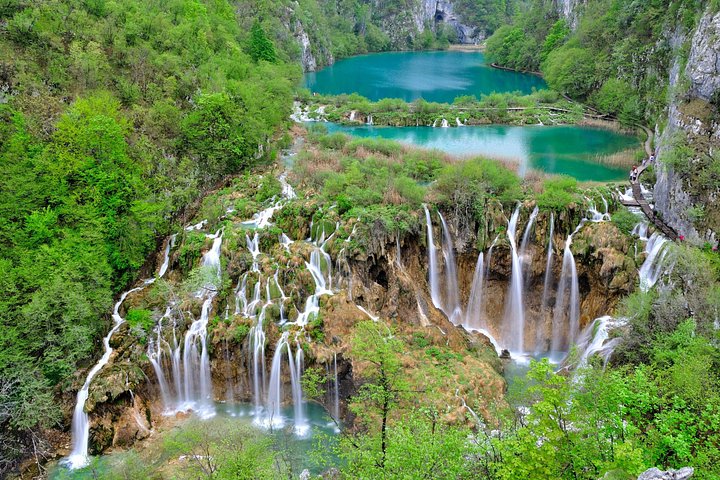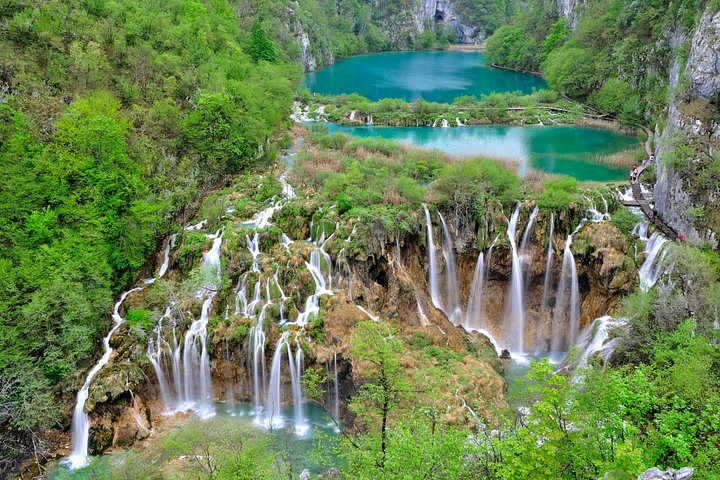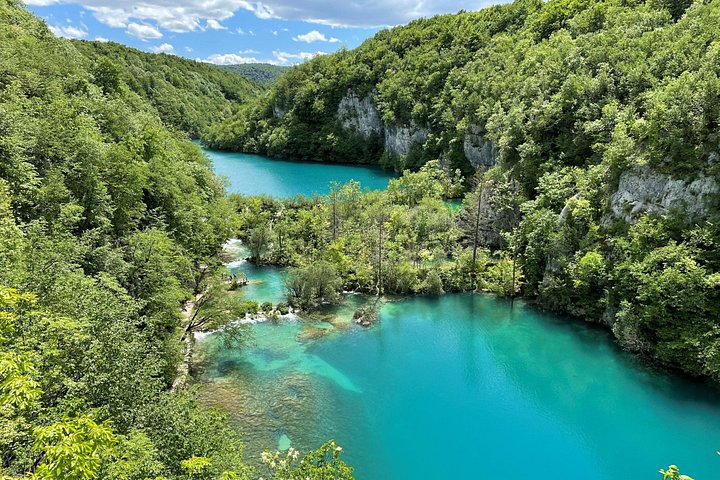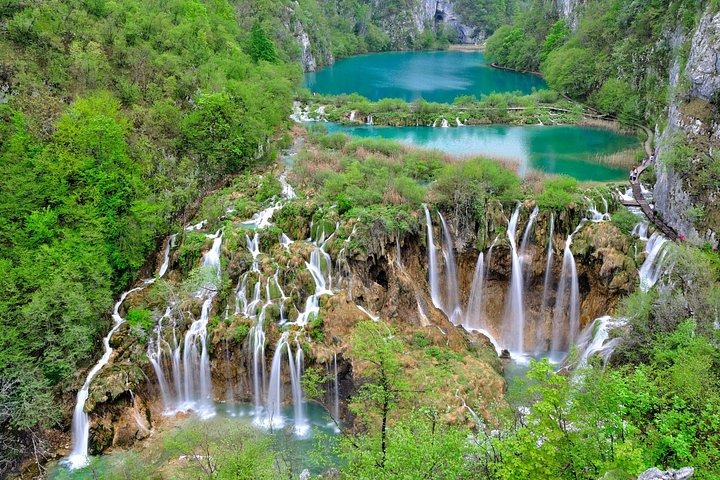
Plitvice Lakes National Park is Croatia's best-known natural sight, a chain of sixteen turquoise lakes stepped down a forested valley and linked by waterfalls. It is also easy to get wrong. The park is large, the distances from Zagreb and the coast are long, and the experience changes sharply with the season. This guide covers the decisions that matter for a first visit, with the winter situation spelled out plainly.
What to book ahead
The park ticket is the one item that matters. In summer, entry is limited and peak slots sell out, so buy ahead. In winter you can usually buy on the day, but the ticket office closes early in the afternoon, so buying ahead saves a queue. If you are not driving, book a guided day trip from Zagreb or Split, or arrange a bus. If you want to stay overnight, reserve early for weekends, because lodging near the park is limited and many guesthouses close in winter.
Choosing an entrance
There are two main entrances. Entrance 1 is closest to the Lower Lakes and the big waterfall, Veliki Slap. Entrance 2 is closest to the hotels, the Lake Kozjak boat landing and the start of the Upper Lakes. Both work with the same ticket, and the boat and panoramic train link them, so you can enter at one and finish at the other.
Choosing a route
The park publishes numbered walking programmes. A shorter loop of two to three hours covers the Lower Lakes and the waterfall. A longer route of four to six hours adds the Upper Lakes and Lake Kozjak. If you are in the park for one half day, the Lower Lakes and Veliki Slap are the best choice, and they are also the section that stays open longest in winter.
The boat and train
An electric boat crosses Lake Kozjak and a panoramic train links the main visitor areas, both included in the ticket. They are useful for shortening a route or avoiding a climb. In winter they run on a reduced timetable, and in the latest published schedule they ran every thirty minutes until mid or late afternoon. They can stop in bad weather.
How many days
One full day is enough for a first visit, and a day trip from Zagreb is feasible. If you want a slower visit, two days lets you do the Lower and Upper Lakes separately and see the park at both ends of the day. Add Rastoke and the Barać caves for a third half day.
Getting there
Zagreb is a little over two hours by road, Split around three to four hours, and Zadar closer. A rental car gives flexibility, a bus is cheaper, and guided trips suit anyone who wants to avoid driving. Plan more time in winter, when roads can be wet or icy.
Winter in practice
From roughly November to March the park runs a winter programme with the cheapest tickets of the year. Days are short, with dusk around four in the afternoon in midwinter. The Lower Lakes are the dependable part, the Upper Lakes can close for ice or snow, and some wooden walkways stay shut. Check the park's current notice before you travel, wear boots with a deep tread, and plan to leave the park by mid-afternoon.
Eating and practicalities
Food inside the park is limited, with a few restaurants and bistros on reduced winter hours, and some close one day a week. Carry water and a snack. Swimming is not allowed, and you must stay on marked paths. The park is cold and damp in winter, so bring a waterproof layer, gloves and a hat.
Combining it with other stops
Rastoke village in Slunj is the natural stop on the way from Zagreb, with a free promenade and watermills. The Barać caves, north of the park, offer a guided underground walk at a constant nine degrees. If you have more time, consider a night near the park before heading on to the coast.