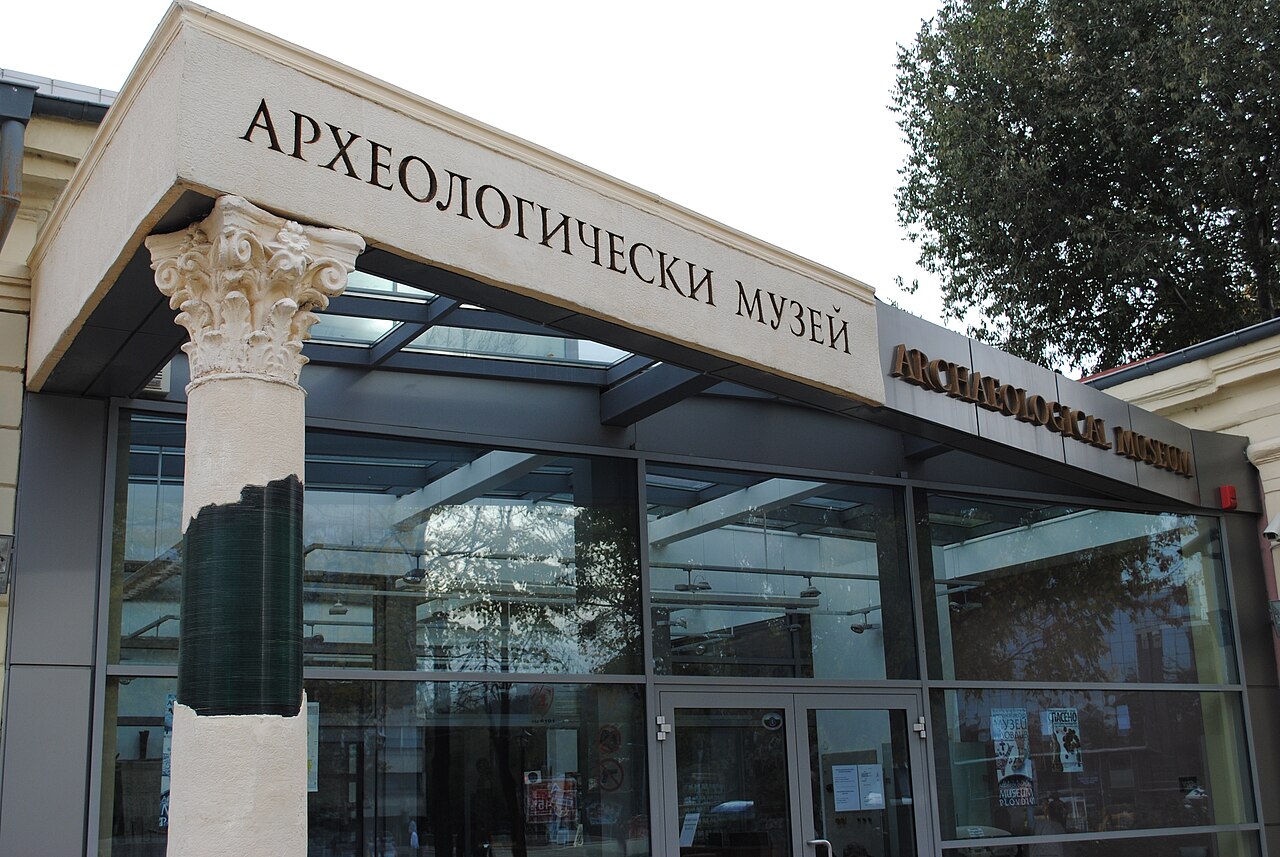
The Regional Archaeological Museum is where Plovdiv's story is told in objects. It stands on Saedinenie Square, a short walk from the central pedestrian street, and its collections run from prehistory and the early Thracian cultures through Greek and Roman Philippopolis to the medieval period. Highlights include gold treasures from Thracian burial mounds around Plovdiv, a coin collection, statues and frescoes from Roman times and a life-size copy of the Panagyurishte treasure, a hoard of more than six kilograms of gold vessels that is one of Bulgaria's great archaeological finds. The museum's permanent exhibition has been renewed, with additional exhibits, rearranged showcases and a refreshed hall devoted to regional archaeological treasures. A free audio guide is accessed by scanning a QR code on the card you receive with your ticket, with text in English, and the museum has added magnifying glasses for visitors with impaired vision and mobile chairs for walking through the exhibition. It is a calm, rewarding half-day when the weather turns.
Why go
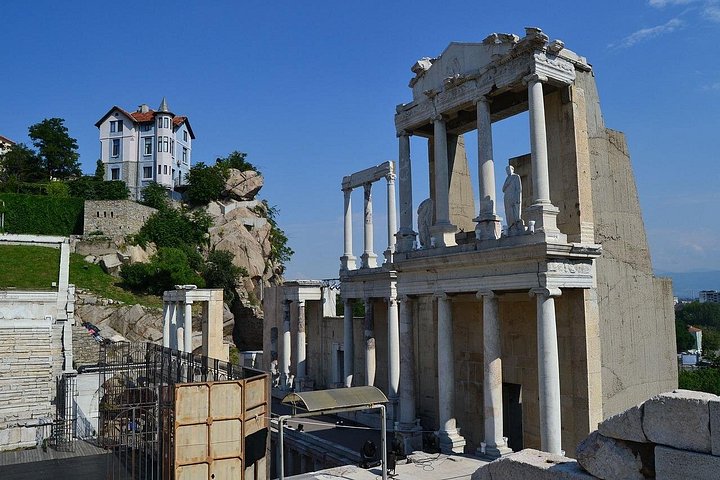
The museum gives context to everything else you see in Plovdiv. The Roman Theatre and Stadium make more sense once you have seen the statues, inscriptions and everyday objects of the city that built them, and the Thracian gold shows that the region was rich and sophisticated long before Rome arrived.
The Panagyurishte treasure, found in 1949, is shown here as a life-size copy, so you can study the shapes and decoration of the vessels up close. Pay attention to the labels and the audio guide, which tie the objects to local sites you can visit on day trips.
Practicalities
The museum has a modest entry fee, an audio guide included with the ticket and facilities for visitors with limited mobility. Opening hours differ between summer and winter, with a nine to five schedule published for the colder months, and the museum has traditionally closed on Mondays in summer, so check the day before you go. The exhibition can be seen in one to two hours, and school-age children tend to enjoy the coins, jewellery and the early Christian tomb, for which the access structure was reinforced in the recent works.
Pairing
Pair this museum with the Nebet Tepe archaeological complex it manages, and with the Roman sites in the centre. Together they make a thorough introduction to the oldest continuously inhabited city in Europe, as local guides like to call it.
What to expect
The experience
A self-guided museum visit through prehistoric, Thracian, Roman and medieval galleries, with a free audio guide unlocked by a QR code on your ticket.
Best time
A weekday morning or a rainy afternoon, when the galleries are calm and the outdoor sights are less appealing.
How long
One to two hours, or a little longer if you listen to the full audio guide.
Tips
Check opening days and winter hours before you go, scan the QR code on your ticket for the English audio guide and look for the early Christian tomb.
Quick picks
- Best for
- History lovers and anyone who wants to understand the Thracian and Roman layers beneath the city.
- Families
- Coins, jewellery, gold and the tomb keep older children engaged for an hour or so.
- Couples
- A calm, culture-rich rainy-day option before lunch in Kapana.
- Pair with
- Nebet Tepe, which the museum manages, and the Roman Stadium nearby.
- Time needed
- One to two hours.
Good questions
What is the main highlight?+
The Thracian gold and a life-size copy of the Panagyurishte treasure, a hoard of more than six kilograms of gold, alongside Roman statues and frescoes.
Is there an audio guide?+
Yes. It is free with your ticket and is accessed by scanning a QR code on the card you receive, with text available in English.
Is the exhibition up to date?+
Yes. The permanent exhibition has been renewed, with additional exhibits and rearranged showcases.
Is it open every day?+
Not necessarily. It has traditionally closed on Mondays in summer and keeps shorter winter hours, so check the museum's site for current days.
Is it accessible?+
The museum has added mobile chairs and magnifying glasses for visitors who need them. Ask at the desk about step-free routes through the galleries.