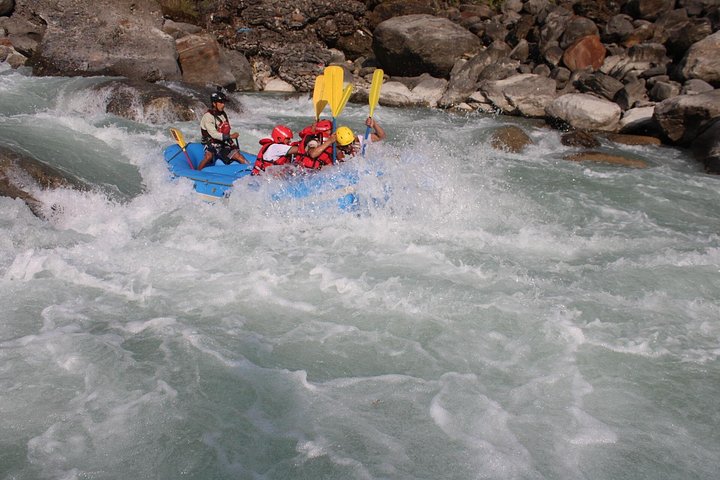
The Seti River is one of the most unusual rivers in Nepal. Its name means white, and its glacial meltwater, carried from the Annapurna range, runs milky blue and cold through a deep gorge that cuts straight under the city. That makes it a rare thing, a white-water rafting trip that begins within easy reach of your hotel. The half-day Upper Seti trip is designed for visitors who want a taste of rafting rather than an expedition. You travel by road to the put-in point, receive a safety talk and instruction on paddling, then spend a couple of hours running a series of rapids of beginner to moderate difficulty, with calmer stretches between them for swimming, photographs and looking up at the walls of the gorge. The trip is run by guides who handle the steering and call the paddling commands, so no previous experience is needed, and the group dynamic is part of the fun: everyone paddles together, and the rafts are shared with other travelers. The operator on this trip has a perfect rating from more than a hundred reviewers, which is a strong signal for a pursuit where the crew matters.
What you can expect is a full but unhurried morning or afternoon. Pick-up from your hotel, the drive to the river, the briefing, the rafting itself and the return normally add up to about half a day. Helmets and life jackets are provided, and it is worth asking what else is included, such as a wetsuit or a meal afterward, because arrangements differ between operators.
The water is cold even on warm days because it comes from glaciers, so wear swimwear under quick-drying clothes, bring a towel and a change of clothes, and keep valuables at the hotel. Footwear that stays on your feet, such as sports sandals, is better than flip-flops.
Is it suitable for everyone? Most adults and teenagers with average fitness can manage it, and the guides do the hard work. You should be comfortable in water and willing to follow instructions quickly when the guide calls them. Check the minimum age and weight limits when you book, and say honestly if you cannot swim, since guides will adjust where you sit.
Rapids rise and fall with the season, and the river is at its most energetic after the summer monsoon and in the weeks that follow, so experienced rafters who want more punch may prefer a longer trip on another river, while beginners usually enjoy the gentler levels of autumn and spring.
Plan the rafting for a day when the weather is stable and you have nothing demanding that evening, because the combination of cold water and sun leaves most people pleasantly tired. It pairs well with a lazy afternoon on Phewa Lake or with dinner in Lakeside, and it is a good alternative to a trek if your knees or time rule out walking. Book a day or two ahead in October and November, and ask about the exact meeting point and pick-up time the evening before, since schedules depend on the river and the group.
What to expect
The experience
Transfer to the river, take a safety talk and paddling instruction, then raft a series of beginner to moderate rapids with a guide steering the boat.
Best time
Autumn and spring give stable weather and manageable flows, while the monsoon brings higher water and more rain.
How long
About half a day including the transfer, briefing and return to Pokhara.
Tips
Wear swimwear under quick-drying clothes, secure footwear, bring a towel and a change, and leave valuables at the hotel.
Quick picks
- Best for
- First-time rafters and active travelers who want a river experience without a multi-day commitment.
- Families
- Suitable for teenagers and active families who meet the operator's age and swimming conditions.
- Couples
- A fun, shared morning that ends with a relaxed lakeside lunch.
- Pair with
- Bungee Pokhara for a compact adventure itinerary, or a quiet afternoon on Phewa Lake.
- Time needed
- Half a day.
Good questions
Do I need rafting experience?+
No. A guide steers the raft and calls the paddling commands, and you receive a safety talk and instruction before you start. The rapids on this stretch suit beginners.
Is the water cold?+
Yes, the Seti is fed by glacial meltwater and stays cold even on warm days. Wear swimwear under quick-drying clothes and bring a towel and a change of clothes.
Can I do it if I cannot swim?+
Tell the operator when you book. Life jackets are provided and guides can place you in the raft accordingly, but you should be comfortable in and around water.
When is the best season?+
Autumn and spring offer the most comfortable weather and manageable water levels. The summer monsoon raises the river and brings rain, so check conditions with the operator.
How long does the trip take?+
Plan on about half a day, including the transfer from Pokhara, the briefing, the rafting and the return.