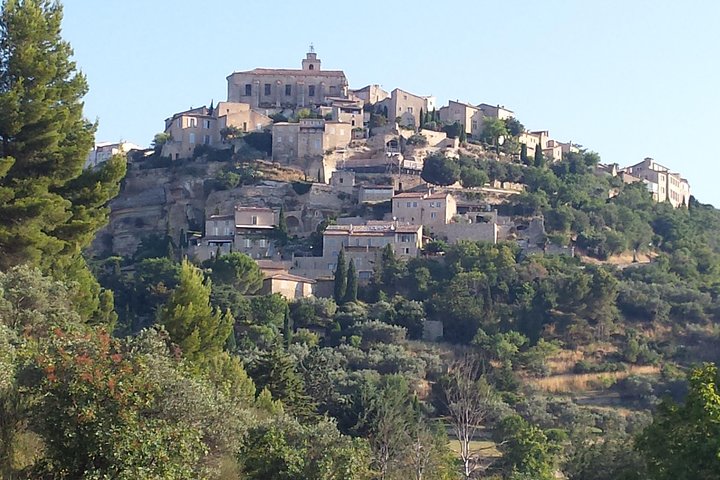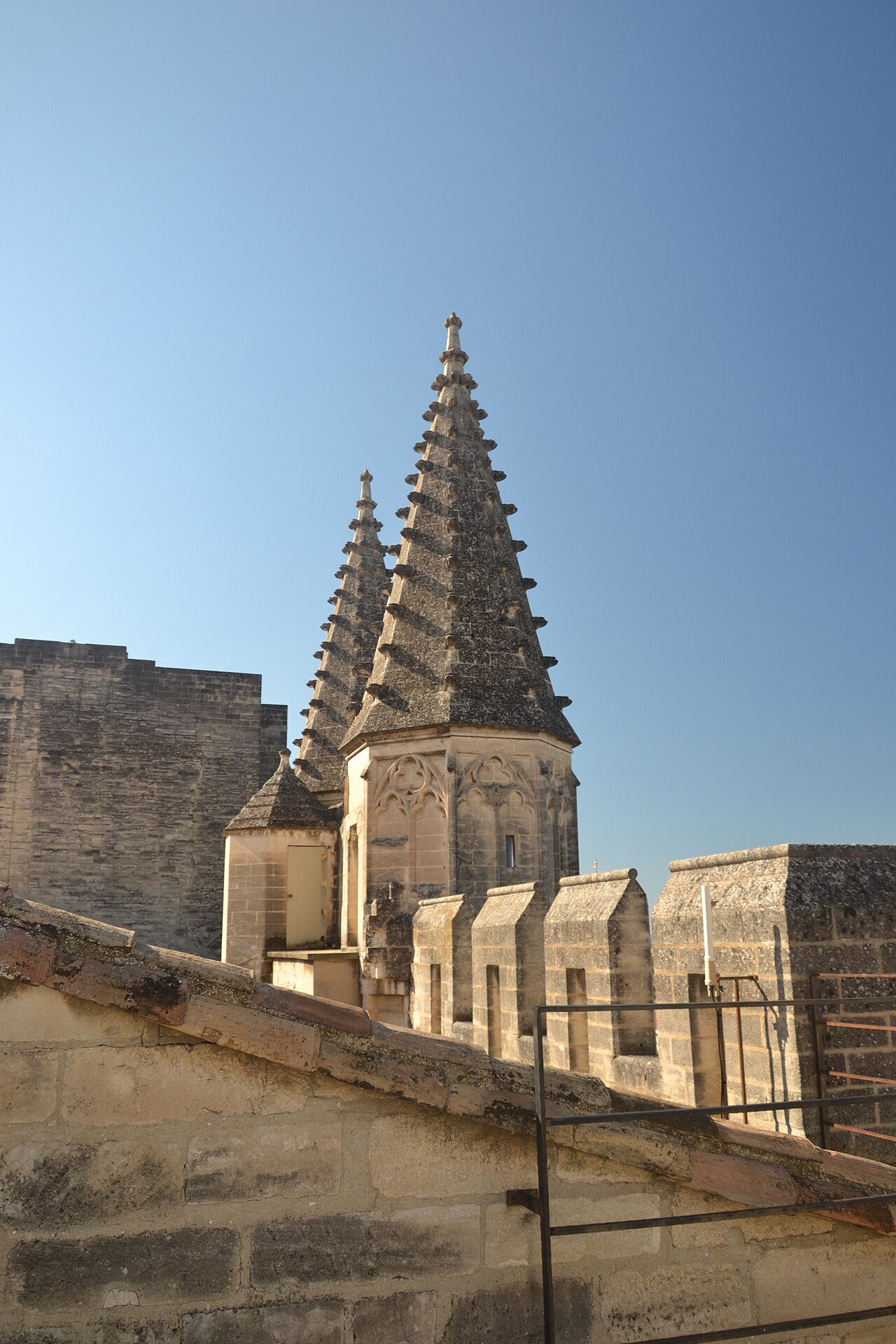
Villeneuve-lès-Avignon sits on the opposite bank of the Rhône from Avignon, in the Gard, and for a time it was the place where cardinals of the Avignon papacy built their residences, on the French side of the river and away from the city's bustle. The most visible landmark is the Fort Saint-André, a fortified abbey on a hilltop with a double-towered gatehouse and gardens inside the walls. Down by the river, the Tour Philippe le Bel was built at the end of the bridge to guard the crossing and lets you climb to a good view of Avignon. In the town itself, the Chartreuse du Val de Bénédiction is a large former charterhouse whose cloisters and cells make a fine visit, and the Notre-Dame collegiate church holds a famous ivory Virgin, and the town museum is known for Enguerrand Quarton's painting of the Coronation of the Virgin.
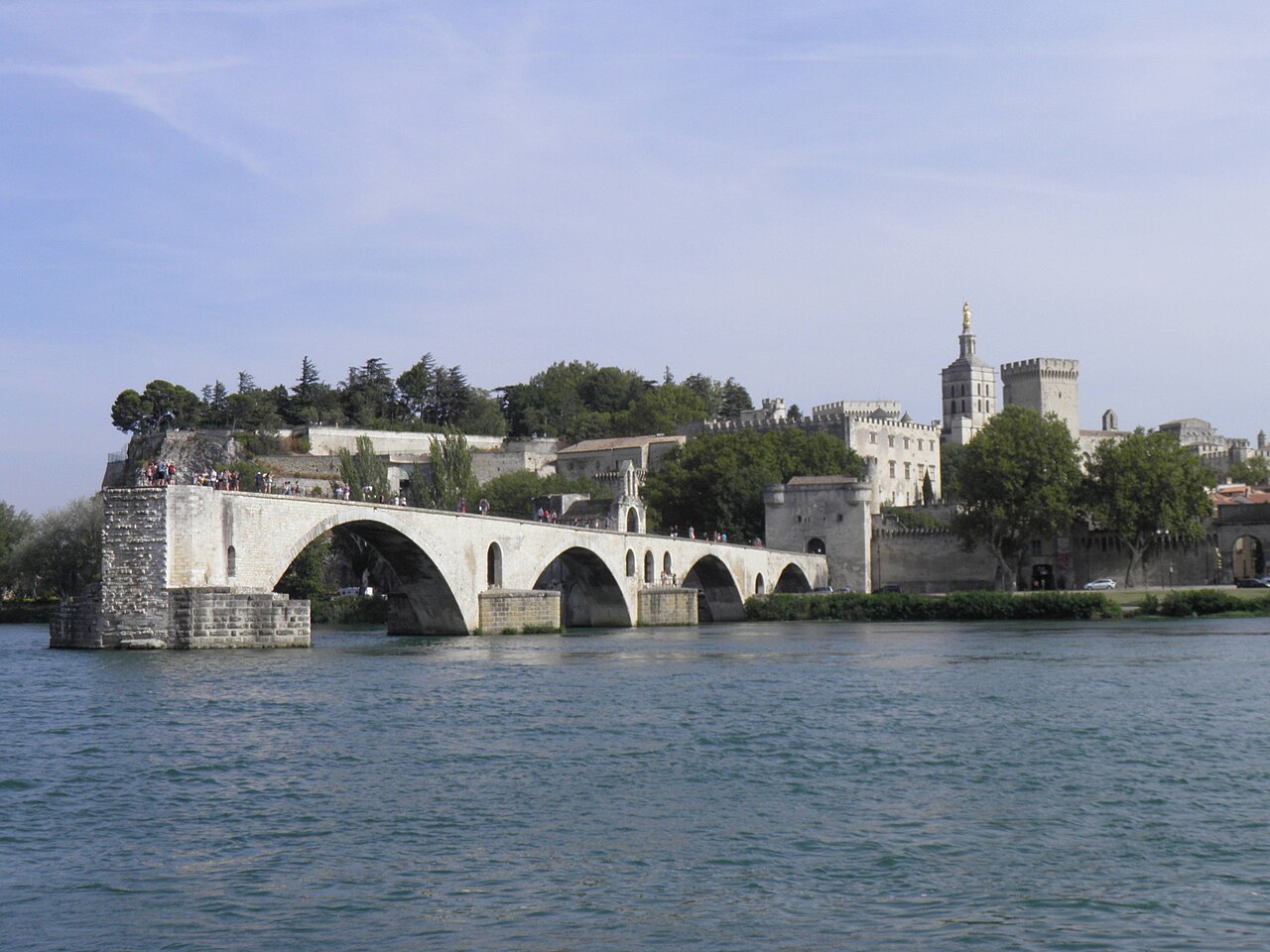
The simplest plan is to start at the river and the Tour Philippe le Bel, then walk up the stepped lanes toward the Fort Saint-André, passing old houses and gardens and the collegiate church. The fort's walls give a wide view back over the Rhône to the Palais des Papes, which is the main reason many visitors come: the palace seen from Villeneuve is a picture that you cannot take from within Avignon itself.
The Chartreuse is on the lower side of town and works as a separate visit, with courtyards, a cloister and garden spaces that are used for cultural events. Several of these sites are paid, with their own hours, and some close on one day a week or for part of the winter, so check each one before you go.
The town has an easygoing market and a handful of cafes, and in November it is calm. Walking is the best way to see it, as the lanes are steep in places and parking at the top is limited. The old bridge of Avignon is a short drive or a walk of about twenty minutes along the river and over the modern bridge, and a bus connects the two towns. Visitors who want a quieter base than Avignon sometimes stay here, though the choice of hotels is smaller.
A good half-day sequence is a morning walk up to the fort and the views, a simple lunch in the lanes, an hour in the Chartreuse or the church, and a late-afternoon return along the river toward Avignon as the light turns gold. It is also a fine choice on a day when the Palais des Papes feels too busy or when you want to get away from the crowds in the old town. The walk is free apart from the individual monuments, and the town's calm, shaded lanes suit anyone who prefers to wander rather than queue.
One more idea is to cross the river twice: walk over to Villeneuve in the morning for the fort and the view, then return to Avignon in the afternoon for the palace and the old town, so that you see the same skyline from both sides. The two towns once belonged to different realms, which explains why the cardinals chose the French bank and why each side built towers and walls to watch the other.
That rivalry is still visible in the stone. Wear comfortable shoes, because the lanes are cobbled and steep, and bring a layer for the breeze that rises off the Rhône in the late afternoon.
What to expect
The experience
A self-guided walk through a hillside town from the river tower to a hilltop fort, with an optional visit to the charterhouse and the church.
Best time
A clear morning for the view of the palace, or late afternoon for the golden light.
How long
Three to four hours with a monument or two and lunch.
Tips
Individual monuments have their own hours and some close one day a week or in winter, so check each one; lanes are steep and parking at the top is limited.
Quick picks
- Best for
- Travellers who want the best view of the Palais des Papes and a calmer pace.
- Families
- Fort walls and a tower to climb, but steep lanes and drops, so keep small children close.
- Couples
- A slow climb to the fort, lunch in the lanes and a riverside walk at dusk.
- Pair with
- The Palais des Papes and the Pont d'Avignon, which sit directly across the river.
- Time needed
- Half a day.
Good questions
Where is Villeneuve-lès-Avignon?+
It is on the west bank of the Rhône, directly across the river from Avignon. It takes about twenty minutes to walk from the Pont d'Avignon area or a few minutes by car or bus.
What are the main sights?+
The Fort Saint-André, the Tour Philippe le Bel, the Chartreuse du Val de Bénédiction and the collegiate church of Notre-Dame, plus the views back to Avignon.
Is it free to visit?+
Walking the town and the lanes is free. The fort, tower, charterhouse and church each have their own admission and hours.
Is it worth visiting in November?+
Yes. The town is calm, the views are clear on bright days and the walks are comfortable, though some monuments may keep shorter winter hours.
How do I get there from Avignon?+
You can walk over the river, take a local bus or drive. Parking near the fort is limited, so walking up from the river is easier.