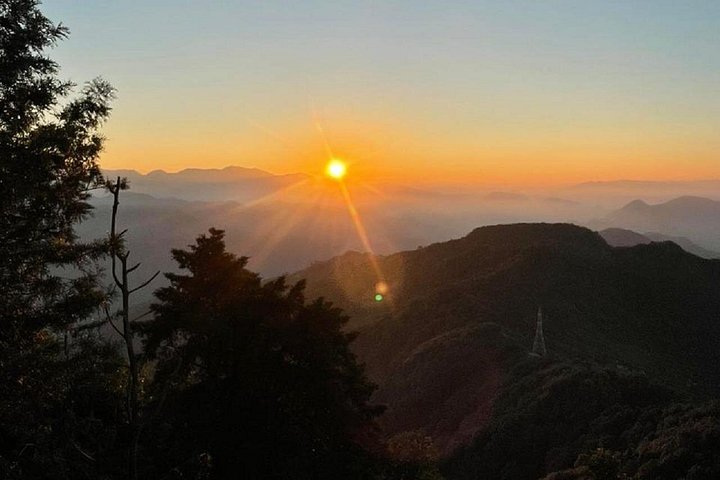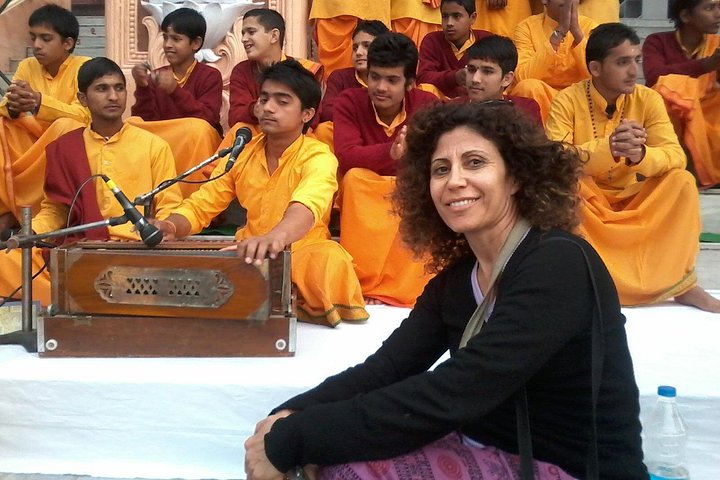
The two iron footbridges over the Ganges, Laxman Jhula and Ram Jhula, are the visual symbols of Rishikesh, and the lanes that surround them are where the town's character is easiest to see. A private walking tour with a local guide strings together the highlights: the riverside paths, the ashram gates, the temples, the cafes, the bookshops and the bazaar stalls selling rudraksha beads, singing bowls and incense. It is an easy way to get your bearings on a first day. Without a guide the area can feel confusing, with narrow lanes, motorbikes squeezing through crowds and cows moving at their own pace. With one, you learn which temple is which, why the town is considered holy, how yoga arrived here, and where to eat and shop without being steered into tourist traps. The Ganges runs beside every route, wide and green, and the hills behind the town give the walk a Himalayan backdrop that surprises people who expect a plains city.
How the walk usually goes
It starts at a meeting point near the river, follows lanes on one or both banks, crosses a footbridge, and pauses at ghats and shrines along the way. Guides tell stories about the sage Lakshman, who in legend crossed the Ganges here on a jute rope, and about the later suspension bridges that replaced the rope.
Ram Jhula, built in the 1980s, is the larger and busier of the two bridges, near the Sivananda Ashram and Swarg Ashram area. Laxman Jhula, the older bridge, sits further upstream among a cluster of cafes and guesthouses. Access to the old Laxman Jhula has been restricted at times in recent years because of its condition, so confirm locally what can be crossed.
A private tour has real advantages in a town this busy. You set the pace, linger where you like, skip what you do not, and ask the questions that interest you, whether about yoga, local history or where to buy a good meditation cushion. Guides also help with etiquette, such as covering shoulders and knees at temples, removing shoes at doorways, and how much to give when a priest offers a blessing. They can suggest a good lunch spot, and many will pause at a tea stall for chai.
Things to keep in mind
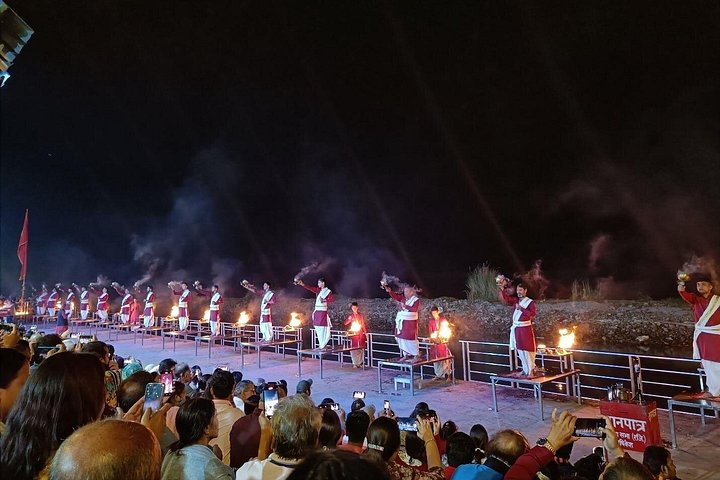
Bridges are crowded with pedestrians, scooters and the occasional monkey, so keep bags zipped and phones secure, and avoid putting down food where monkeys can see it. The lanes are uneven and sometimes steep, so wear comfortable shoes. Rishikesh is a vegetarian and alcohol-free zone in its central area, which affects where you eat and drink. Morning gives cooler air and softer light; late afternoon pairs with sunset and the evening aarti.
Because the tour is flexible, it combines well with other sights. Many guides end at a ghat in time for the aarti, or at a good cafe with a river view. If you have only one day in Rishikesh before moving on, a walking tour is the most efficient way to see the essentials.
Choosing a guide and a route
Ask whether the walk is on the east bank, the west bank or both, how long it lasts and whether it includes a ghat visit. A guide who is happy to adjust the route to your interests is worth more than a fixed script. Settle the price and the end point before you start, and carry small notes for chai and offerings so that you are not fumbling for change in the crowd.
What to expect
The experience
A private guided walk through the riverside lanes, footbridges, ashram gates and bazaars of Rishikesh.
Best time
Morning for cooler air, or late afternoon into sunset.
How long
Two to three hours at an easy pace.
Tips
Wear comfortable shoes, cover shoulders and knees at temples, and keep bags zipped on the bridges.
Quick picks
- Best for
- First-day visitors who want to understand the town before choosing activities.
- Families
- Kids enjoy the bridges, but keep a firm hold in the crowds.
- Couples
- A relaxed walk with chai stops and river views.
- Pair with
- The evening aarti at Triveni Ghat or Parmarth Niketan.
- Time needed
- A morning or an afternoon.
Good questions
Which bridge is which?+
Ram Jhula is the larger, busier bridge near the Sivananda and Swarg Ashram area. Laxman Jhula is the older bridge further upstream among cafes and guesthouses.
Can I still cross Laxman Jhula?+
Access to the old bridge has been restricted at times because of its condition, so ask your guide or hotel what is open before you plan around it.
Is a private tour better than a group walk?+
A private walk lets you set the pace and focus on your interests, which suits families and anyone who prefers flexibility.
Will we see yoga classes?+
You will pass many studios and ashrams, and the guide can explain how to join a class, but the walk itself is sightseeing.
What should I carry?+
Water, small change for offerings and tea, a hat, and a small bag you can keep zipped on the bridges.