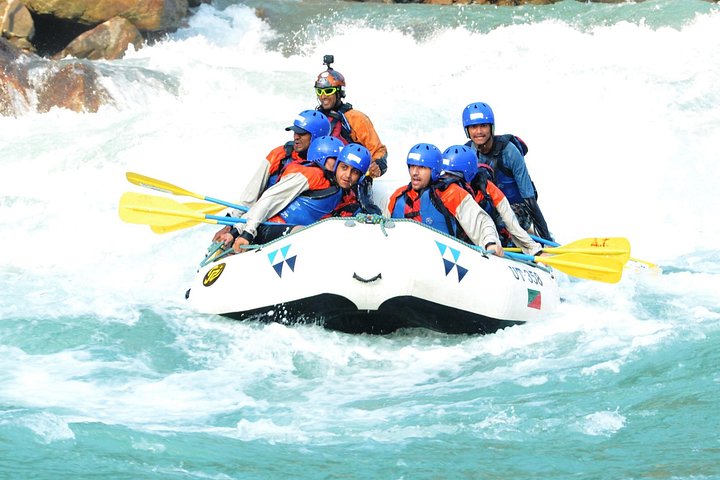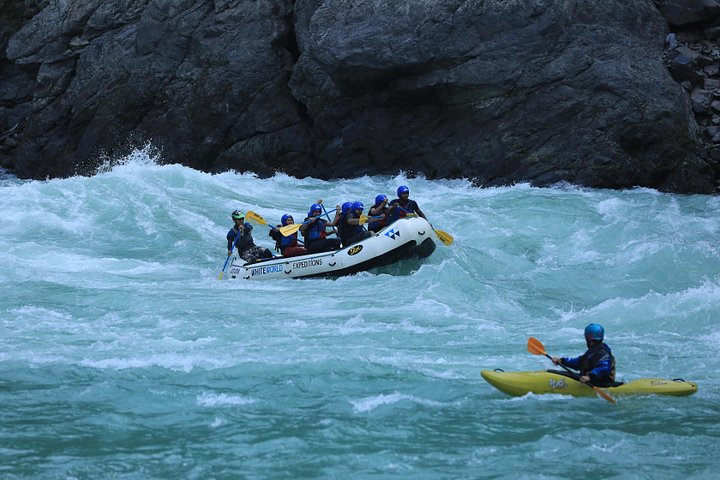
The full-day rafting trip stretches the Rishikesh experience to about 35 km of Ganges, starting far enough upstream that you get the quiet, forested reaches before the big rapids begin. Where the half-day run joins the river below the first gentle section, this one starts higher and gives you roughly twice the paddling, more time on the water and a lunch stop on a sandy beach. The Ganges at this point is cold, quick and very clear, fed by snowmelt from the Himalaya, and the scenery changes through the day from steep forested gorge to wider banks with temples and ashrams on the hillside. The named rapids are a headline, but the long calm stretches between them are where the day earns its keep, because there is time to float, swim and look around without the clock running. It suits people who already enjoy being outdoors, keen first-timers who want the full experience, and groups who would rather make a day of it than squeeze a rafting trip between other plans.
The shape of the day is straightforward. You are picked up early, driven upstream to the put-in, briefed on safety and commands, and then spend several hours on the river with breaks. Lunch is normally taken at a riverside spot or on a beach and is vegetarian, in keeping with the holy-town rules.
Time in the water is a feature: guides usually let rafts drift in the calmer sections so you can swim in a life jacket, and some operators allow a short cliff jump where the depth is safe. You reach the finish in the afternoon and are driven back to town, so plan nothing strenuous for the evening.
Compared with the half-day run, the extra distance adds more rapids and more variety. The classic named drops, including Roller Coaster, Three Blind Mice, Golf Course and Black Money, appear along the lower sections, and the upper stretch has its own rapids. The difference is also in rhythm. You get long gaps between rapids to talk, take photos and watch for temples and kingfishers along the bank. A full day suits travellers who want the whole river rather than the highlights, and it works well as a standalone activity for a group of friends.
Be realistic about the demands. A full day on the water means sun, cold spray and a lot of paddling, so it asks more of you than a half-day trip. Wear a swimsuit or quick-dry clothes with a layer for after, secure sandals, a hat and plenty of sunscreen, and drink water throughout.
People with back, shoulder or heart conditions, pregnant travellers and very small children should not take the longer trip. Season matters as well: the river is runnable roughly from autumn to spring and closed during the monsoon, with spring snowmelt giving the strongest water. Always confirm dates and conditions with the operator.
How to choose between lengths
Pick the half day if rafting is one activity among many, and the full day if the river is the main reason you came. A multi-day expedition with beach camping is the next step up for confident travellers. Whatever you book, ask what is included, such as transfers, lunch, photos and insurance, and check that guides carry certified safety gear.
What to expect
The experience
A guided 35 km raft run with a safety briefing, rapids, a riverside lunch stop and swimming time.
Best time
Autumn to spring; rafting is suspended during the monsoon.
How long
Six to eight hours including transfers and lunch.
Tips
Dress in layers, apply sunscreen often, and keep your evening light because a full day on the river is tiring.
Quick picks
- Best for
- Keen first-timers and groups who want the whole river, not just the highlights.
- Families
- Better for older children and teenagers than for small kids; check age limits.
- Couples
- A shared day outdoors that ends with a quiet evening.
- Pair with
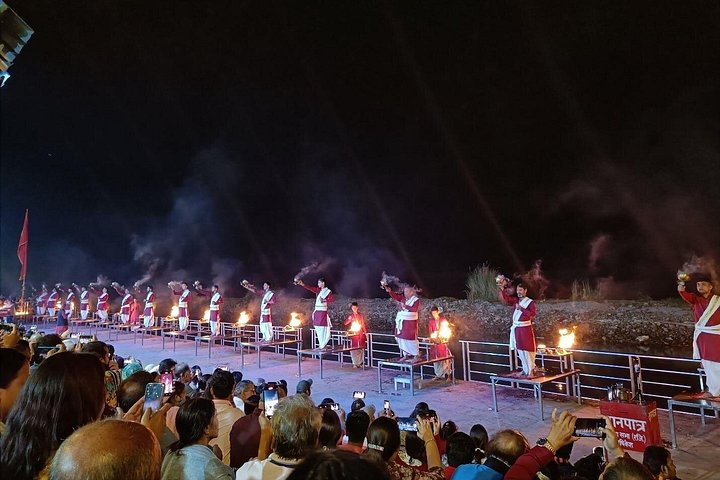
- The Ganga Aarti at Parmarth Niketan once you are dry.
- Time needed
- A full day.
Good questions
How is it different from the half-day trip?+
It covers about 35 km instead of 26 km, starts further upstream, includes more rapids and calm stretches, and normally stops for lunch.
Is lunch included?+
Operators of full-day trips normally include a simple vegetarian lunch, but confirm what is covered when you book.
Can non-swimmers go?+
Many operators allow non-swimmers because everyone wears a life jacket, but tell the guide so they can seat you sensibly and keep you out of the swim stops.
When can I raft?+
From roughly September to June. The monsoon months are closed because the river is too high.
Is it suitable for children?+
Usually only older children, and age and weight limits vary by operator, so ask before you book.