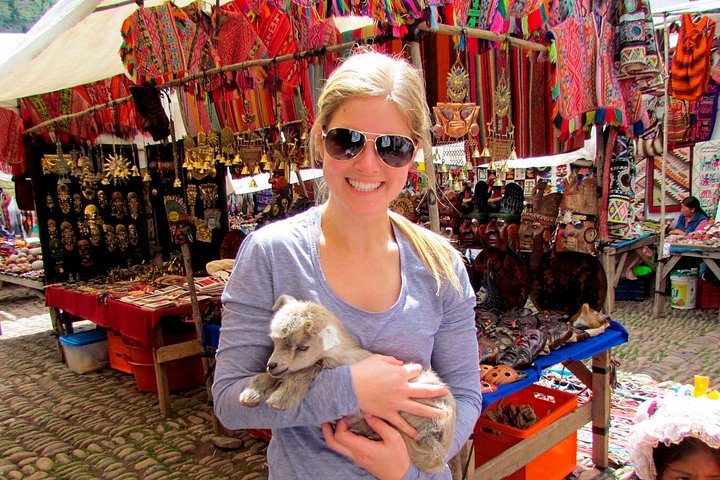
An alpaca walk is one of the most relaxed ways to spend a morning in the valley. You visit a small farm, meet the animals, learn how the family tells alpacas from llamas and then set off on an easy walk with a few of them on a lead. The animals are curious, soft and surprisingly characterful, and children in particular love them. It is a good change of pace after ruins and long drives, and it gives a real sense of the pastoral life that has shaped these highlands for centuries.
Alpacas are bred mainly for their fibre, which is among the finest in the world, while llamas are larger and traditionally carry loads. A guide explains the difference, shows how the fleece is shorn and sorted, and often lets you feed the animals with handfuls of grass. Some farms add a short demonstration of washing, dyeing with plants and spinning, which links the walk to the textiles you will see in the markets of Pisac and Chinchero.
The walk is flat or gently rolling and suits most fitness levels, but the altitude means a slow pace is wise. Wear sturdy shoes, bring a hat and sun cream and keep a light jacket handy, because the wind can be cool even when the sun is strong. Keep your hands calm and do not chase the animals; they are gentle but easily startled by sudden movement, and a patient approach gets you much closer.
Choose this on a day when you want something easy and visual. It pairs naturally with a visit to a weaving community, a lunch in a farm restaurant or a stop at the Pisac market. In the rainy season, from November to March, paths can be muddy and showers frequent, so take a waterproof layer and aim for the morning. Respect the farm family by buying a small woven item if you like, since visits help support their work.
What to expect
The experience
A guided farm visit and easy countryside walk with alpacas and llamas, with feeding, photographs and a short talk on fibre and weaving.
Best time
Mornings, when the light is soft, the air is cool and the animals are calm.
How long
Two to three hours, including time at the farm.
Tips
Move slowly, wear sturdy shoes and carry a waterproof layer from November to March.
Quick picks
- Best for
- Families and anyone who wants a gentle, hands-on rural experience.
- Families
- Very suitable; children can feed and stroke the animals, and the walking is short and easy.
- Couples
- A quiet, photogenic morning that pairs well with a slow lunch.
- Pair with
- A weaving demonstration, the Pisac market or a farm lunch.
- Time needed
- Half a day.
Good questions
Can I touch the alpacas?+
Usually yes, with guidance. Approach calmly and let the animals come to you.
Is the walk difficult?+
No. It is a short, gentle route, though the altitude means you should go slowly.
What is the difference between alpacas and llamas?+
Alpacas are smaller and bred for their fine fibre, while llamas are larger and traditionally used to carry loads.
Is it suitable for children?+
Yes. It is one of the easiest and most enjoyable activities in the valley for families.
What should I bring?+
Sturdy shoes, a hat, sun cream, a light jacket and a waterproof layer in the rainy season.