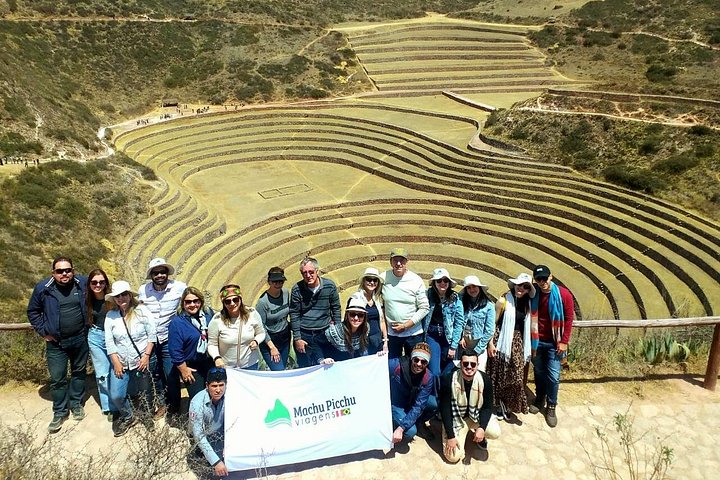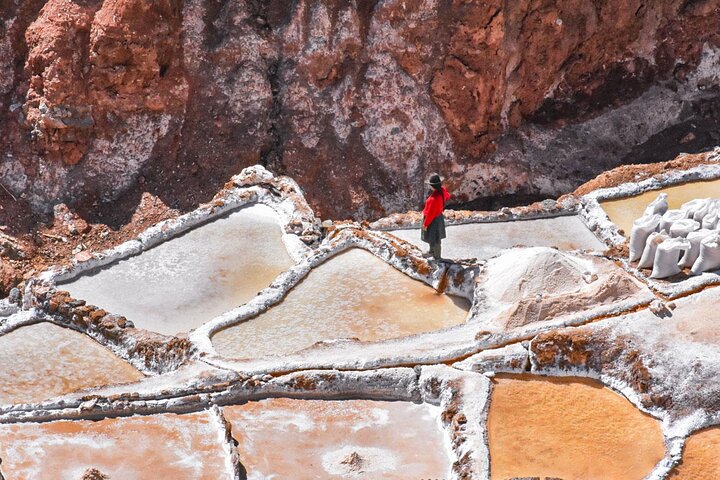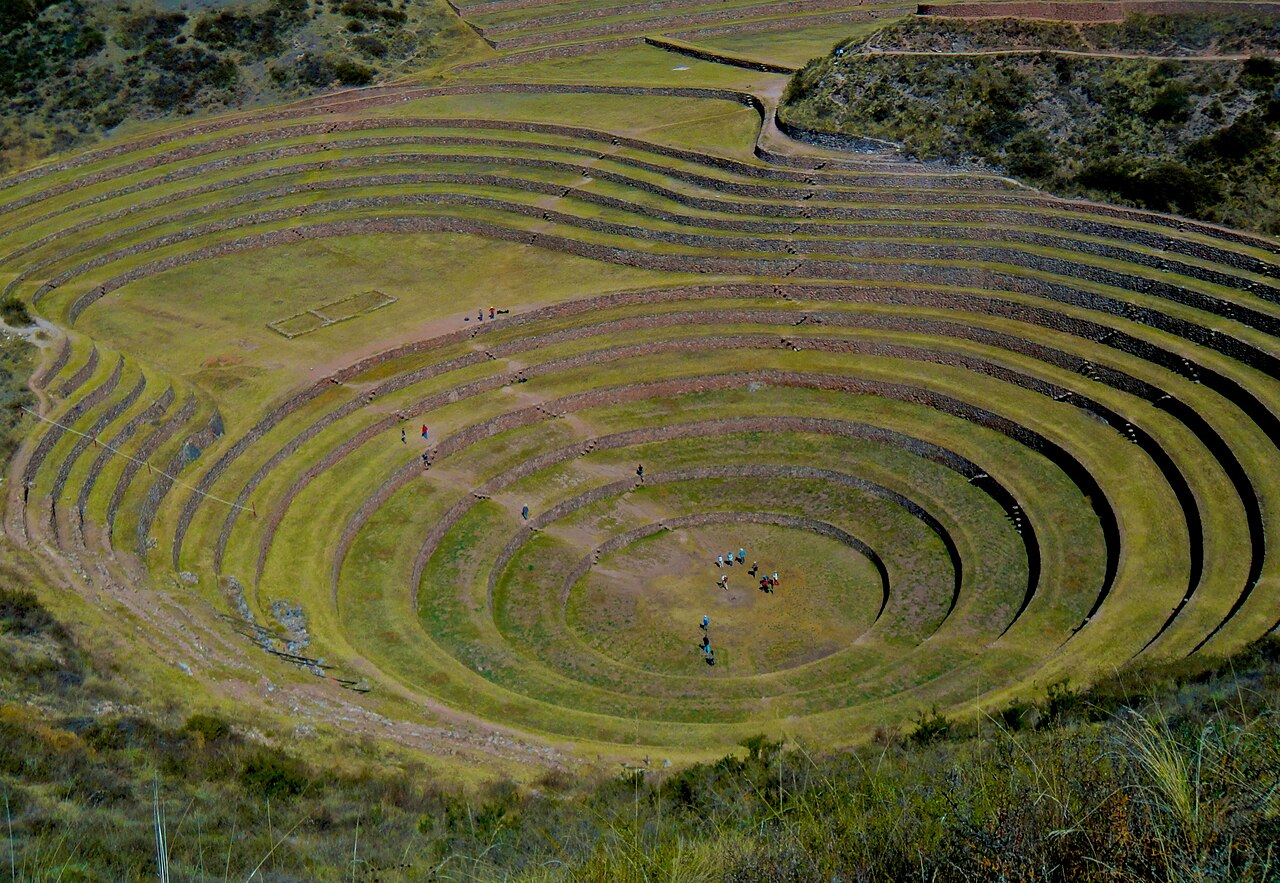
Moray is one of the strangest and most photographed sights in the valley: a set of deep circular depressions lined with stone terraces that step down like an amphitheatre. The Incas are thought to have used them to test crops, because the temperature changes noticeably from the rim to the floor, so each level behaved like a different climate. The site sits on a high plateau above Maras, with open views across fields to snow-capped peaks. Most people spend about forty-five minutes here, walking the rim and, where access allows, the paths to the terraces. This day tour from Cusco combines Moray with the Maras salt mines in a half-day trip, which suits travellers who want both without driving themselves.
The plateau is high, around 3,500 metres, and the air is thin, cold in the shade and bright in the sun. Dress in layers, wear a hat and use sunscreen. The ground can be slippery after rain, and some paths between terraces are closed to protect the stonework, so follow the signs and your guide. The viewing platforms give the best photographs, and early light or late afternoon is kinder to the shape of the circles than midday glare.
Moray is covered by the Boleto Turistico, in the partial valley circuit alongside Pisac, Chinchero and Ollantaytambo, so check whether your tour includes entry. The Maras salt mines are not on that ticket and are paid separately at the site, so carry cash in soles. A half-day tour usually takes about six or seven hours with transport from Cusco, which keeps the pace gentle.
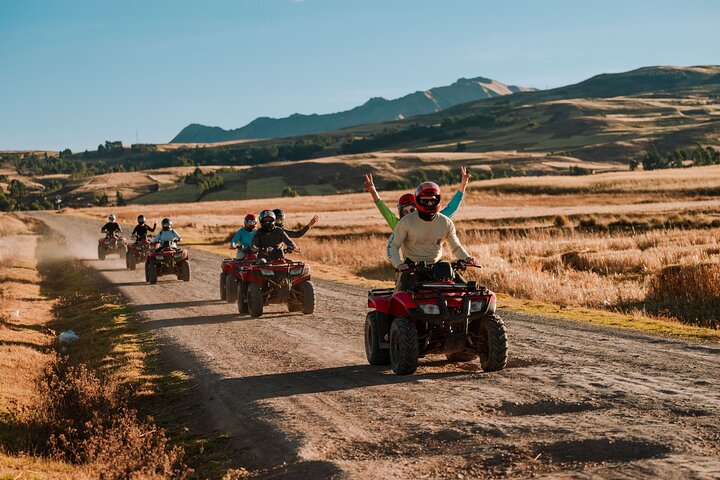
From November the rainy season begins and runs to March. Showers are most likely in the afternoon, and rain makes the dirt road and steps slick, but the plateau turns green and the light can be dramatic. If you are staying in Urubamba or Ollantaytambo, ask about a shorter tour from the valley floor, or combine Moray with the ATV adventure for a very different way to arrive.
What to expect
The experience
A guided half-day trip by road that stops at the Moray viewing platforms, with time to walk the rim and look into the terraces.
Best time
Morning or late afternoon, when low light shows the circles clearly and the plateau is quieter.
How long
Forty-five minutes to an hour at the site, with the whole tour taking most of a morning.
Tips
Wear layers and a hat, carry soles for the salt mines, and respect the signs that close some paths.
Quick picks
- Best for
- Curious travellers who like unusual engineering and big, open views.
- Families
- Easy for children on the platforms, though the altitude and cold wind can tire little ones.
- Couples
- Late afternoon light is lovely, and you can finish with the salt pans at golden hour.
- Pair with
- The Maras salt mines on the same tour, or an ATV ride between the two.
- Time needed
- Half a day with transport, or about an hour if you are driving yourself.
Good questions
What is Moray for?+
It is thought to have been an Inca agricultural experiment, because each terrace level has a slightly different temperature. Archaeologists still discuss exactly how it was used.
Is Moray included in the Boleto Turistico?+
Yes, it is part of the partial valley circuit that also covers Pisac, Chinchero and Ollantaytambo. The Maras salt mines are not on that ticket.
Can I walk down into the terraces?+
Access to the terraces is limited to protect them, so follow the signs. The rim and platforms give excellent views either way.
How cold is it at Moray?+
It is high, around 3,500 metres, so it feels cold in the shade and wind even in sunny weather. Layers and a hat are wise.
Can I visit in the rainy season?+
Yes, from November to March showers are common, mostly in the afternoon, and paths can be slippery. The green landscape is a reward, and mornings are often clear.